Why My GSX-R Lost to a Tesla Model 3 Performance
It was a Saturday morning at the drag strip, the kind of morning where the air smells like burnt rubber and high-octane dreams. I rolled my 2026 Suzuki GSX-R1000R into the staging lanes, the inline-four purring with that metallic, frantic idle that only a liter bike can produce. Then I saw it: a 2026 Tesla Model 3 Performance, silent and unassuming, its owner calmly tapping at the center screen. I chuckled to myself. Another EV at the strip? They’re quick, sure, but this was my turf — two wheels, a screaming engine, and the promise of a sub‑10‑second quarter‑mile if I nailed the launch. How wrong I turned out to be.
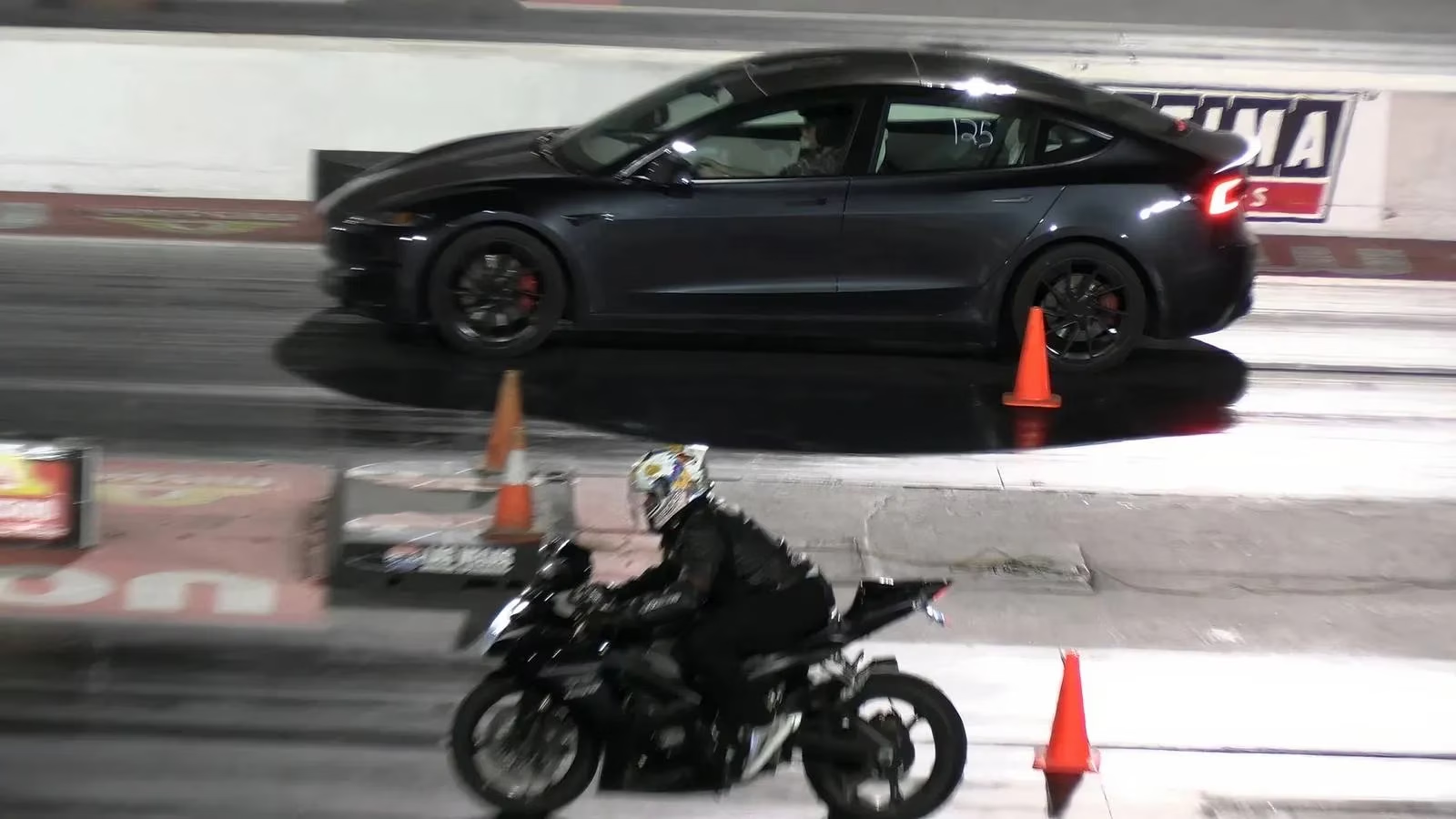
Sport bikes have always been the street‑legal cheat code when it comes to straight‑line speed you can actually afford. With a power‑to‑weight ratio that humbles most supercars, a modern GSX‑R can rip from 0 to 60 mph in under three seconds — if you have the skill. The Tesla, on paper, seemed like an odd opponent. It weighed over 4,000 pounds while my Suzuki, with me on it, barely tipped 700. Yet I knew the numbers: the latest Model 3 Performance packs dual motors, all‑wheel drive, and over 500 horsepower delivered with a brutality that no gasoline engine can match. Instant torque. That phrase echoed in my head as I lined up.
The staging lights blinked down. I feathered the clutch to just the right engagement point, revs held at 9,000 rpm — too little and I’d bog, too much and the front wheel would kiss the sky. Beside me, the Tesla driver sat motionless, hands at 10 and 2, foot hovering over the accelerator. No clutch, no tachometer dance. Just a computer waiting for a signal. 🏍️ vs ⚡ never felt so asymmetric.
Green light. I released the clutch with what I thought was perfection, but the rear tire squirmed, searching for grip on the unprepped concrete. The bike wheelied slightly, forcing me to roll off the throttle for a split second — an eternity in drag racing. Meanwhile, the Tesla lunged forward with a silent, violent surge. All‑wheel drive and electric motors reacting in microseconds made its launch look like a production error in a movie. No wheelspin. No drama. Just forward motion that distorts your perception of physics.
By the 60‑foot mark, the Model 3 had already put a car length on me. I tucked in, shifting through the gears while the GSX‑R’s engine howled past 13,000 rpm, but the gap didn’t shrink. The Tesla’s acceleration never wavered; it pulled like a freight train with a constant, unwavering force that a combustion engine can’t sustain. At the finish line, I crossed a full three‑tenths behind. The time slip read 10.4 seconds at 133 mph for the Tesla, 10.7 at 141 mph for my Suzuki. I had more trap speed, but the race was lost at the launch.
Here’s the thing about car‑versus‑bike drag races: the weight disparity is immense, but so is the grip disadvantage for a bike. The Tesla had about four times my horsepower but also six times the weight, making its power‑to‑weight ratio worse on paper. Yet electric torque and all‑wheel drive changed everything. As the video I later watched showed (you know the one — it’s all over YouTube by now), all a Tesla driver has to do is floor the go pedal. The computer sorts out traction, vectoring, and propulsion millisecond by millisecond. On a GSX‑R, you need footwork, clutch modulation, body position, and a prayer to the gods of friction just to get a clean launch — and even then, one tiny mistake costs you the race.
This is why, deep down, most bike guys wouldn’t trade their screaming machines for a Tesla, no matter how fast it clocks at the strip. The skill required is part of the soul of motorcycling. When I rolled back to the pits, the Tesla owner gave me a friendly nod and said, “Good race! You should try one of these — it’s effortless.” He wasn’t wrong. His car also had three friends aboard, laughing and replaying the launch on their phones. I? I rode to the track alone, strapped into a leather suit, and after the race I had to change back into street gear just to ride home. And yet, I preferred my cramped, noisy, thrilling saddle. The Model 3 Performance is a technical marvel, but it doesn’t make my heart race the way a tachometer pegged at 14,500 rpm does.
Still, the numbers are undeniable. As electrification marches on, the gap will only widen. 2026 Tesla software updates supposedly squeeze another couple of tenths from the same hardware — over‑the‑air performance gains while we bikers are stuck swapping sprockets. EVs depreciate fast, making used Model 3 Performances almost affordable, and they can carry your whole crew along for the roller‑coaster ride. But reliability? That’s where my Suzuki may still hold an edge. After hot‑lapping at the strip, I didn’t have to worry about battery thermal management derating my power, and I had zero range anxiety for the ride back. At least the GSX‑R is more likely to make it home without breaking — or needing a charge stop.
In the end, the loss stung less than I expected. The strip had taught me a lesson in humility: not everything on paper translates to reality. Instant torque and all‑wheel drive are cheat codes of their own, and the Tesla played them perfectly. I’ll keep riding my GSX‑R, chasing those perfect launches, and maybe, just maybe, I’ll come back with a new set of tires and a few more rpm for the next encounter. Until then, I’ll respect the silent speed of the machines that are redefining what “quick” means on four wheels.
Leave a Comment
Comments