Trump's EV Rollback: One Year Later, US Auto Industry Faces Uncertain Future
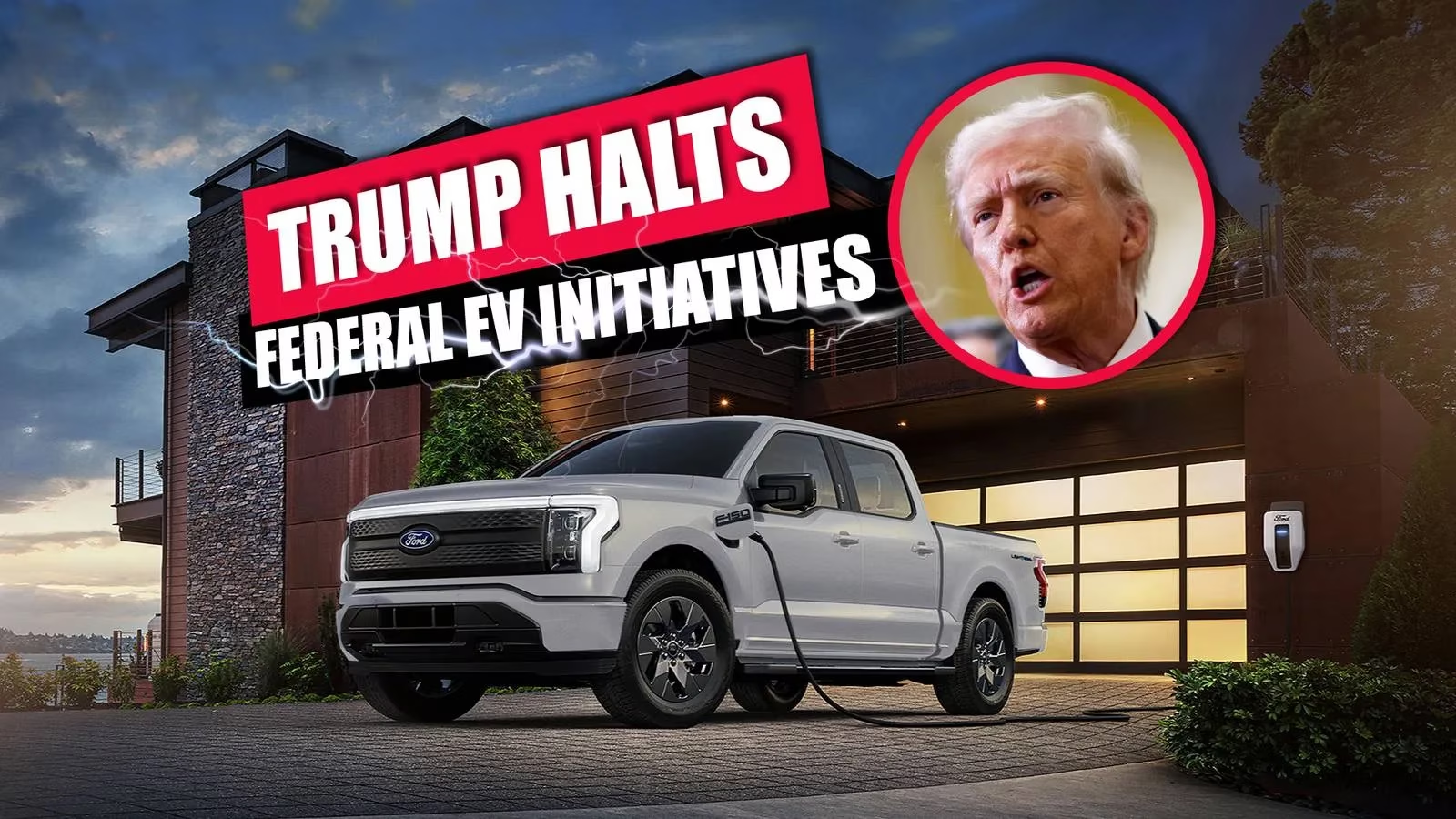
In January 2025, on his first day in office, President Donald Trump signed an executive order titled "Unleashing American Energy," signaling a dramatic reversal of federal electric vehicle policies. The order, which aims to eliminate what Trump calls the "electric vehicle mandate" and pause funding for EV charging infrastructure, has sent ripples through the US auto industry. Now, in 2026, the effects are becoming clearer. The order does not ban electric vehicles or their manufacturing, but it removes government incentives and support that had accelerated the transition to electric mobility. This shift has left automakers, consumers, and industry analysts grappling with a new reality.
The Executive Order: A Sharp U-Turn
The executive order, part of a broader push to "unleash American energy," targets a range of policies implemented by the previous administration. Trump describes the regulations as "burdensome and ideologically motivated" and argues that high energy costs have devastated Americans. To restore prosperity, his administration plans to eliminate the so-called EV mandate—even though no such federal mandate exists. Instead, the order focuses on removing state emissions waivers that limit the sale of internal combustion engine (ICE) vehicles, and it considers eliminating subsidies that favor EVs over other technologies.
The order directs all agencies to immediately pause the disbursement of funds appropriated through the Inflation Reduction Act of 2022 (IRA) and the Infrastructure Investment and Jobs Act (IIJA). This means the National Electric Vehicle Infrastructure (NEVI) Formula Program and the Charging and Fueling Infrastructure Discretionary Grant Program are effectively frozen. Additionally, agencies must review all regulations, orders, guidance documents, and policies to ensure they do not burden domestic energy resources—a move that could further erode support for EVs.
Tax Credits and Charging Infrastructure on the Chopping Block
The most immediate impact for consumers is the potential elimination of the $7,500 federal tax credit for purchasing an EV. This credit had been a cornerstone of the Biden administration's strategy to make electric cars more affordable. Without it, the upfront cost of EVs will rise, potentially deterring price-sensitive buyers. The order also threatens funding for EV charging infrastructure, which was set to expand rapidly under the IIJA. The pause on NEVI and other grant programs means many planned charging stations may never be built, exacerbating range anxiety and slowing adoption.
| Policy | Status Under Trump Order |
|---|---|
| $7,500 EV tax credit | Likely eliminated |
| NEVI Formula Program | Funds paused |
| Charging and Fueling Infrastructure Grants | Funds paused |
| State emissions waivers | Under review for termination |
| EV manufacturing subsidies | Considered for elimination |
Automakers React: Ford, Tesla, and Others
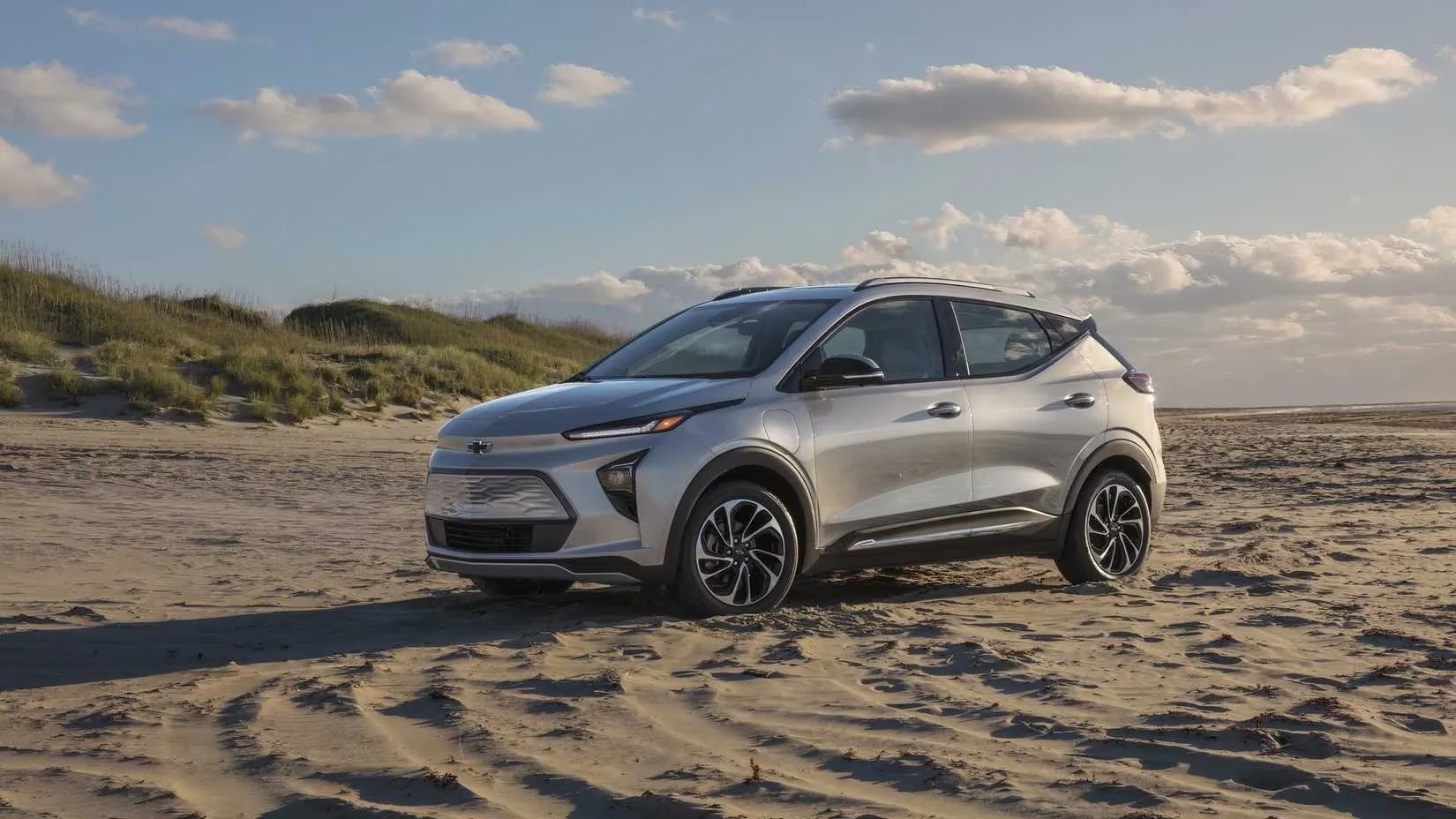
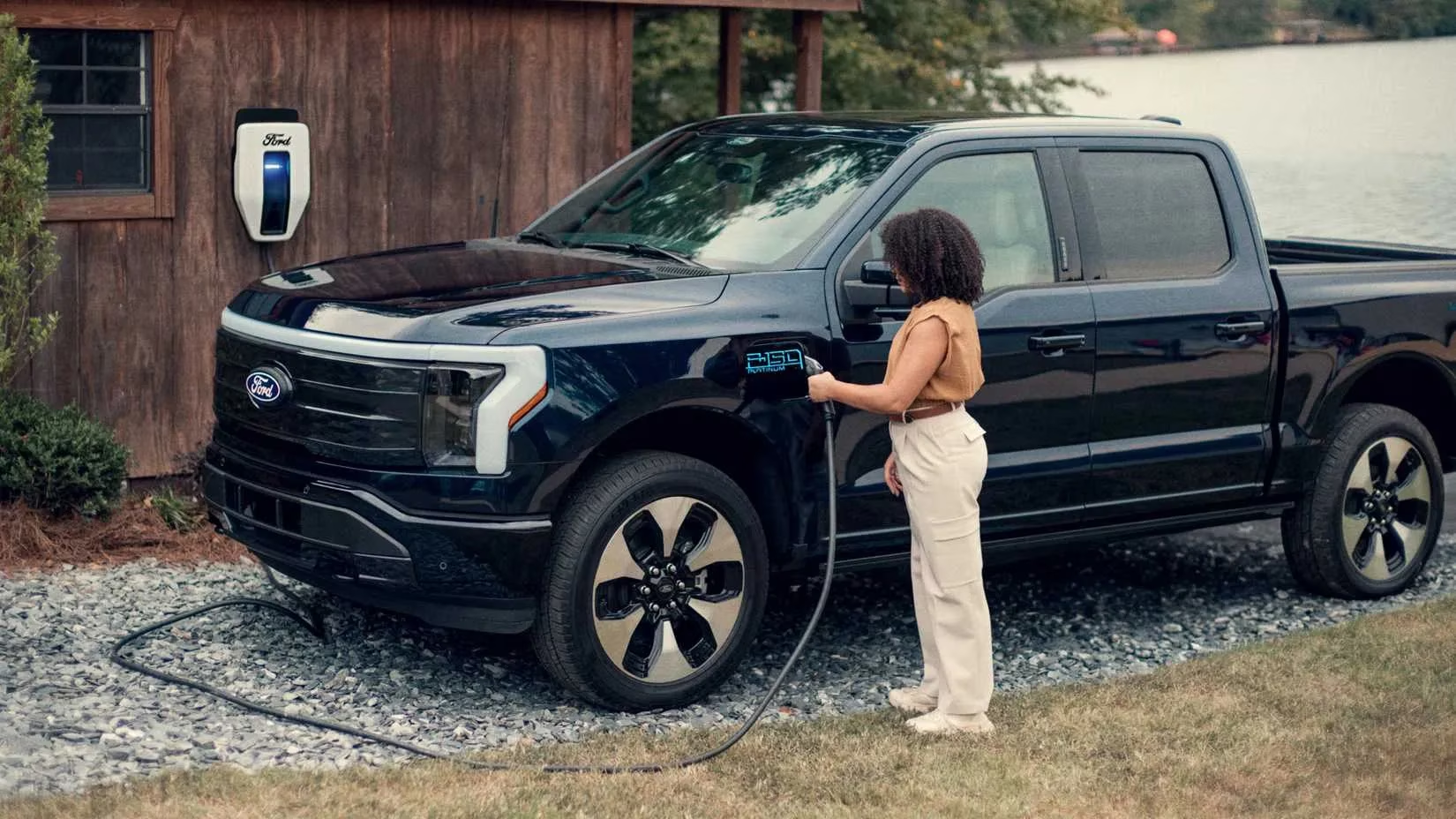
The executive order affects a wide range of manufacturers, from traditional giants like Ford, Toyota, and Chevrolet to EV leader Tesla. While Tesla may be less reliant on the tax credit due to its brand strength and loyal customer base, the loss of subsidies could still impact its sales, especially for lower-priced models like the Model 3 and Model Y. Ford, which has invested heavily in EVs such as the F-150 Lightning, may face challenges in achieving profitability on its electric lineup without government support. The order also jeopardizes loans and grants for companies building EV factories and battery facilities, potentially delaying or canceling projects across the country.
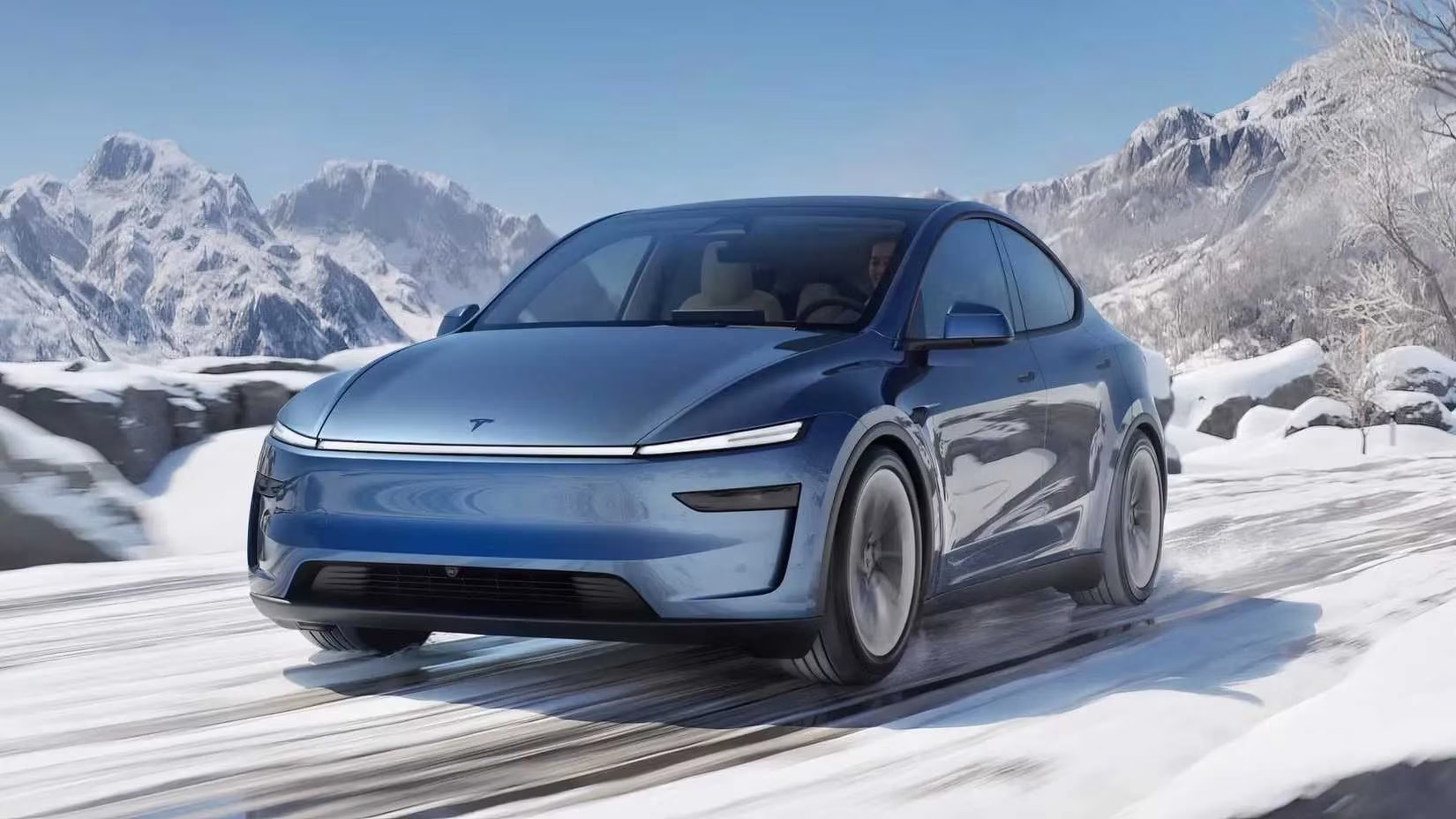
Despite the rollback, automakers are unlikely to abandon EV development entirely. Global demand for electric and hybrid vehicles continues to rise, and manufacturers must cater to markets outside the US. However, the lack of federal incentives will slow innovation and make it harder for American companies to compete with foreign rivals, particularly Chinese automakers who benefit from strong domestic support.
The Global Context: America's U-Turn vs. China's Advance
While the United States makes a swift U-turn on EV policies, the rest of the world is accelerating toward an electric future. China, already the largest EV market, continues to innovate and produce affordable electric cars at scale. The US currently imposes a 100% tariff on Chinese EVs, a measure aimed at protecting American jobs and preserving domestic manufacturing. However, with federal support for EVs now evaporating, the tariff may not be enough to shield US automakers from competition. In fact, it could make Chinese EVs even more attractive if American-made options become pricier due to the loss of tax credits.
What's Next for Consumers and the Industry?
For consumers, the immediate future may see fewer affordable EV options and a slower expansion of charging networks. The used EV market, which also benefited from tax credits, could cool down. For automakers, the challenge is to navigate a landscape where government support is no longer guaranteed. Some may shift focus to hybrids, which are not targeted by the order, while others may double down on electric models for export markets.
The long-term impact remains uncertain. If the US falls behind in EV technology, it could lose its competitive edge in the global auto industry. President Trump's order emphasizes "true consumer choice" and a level playing field, but critics argue that removing incentives for EVs while maintaining subsidies for fossil fuels is anything but fair. As 2026 unfolds, the automotive world will be watching closely to see whether this policy shift leads to a resurgence of ICE vehicles or a temporary detour on the road to electrification.
Leave a Comment
Comments