Toyota's Electrifying Track Monster: The bZ Time Attack Concept Debuts at 2025 SEMA
In the vibrant heart of Las Vegas, a new kind of predator was about to be unleashed. The sprawling halls of the 2025 SEMA Show, the global epicenter of automotive aftermarket passion, were buzzing with anticipation. Among the sea of roaring engines and chrome, Toyota, the colossal Japanese automaker, was preparing to unveil something that would shift the conversation. It wasn't just another concept car; it was a declaration of intent, a battery-electric utility vehicle transformed into a track-honed weapon named the bZ Time Attack Concept.
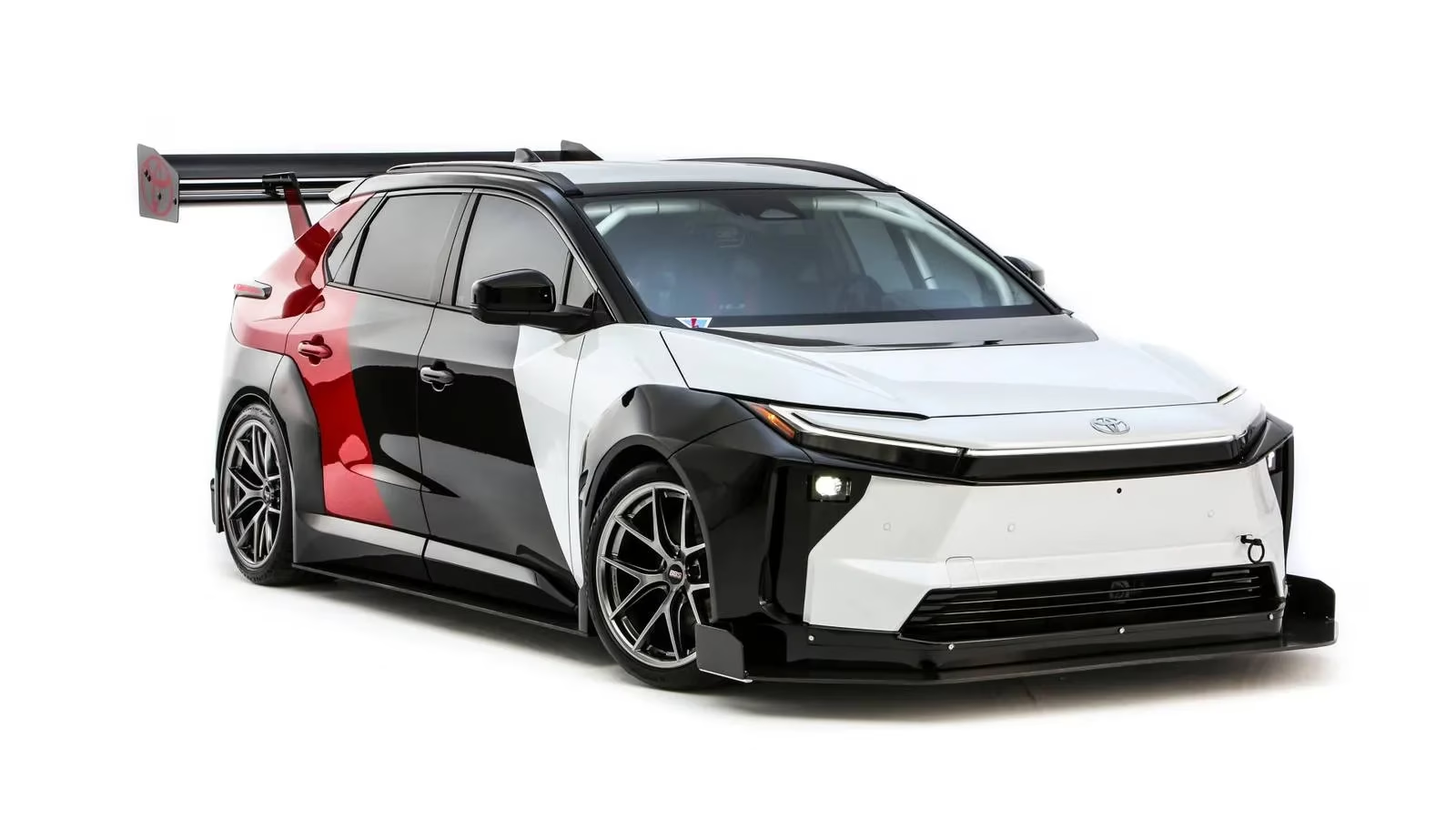
This was no mere styling exercise. The team at Toyota's Motorsports Technical Center had a clear, aggressive mission. Marty Schwerter, the project's lead builder, emphasized this was a chance to "explore, learn, and create something that shows just how much potential exists within Toyota’s BEV platforms." Their goal was audacious: to push the boundaries of an electric SUV in a pure motorsports context, confronting the twin challenges of battery performance and aerodynamic integration head-on. The result was a machine that looked ready to devour lap records.
From Family Hauler to Track Terror
At its core, the Time Attack Concept began life as a 2026 model year Toyota bZ. But any resemblance to its civilized sibling ended there. The transformation was comprehensive and brutal. The most immediate upgrade came from the powertrain. A dual-motor all-wheel-drive system was tuned to crank out over 400 horsepower, a significant leap from the standard model's 338 hp. While a factory bZ could sprint to 60 mph in a respectable 4.9 seconds, this concept promised to be "a good bit swifter," its electric motors delivering instant, silent fury.
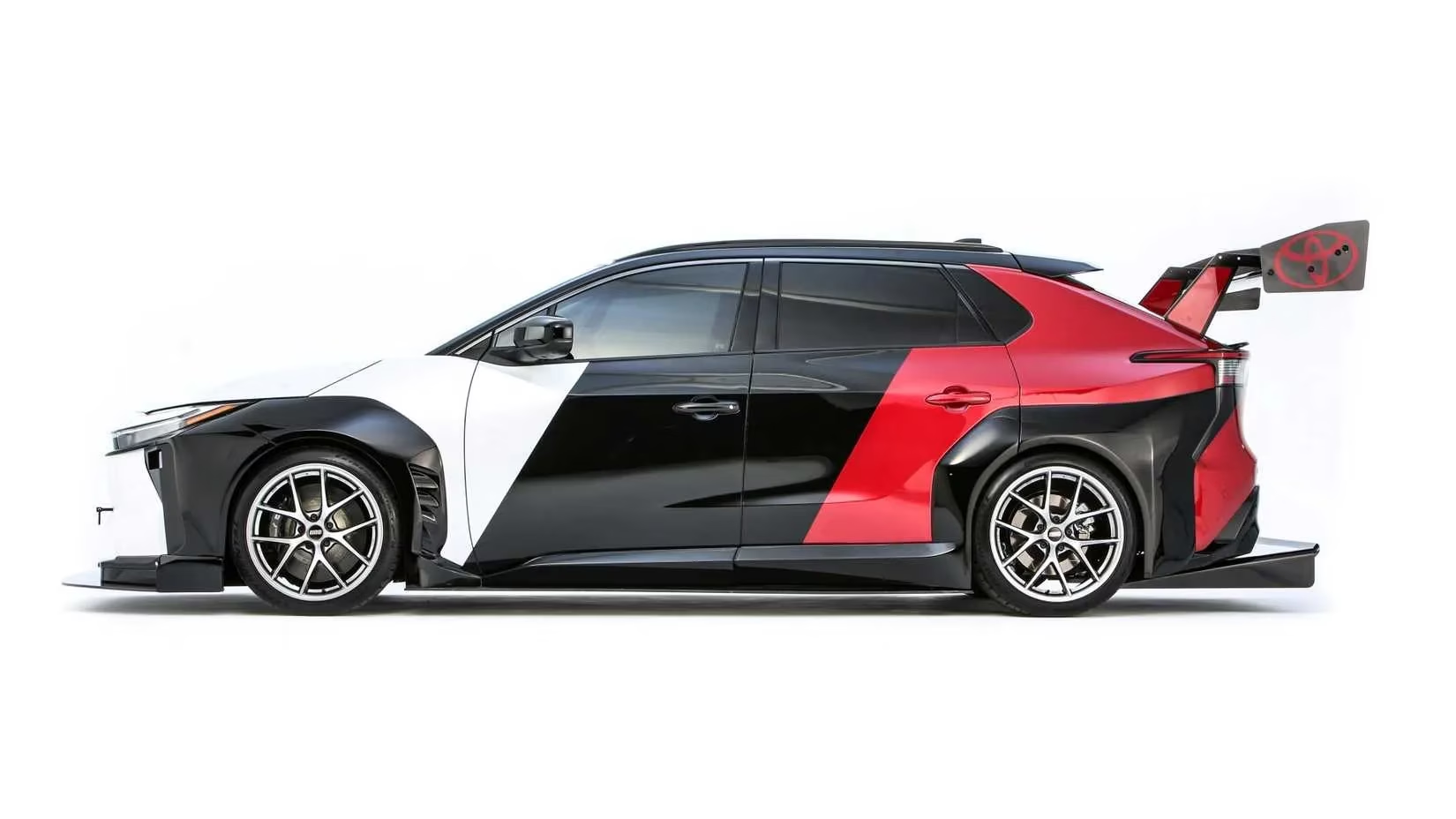
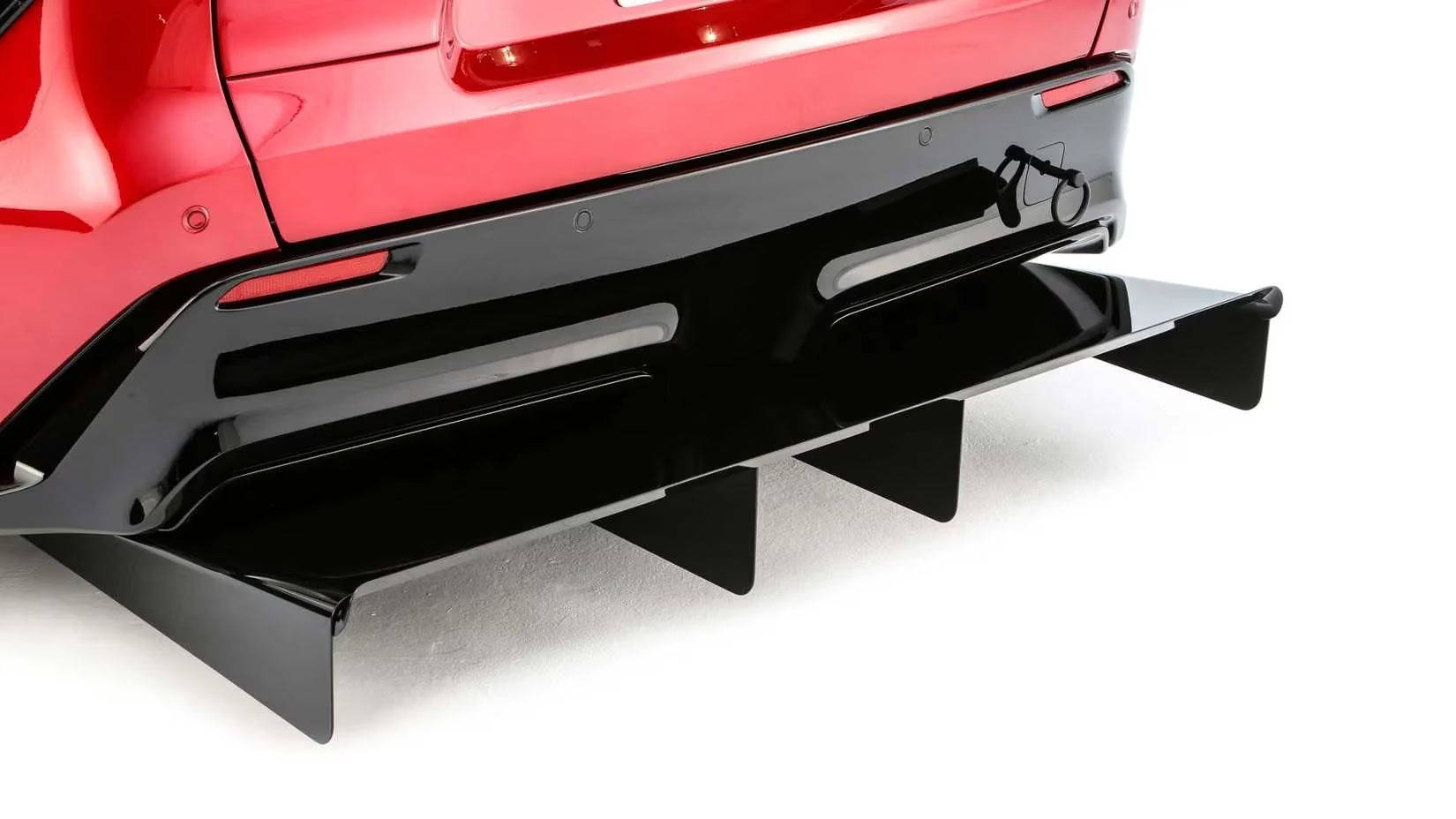
Yet, power is nothing without control. The vehicle's silhouette was utterly rewritten by an integrated aerodynamics package. A massive rear wing, aggressive front and rear diffusers, and sculpted side skirts were not for show. This comprehensive kit served a critical function, working in concert to manage airflow and generate downforce. The stance was transformed, with the ride height lowered and the track widened by a staggering six inches, planting the concept to the tarmac with unwavering purpose. The striking black, red, and white livery only accentuated its purposeful, competition-bred appearance.
Engineering for the Extreme
Peek underneath the dramatic bodywork, and the concept's serious intent becomes undeniable. This was a build where every component was selected for a singular purpose: maximum performance.
-
Chassis & Suspension: A chromoly roll cage, built to stringent FIA specifications, cocooned the cabin, providing critical safety and dramatically stiffening the chassis. The suspension was entrusted to high-performance TEIN coilovers and springs, promising razor-sharp handling responses.
-
Stopping Power: Harnessing the immense power required supreme braking capability. An Alcon braking system with Hawk performance pads, technology adapted directly from Toyota’s proven 86 Cup and Corolla TC race programs, was installed to ensure the driver could reign in the speed with confidence.
-
The Contact Patch: Grip is the currency of the track. The concept rolled on massive 19-by-11-inch wheels shrouded in sticky Continental Extreme Contact Sport 02 tires, providing the immense mechanical grip needed to translate the electric torque into forward motion.
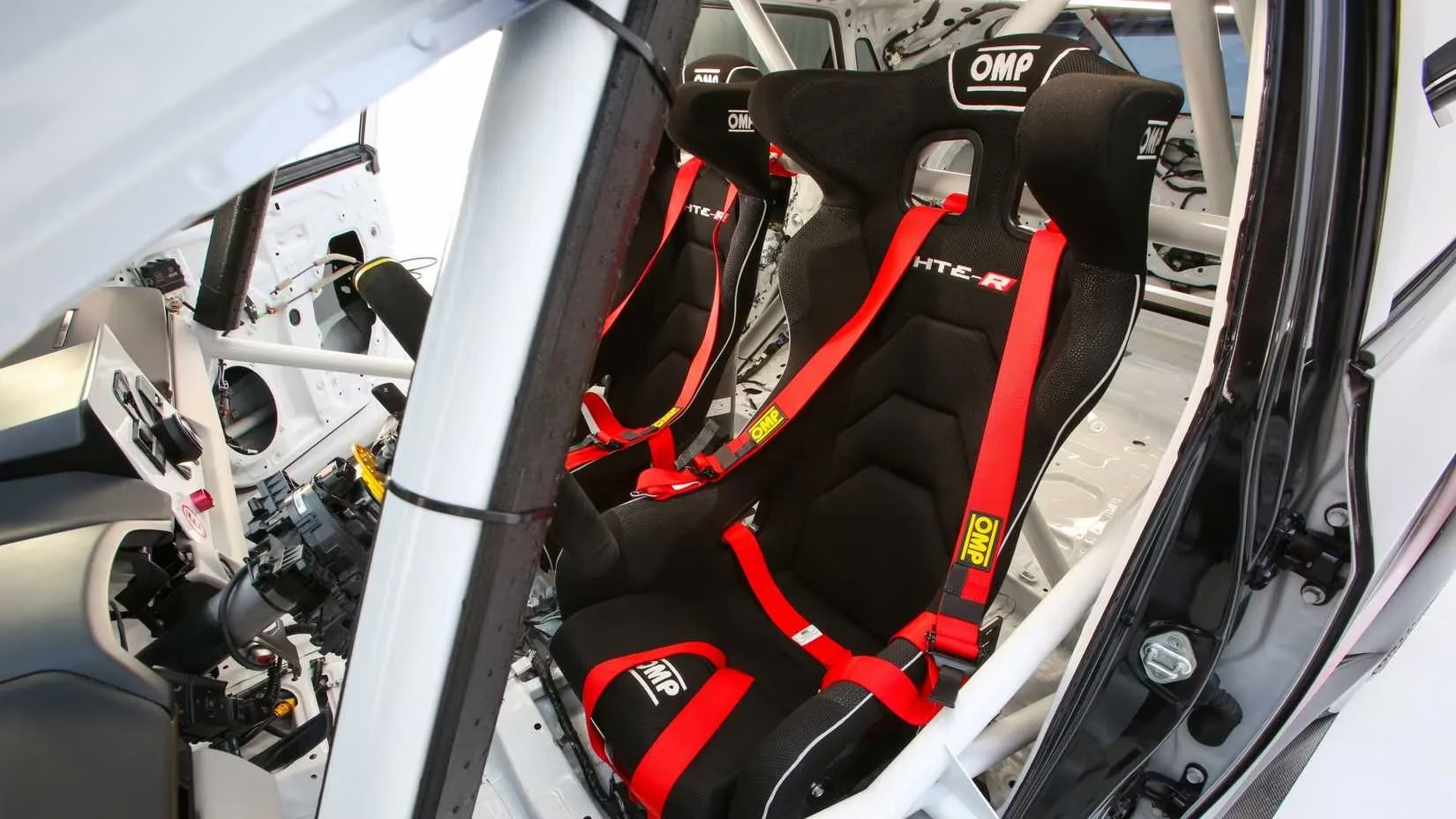
Inside, the transformation was equally complete. The plush seats of the production model were replaced by form-fitting racing buckets, secured by OMP harnesses. The cabin was a driver-focused cockpit, stripped of superfluous comforts and dedicated to the singular experience of driving fast.
A Statement of Potential
For Toyota, the bZ Time Attack Concept was more than a SEMA showpiece. It was a rolling laboratory and a powerful marketing statement. Mike Tripp, Toyota's group vice president of marketing, noted that every SEMA project challenges their teams to outdo themselves. "The bZ Time Attack Concept is not only a striking visual concept," he stated, "but also a serious performance contender." This vehicle served as a tangible answer to skeptics who questioned the sporting potential of electric vehicles, particularly utility-focused ones. It screamed that Toyota's electric future could be thrilling, competitive, and deeply engaging.
The concept's debut at booth No. 22200 in the Central Hall was a landmark moment. It represented a bridge between Toyota's storied racing heritage and its accelerating electric future. While it may never see a production line, the technologies, lessons, and sheer ambition poured into the Time Attack Concept would inevitably trickle down. It proved that the heart of a racer could beat within the architecture of a battery-electric vehicle, promising a future where zero emissions and high-octane excitement are not mutually exclusive, but intrinsically linked. The era of the electric track weapon had officially been joined by a formidable new contender from one of the world's largest automakers. 🔋⚡🏁
Leave a Comment
Comments