Toyota bZ4X: How a Promising EV Dream Became a Sales Nightmare by 2026
Let me tell you a story about ambition, expectations, and a spectacular faceplant. When Toyota, the undisputed king of reliable hybrids, decided to finally join the pure electric vehicle party with the bZ4X, the automotive world took notice. This was supposed to be their confident, bold statement—the beginning of a new, battery-powered chapter. Fast forward to 2026, and looking back at the September 2025 sales figures feels like watching a slow-motion car crash. A staggering 95.6% year-over-year sales plunge, down to a mere 61 units sold in the U.S. that month. To put that in perspective, some boutique supercar manufacturers move more metal. Meanwhile, Toyota's hybrid lineup was absolutely thriving, making the bZ4X look like the awkward, forgotten cousin at a family reunion where everyone else is winning trophies. As a seasoned observer of the automotive circus, I can't help but chuckle at the irony. The company that taught the world to love electrification with the Prius somehow managed to build an EV that its own loyal customers didn't want to touch.
The Performance Problem: It's Not Just About Speed
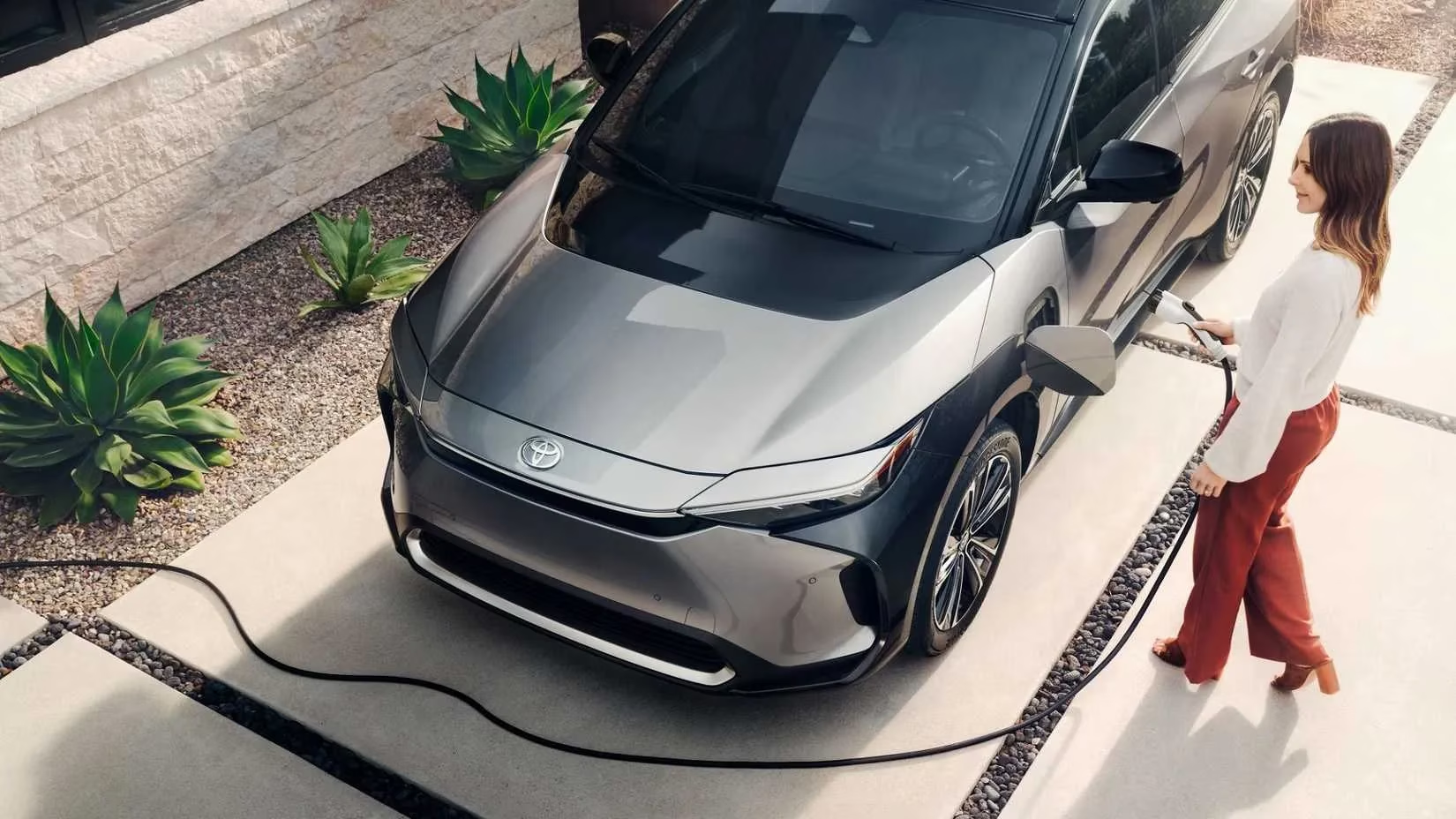
In the realm of electric vehicles, performance is a multifaceted beast. It's not merely about launching from 0-60 in a blink; it's about real-world usability—range, charging speed, and overall livability. This is precisely where the bZ4X tripped over its own feet right out of the gate. Owners and critics were quick to highlight its Achilles' heel: a painfully sluggish DC fast-charging capability that lagged woefully behind rivals from Hyundai, Kia, and Tesla. Planning a road trip? Better pack a good book, because you'd be spending more time at the charging station than your competitors. While other automakers were pushing the envelope with faster charging curves and improved thermal management, the bZ4X felt like it was stuck in the past. Toyota's legendary reputation for building indestructible hybrid powertrains ironically worked against them here. Buyers trusted them for bulletproof reliability in a hybrid, but that trust didn't automatically transfer to this newfangled, fully electric system. The numbers screamed the truth: the Camry Hybrid saw a 91% year-to-date sales jump, and the Grand Highlander Hybrid surged by 136%. Toyota's customers were screaming for electrification, just not in this underwhelming, range-anxious package.
The Recall Wrecking Ball: Shattering First Impressions
Launching a first-generation vehicle is tough. Launching a first-generation EV for a hybrid-focused brand is tougher. But doing all that while simultaneously issuing major recalls? That's a recipe for commercial disaster. The bZ4X's early stumbles caused lasting, perhaps irreparable, damage to its reputation. First, there was the wheel hub bolt issue that forced Toyota to halt deliveries entirely in its launch year—not a great look. Then, more recently, a widespread software glitch affecting the HVAC and defroster systems led to another major recall and stop-sale order across the U.S. For potential buyers already hesitant about diving into the EV pool, these headlines were a bucket of ice water. Toyota's entire brand is built on a foundation of trust and dependability. Having their flagship EV associated with serious reliability concerns undermined their core identity. The sales result was a cliff dive. In that fateful September of 2025, while Toyota moved 12,830 RAV4 Hybrids and 7,801 Sienna Hybrids, they only found homes for 61 bZ4X models. The message from the market was crystal clear.
An Identity Crisis: The Blandmobile
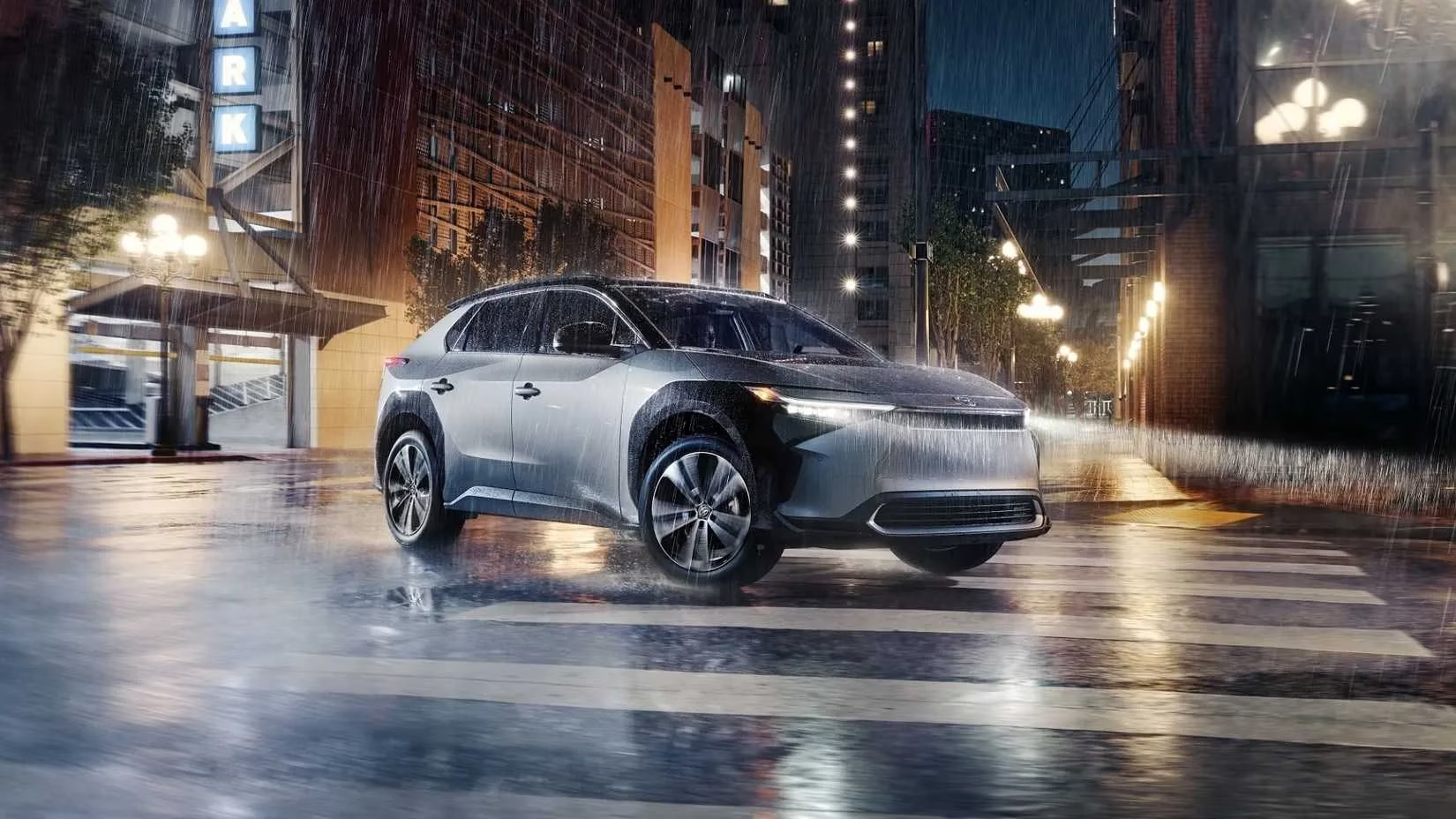
Perhaps the most fundamental issue was that the bZ4X suffered from a severe identity crisis. It was a car lost in translation. It wasn't sleek, tech-forward, or exciting enough to poach buyers from Tesla or the stylish Korean EVs. Yet, it also wasn't familiar or reassuring enough to make Toyota's legion of loyalists feel comfortable making the switch. For a vehicle meant to carry the banner of Toyota's electric future, it came across as cautious, conservative, and frankly, a bit boring. It lacked a compelling "reason to be." In a segment where brands are selling dreams of the future, the bZ4X felt like it was selling an appliance.
Desperation Moves: Price Cuts and Plummeting Value
In a desperate attempt to move the metal, Toyota resorted to aggressive price cuts and heavy incentives. But this strategy often backfires in the automotive world. Instead of spurring demand, it fed the perception of a troubled product with shaky resale value. Online forums and auction results quickly became graveyards for early bZ4X models, with owners taking steep financial losses to get out from under them. Contrast this doom-and-gloom with the palpable excitement around new Toyota hybrids like the Tacoma Hybrid, which saw a meteoric 405% year-to-date sales increase. The energy and momentum were unequivocally with the hybrid side of the house. The bZ4X began to feel less like a serious product and more like a placeholder—a box Toyota needed to check while it figured out its real long-term battery-electric strategy.
The Hybrid Juggernaut and the EV Ghost
Let's look at the cold, hard data that highlights the absurd contrast within Toyota's 2025 lineup:
| Vehicle Model | Key Sales Trend (YTD 2025) | What It Tells Us |
|---|---|---|
| Toyota bZ4X | 📉 95.6% sales drop in Sept '25 | The EV experiment is failing spectacularly. |
| Camry Hybrid | 📈 91% sales increase | The sedan is not dead; it's electrified and thriving. |
| Tacoma Hybrid | 📈 405% sales increase | Buyers are flocking to electrified trucks. |
| Grand Highlander Hybrid | 📈 136% sales increase | Family haulers are going hybrid in droves. |
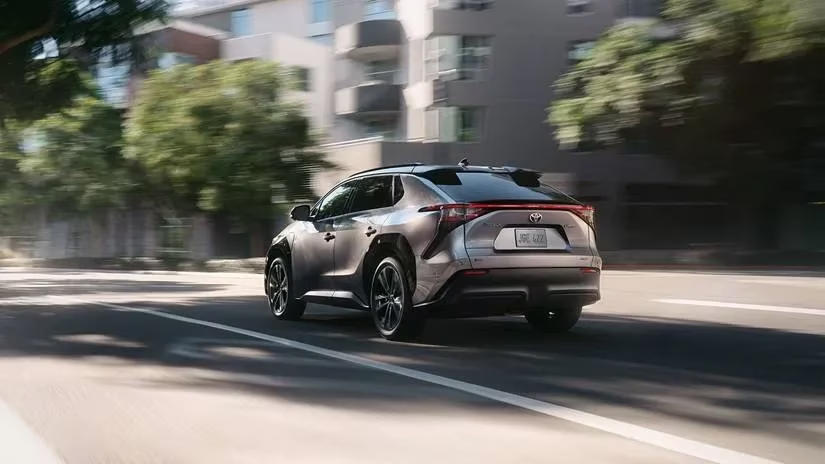
The irony is delicious. Toyota knows how to sell electrified vehicles better than almost anyone. Nearly half of all Toyota and Lexus vehicles sold in the U.S. in 2025 had some form of electrification. The hybrid machine is a well-oiled, massively profitable powerhouse. But the pure electric bZ4X? It's the ghost at the feast—a stark warning sign that simply slapping a "bZ" badge on a conventional-looking crossover isn't enough to win in the brutal EV arena.
The 2026 Question: Can Toyota Reboot the Dream?
So, where does this leave us in 2026? The bZ4X's first impression was, to put it mildly, a disaster. It's a case study in how not to launch a pivotal new product. The shaky start, the reliability scares, and the personality deficit may haunt this nameplate for years. The big question now is whether Toyota can learn from this stumble. Rumors swirl about a revamped, improved model—perhaps even with a new name—that could arrive to reset the narrative. But it will need to be stronger, faster, charge quicker, and be far bolder in its design and technology. It needs to give people a reason to choose it over the fantastic hybrids Toyota already makes, or over the compelling EVs from dedicated rivals. The bZ4X saga isn't just a story about one failed car; it's a lesson for an entire industry on the importance of nailing your debut, especially when you're the last major player to the party. For now, the bZ4X sits as a curious footnote—a $40,000 reminder that in the EV game, you only get one chance to make a first impression, and Toyota whiffed it.
Leave a Comment
Comments