The Future of Automotive Enthusiasts in the Era of Electric Dominance
The automotive landscape is undergoing a profound transformation, with electric powertrains steadily advancing toward eventual dominance on roads, driveways, and racetracks. While the adoption of pure electric vehicles has encountered headwinds, leading to a resurgence in popularity for hybrid and plug-in hybrid vehicles, the long-term trajectory is clear. The fundamental shift from internal combustion engines to electric propulsion is irreversible, raising a pivotal question for traditional petrolheads: what does the future hold for the automotive enthusiast in this new era? Insights from seasoned automotive writers, editors, and reviewers paint a multifaceted picture of this electric future, exploring performance dynamics, motorsports evolution, design philosophy, and the very soul of driving pleasure.
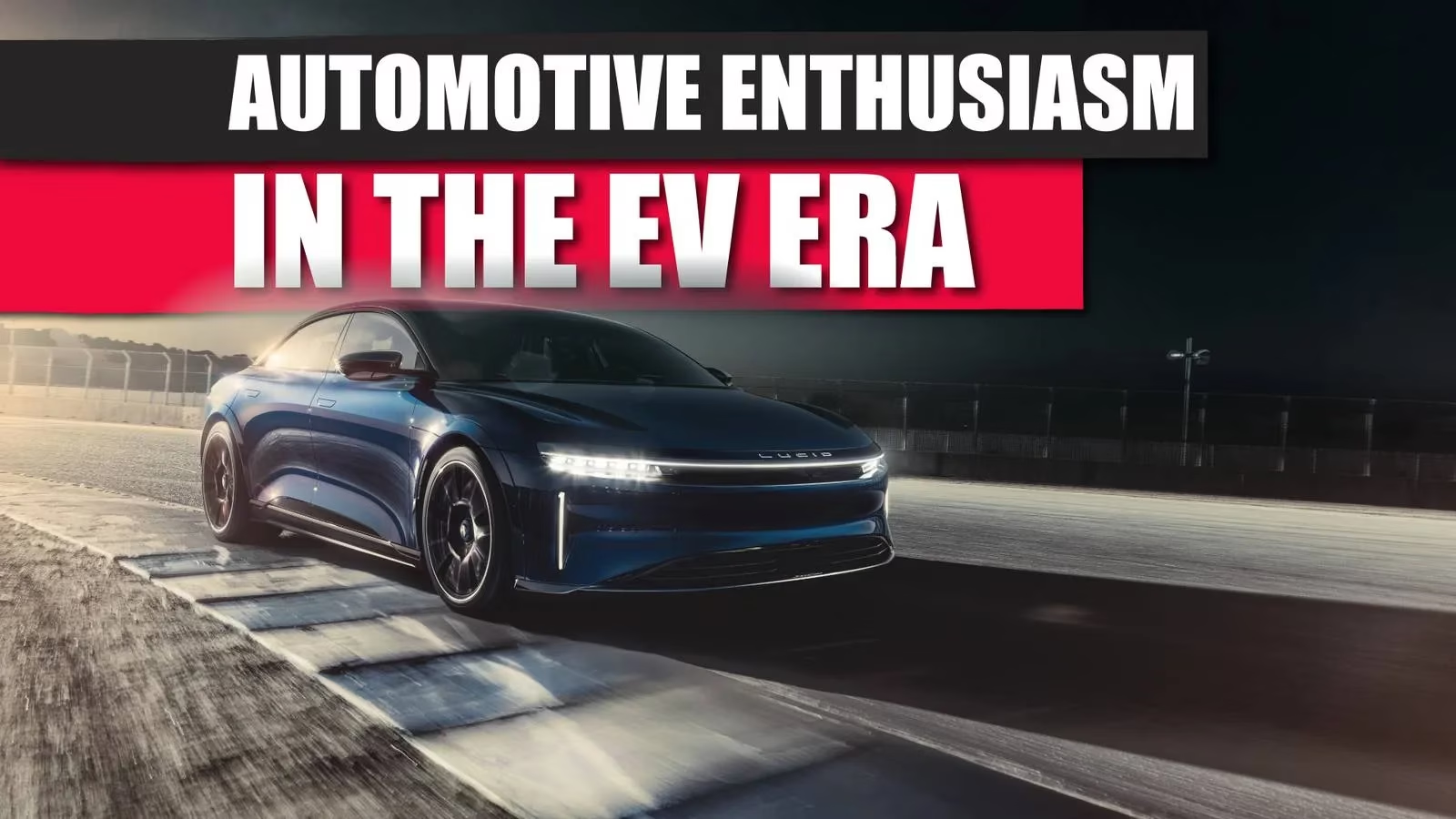
The Performance Paradigm: Instantaneous Thrills and Engineering Flexibility
The driving experience offered by electric vehicles represents a significant departure from traditional norms. One of the most lauded attributes is the instantaneous, linear acceleration delivered directly from the electric motor. This eliminates the lag associated with waiting for a conventional automatic transmission to downshift, providing a seamless and overwhelming surge of power the moment the accelerator is engaged. This characteristic fundamentally alters the sensation of speed and responsiveness.
Beyond raw acceleration, the electric powertrain grants automakers unprecedented engineering flexibility. The architecture simplifies the integration of all-wheel-drive systems, as adding a second motor is far more straightforward than engineering a mechanical transfer case and driveshafts. This allows for sophisticated torque vectoring and dynamic power distribution between axles, enabling engineers to finely tune a vehicle's handling and feel through software alone. The absence of complex components like transmissions, torque converters, and intricate valvetrain systems reduces mechanical complexity and opens new avenues for performance tuning. Furthermore, the compact nature of electric motors makes it significantly easier to design vehicles with rear-wheel-drive dynamics, a layout cherished by enthusiasts for its driving engagement, without the packaging challenges of a longitudinal gasoline engine and transmission tunnel.
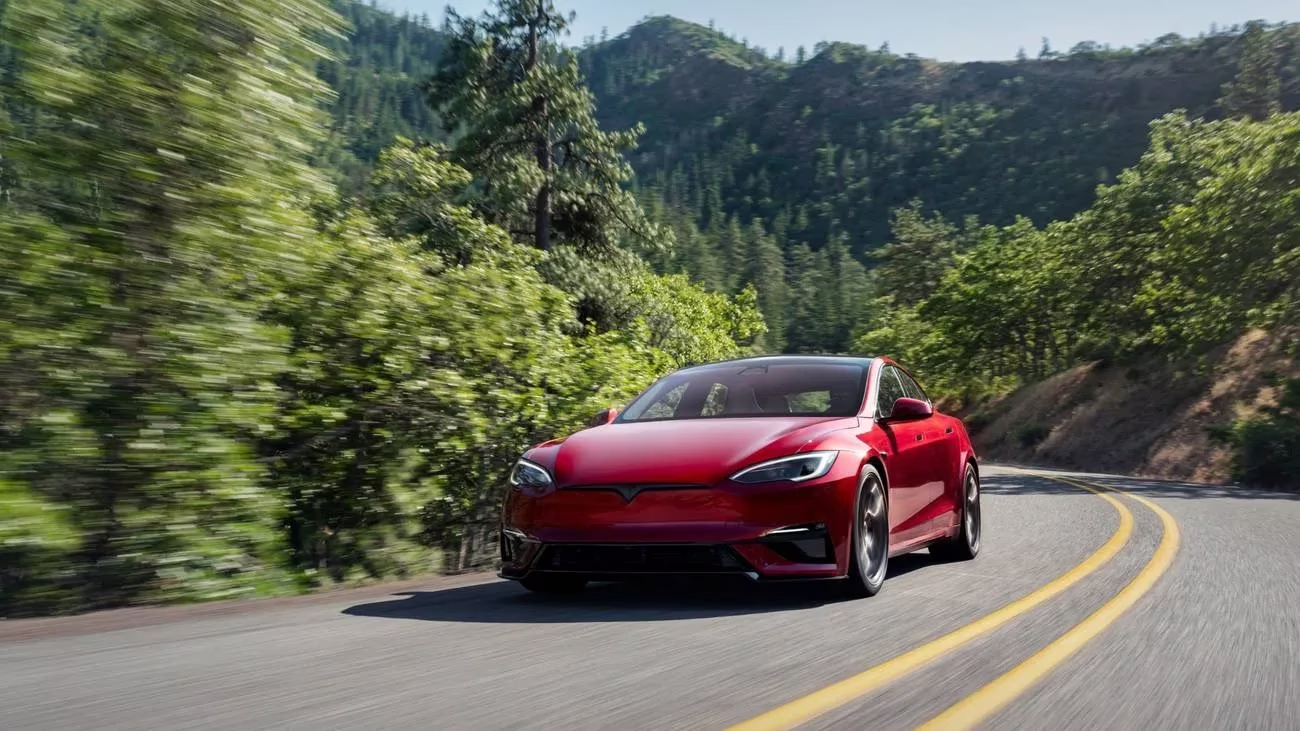
Motorsports in the Electric Arena: New Challenges and Opportunities
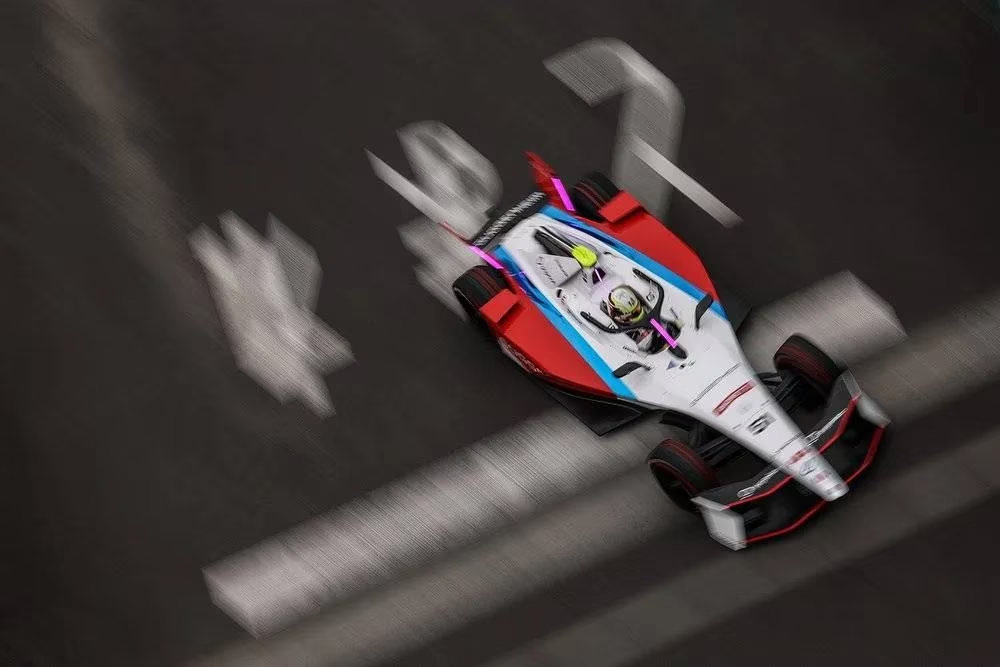
The integration of electric vehicles into competitive motorsport is a complex and evolving narrative. Series like Formula E have demonstrated the potential for high-performance electric racing, showcasing advanced technology on city street circuits. However, significant challenges persist, primarily centered on the fundamental physics of energy density and vehicle mass. The weight of current battery packs can compromise the agility and litheness required for a truly sporty feel, a hurdle that engineers continue to tackle.
Despite these challenges, electric propulsion is already making notable inroads in specific disciplines. The consistent power output of electric motors provides a distinct advantage in high-altitude competitions like the Pikes Peak International Hill Climb, where internal combustion engines suffer from power loss due to thin air. At a grassroots level, a burgeoning culture of modification is emerging. Enthusiasts are beginning to experiment with battery and motor swaps in older EVs, such as the Tesla Model 3, pushing the boundaries of performance and personalization. Looking ahead, the economics of motorsport could shift. While the initial cost of a competitive EV platform may be high, the dramatic reduction in moving parts and associated maintenance—no oil changes, spark plugs, or complex gearboxes—could eventually make electric racing more accessible and affordable over the long term compared to maintaining a traditional internal combustion track car.
Design and Desire: Cultivating the Next Generation of Classics
The transition to electric vehicles is not merely a mechanical shift; it is catalyzing a renaissance in automotive design. Freed from the packaging constraints of large engines, radiators, and exhaust systems, designers are exploring radically new forms, proportions, and aesthetics. Vehicles like the Jaguar 00 Concept and the polarizing Tesla Cybertruck exemplify this break from tradition. While these designs may not resonate with older generations, they captivate younger audiences who lack preconceived notions of what a car "should" look like. For them, these futuristic shapes are inherently cool, destined to become the bedroom wall posters of a new era.
The question of which contemporary EVs will achieve classic, collectible status in the coming decades is a topic of lively debate. Several strong contenders have emerged based on their performance, design significance, and cultural impact:
-
Porsche Taycan: Often described as a true Porsche in spirit, its stunning design and blistering performance could see it venerated as a landmark vehicle.
-
Lucid Air & Gravity: These models are praised for their groundbreaking technology, luxurious appointments, and compelling design language.
-
Hyundai Ioniq 5 N: As a pioneering high-performance EV that actively simulates engaging driving sensations like gear shifts, it is seen as a potential future collectible.
-
Original Tesla Roadster: Its historical importance as one of the first modern, mainstream EVs and its Lotus-derived chassis cement its classic status.
-
Rolls-Royce Spectre: The brand's first EV perfectly aligns with its core values of silent, effortless power, making it a significant milestone.
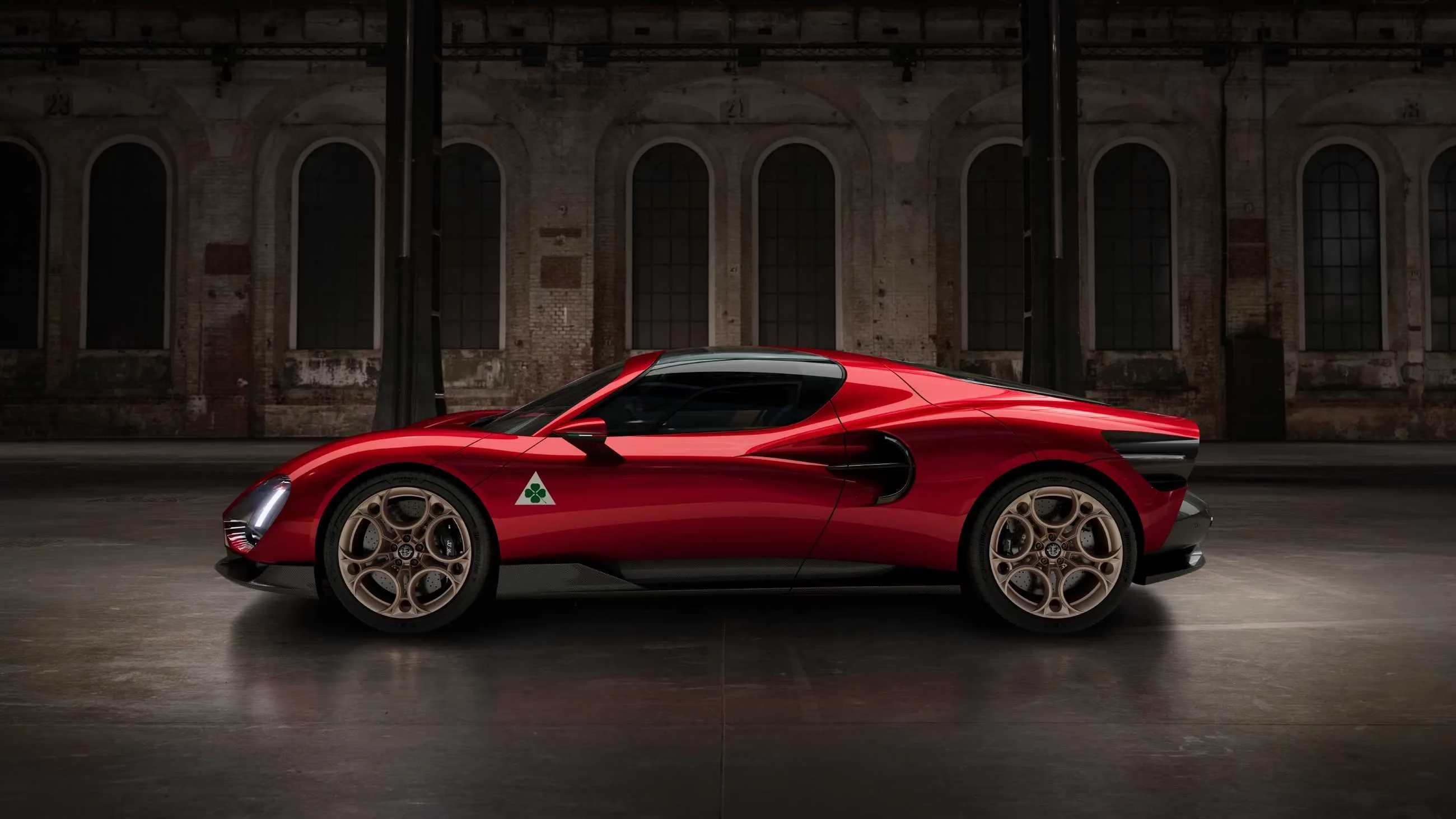
Injecting Soul into Silence: The Quest for Character and Personality
A common critique of early-generation EVs is a perceived lack of character or soul compared to the auditory and tactile feedback of internal combustion engines. Automakers and the aftermarket industry are actively working to address this. Hyundai's Ioniq 5 N leads the charge by incorporating simulated gear changes, synthetic engine sounds, and even a simulated clutch pedal to reintroduce the visceral engagement drivers associate with performance cars. This approach hints at a future where vehicle personality could be augmented or even installed via software "plug-ins."
Other manufacturers are exploring different avenues. Dodge, for instance, introduced its Fratzonic exhaust system for the Charger Daytona SRT EV, an amplified audio system designed to produce a performance-oriented soundtrack. The aftermarket scene is predicted to grow around practices like battery and motor swaps, weight reduction, and enhanced audio tuning, allowing owners to personalize their electric vehicles' character. The overarching goal is to bridge the emotional gap, ensuring that speed and capability are accompanied by a sense of connection and excitement.
-1.jpg?q=70&fit=crop&w=1300&dpr=1)
The Road Ahead: Adoption, Infrastructure, and the Arrival of Lightweight EVs
For enthusiasts hesitant about the electric transition, the prevailing advice is simple: experience it firsthand. Many perceived barriers, like daily charging, are easily mitigated with a home charger installation. While long-distance travel planning requires more consideration due to charging infrastructure variability, for most daily use cases, EVs offer sublime convenience and performance.
It is crucial to view the current state of electric vehicles as an early chapter in a longer story. Technological and infrastructural development is progressing rapidly. The primary hurdle remains battery energy density and weight. Once advancements yield lighter, more energy-dense batteries, the door will open for the creation of lightweight, agile electric sports cars—the true electric successors to icons like the Mazda MX-5 Miata or Chevrolet Corvette. That milestone will represent a watershed moment, combining the instant torque and simplicity of electric drive with the balanced, engaging dynamics that enthusiasts crave. The journey for the automotive enthusiast is not ending; it is being rewired, promising a future where emotion and innovation drive forward together.
Leave a Comment
Comments