The Fading Glow of EV Tax Credits: A Personal Journey Through Corporate Ingenuity in 2026
The federal electric vehicle tax credits, once a beacon of hope for a greener future, officially dimmed at the end of September. That window of opportunity, that promise of a better deal on the whisper-quiet machines that were supposed to carry us forward, has closed. For some, this is a sigh of relief, a correction of the market. For others, like myself, who stands at the crossroads of desire and affordability, it feels like a door gently shutting. Yet, in this new landscape of 2026, I find myself captivated not by what was lost, but by the intricate dance of giants trying to keep a sliver of that light alive. Is the spirit of an incentive truly gone if it merely changes its costume?
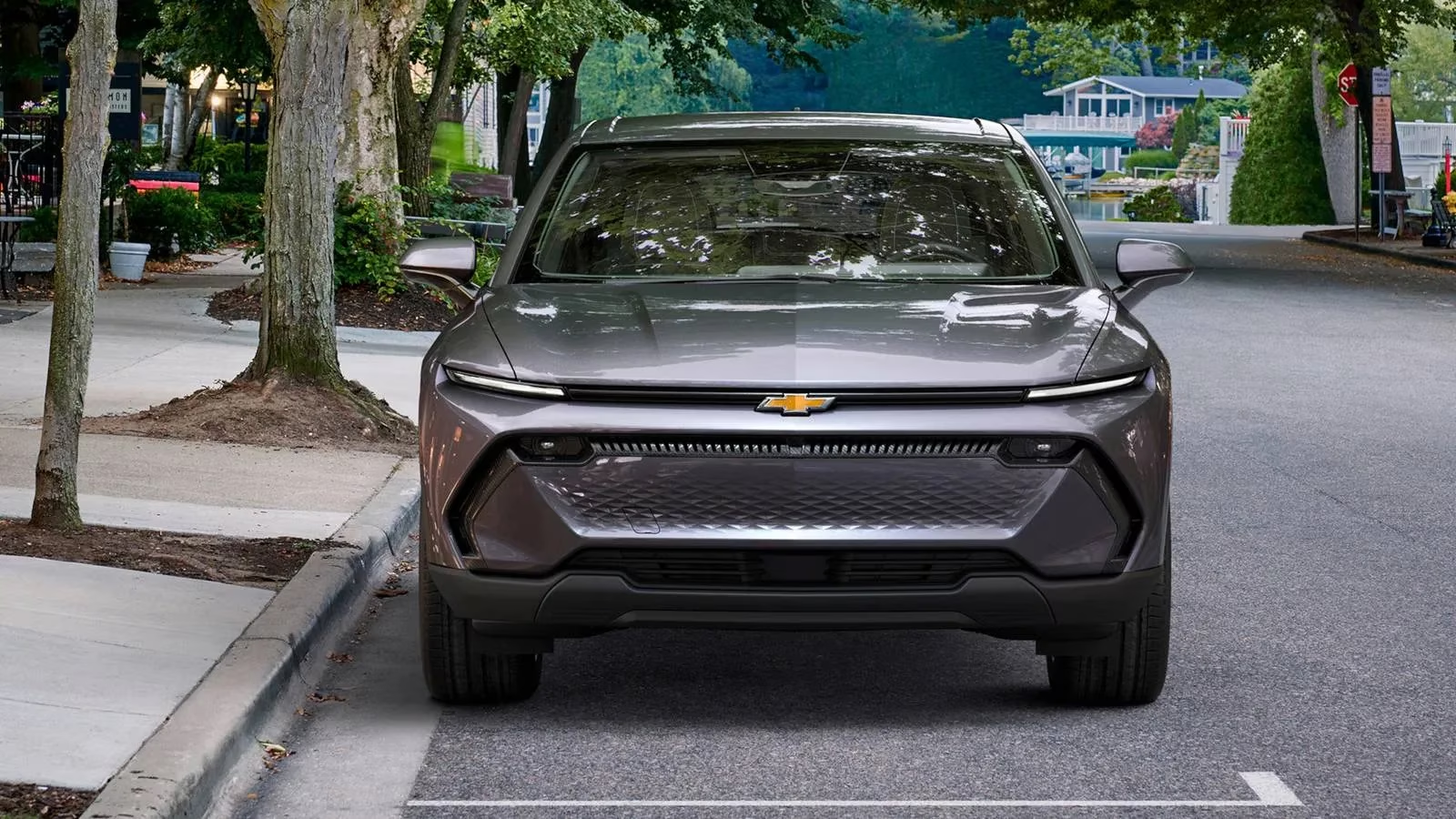
I watch from the sidelines as two automotive titans, Ford and General Motors, engage in a fascinating act of financial choreography. Reuters, my trusted chronicler of these corporate epics, reveals their latest maneuver. They are enrolling their vast networks of dealerships in a program—a clever, almost poetic workaround. The goal? To extend that generous $7,500 federal discount, but with a twist: it now applies exclusively to vehicles that are leased. It’s as if they’ve found a secret passage in a wall we all thought was solid. The core incentive, the heart of the deal, is being kept on life support through the veins of leasing contracts. Isn't it remarkable how innovation applies not just to batteries and motors, but to the very frameworks of purchase?
The mechanism is a thing of subtle beauty. According to the reports, the automakers' own financing arms will initiate the purchase of EVs sitting in dealer inventories. They make the down payments, a corporate handshake with themselves. In doing so, they capture—they lock in—that precious $7,500 tax credit before it vanishes into the ether. Then, the dealers, now holding these officially "purchased" vehicles, can offer them to you and me as leases. That federal discount is seamlessly woven into the monthly payment plan, a ghost of a subsidy making the numbers on the page just a little friendlier.
Some might call this financial chicanery, a shell game played with billion-dollar pieces. But I see it differently. I hear the calm, assured voice of GM stating to Reuters, "We worked with our GM dealers on an extended offer for customers to benefit from the tax credit for leases." There is a deliberate, collaborative purpose here. Similarly, Ford, the blue oval, is offering what they term "generous retail lease rates," a lifeline expected to stretch through the end of this December. They have, it seems, even walked this delicate path with the guardians of the treasury, the Internal Revenue Service, ensuring every step is "kosher." This isn't shadowy evasion; it's a structured, transparent effort to bridge a gap. What does it say about our systems when such intricate loops must be created to achieve a simple goal?
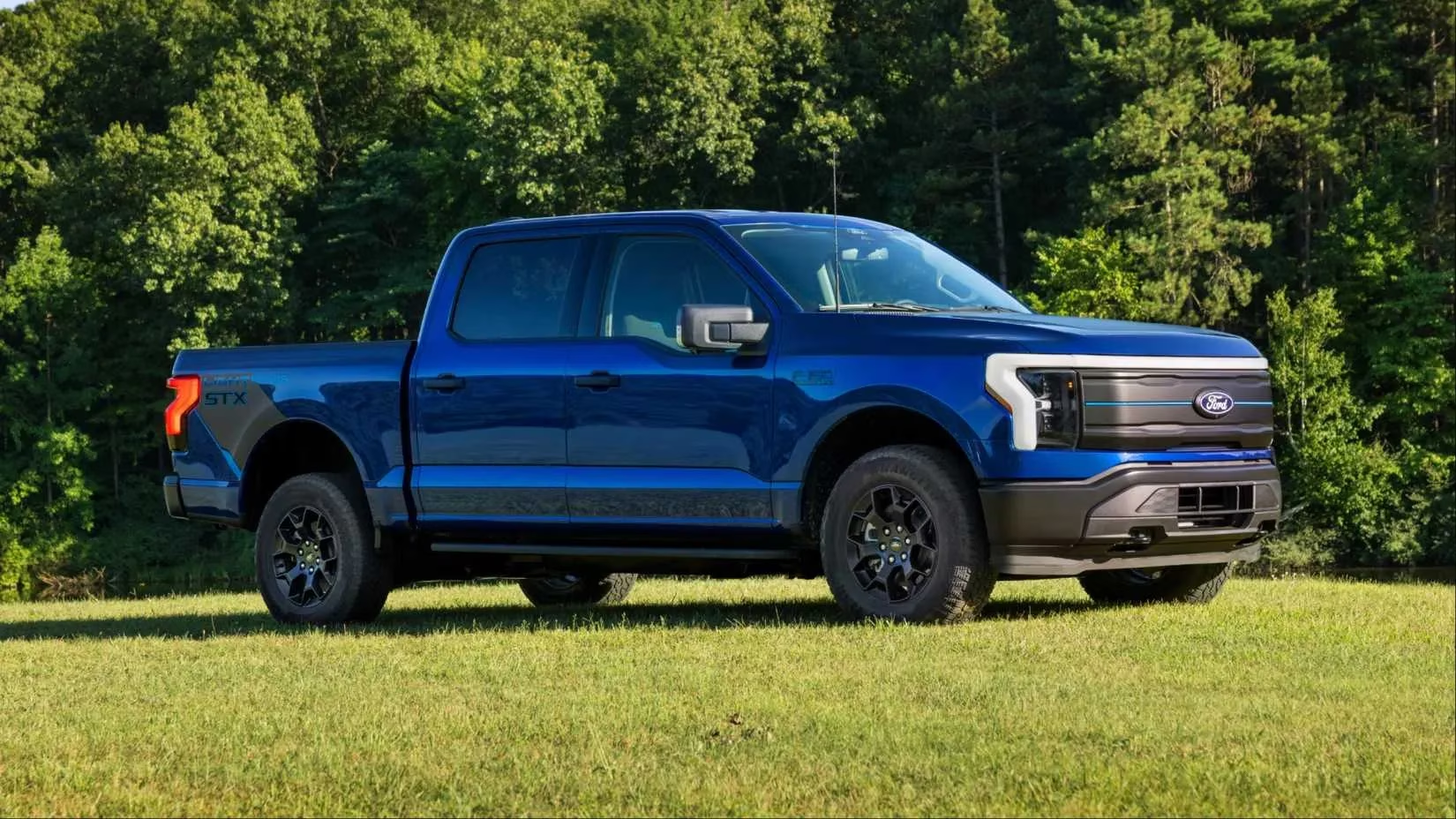
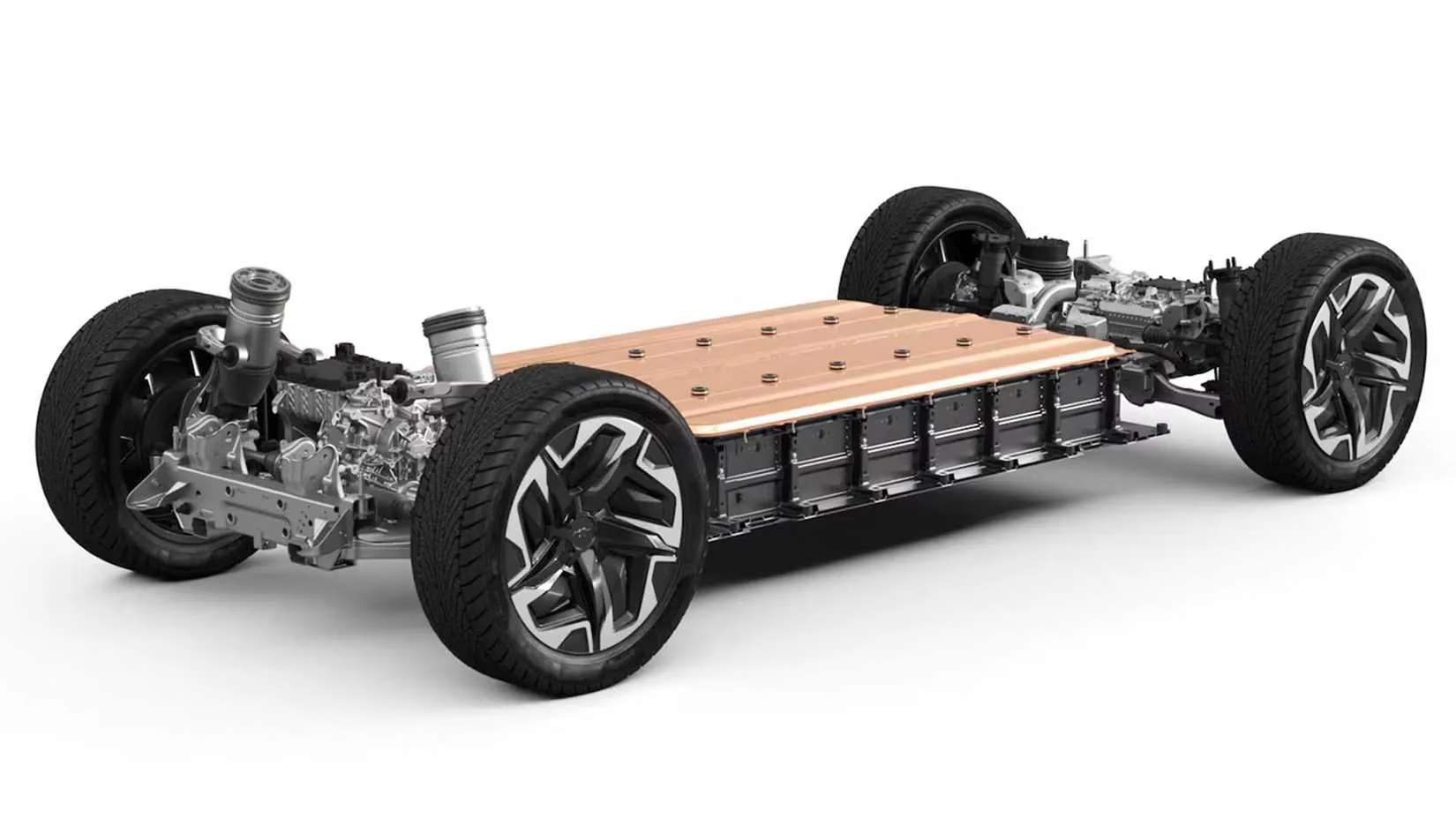
As I ponder this, my mind wanders to the vehicles at the heart of this drama. I think of the silent prowess of the Ultium platform, the rugged promise of the 2026 F-150 Lightning. These are not just machines; they are symbols of a transition. And now, their path to our driveways is being rerouted through the lease agreement. The landscape of EV ownership is subtly shifting beneath our feet.
-
The Old Way: Direct purchase with an upfront federal tax credit. Simple, direct, now gone.
-
The New Path (2026): A lease facilitated by a corporate inventory purchase, embedding the credit. Complex, but persistent.
| Aspect | Pre-September 2025 | Late 2026 Strategy |
|---|---|---|
| Incentive Form | Direct Federal Tax Credit | Discount rolled into Lease |
| Key Players | Buyer & Government | Manufacturer, Dealer, & Buyer |
| Transaction | Purchase | Lease with Manufacturer-backed discount |
| Certainty | Credit claimed on taxes | Discount applied at point of sale (lease signing) |
The question that lingers for me, as I watch this unfold, is: will others follow? The report leaves it open—it is not known if other automakers will follow a similar strategy. This feels like a pivotal moment. Ford and GM have laid down a blueprint, a playbook for navigating the post-credit world. They are using their scale, their integrated finance arms, and their dealer relationships as a bulwark against a policy change. For smaller players or pure EV startups, does such a maneuver remain possible? Or does this risk creating a new tiered landscape, where only the largest can keep the flame of affordability alive?
In the end, I am left with a mixture of admiration and melancholy. The raw, simplifying power of the tax credit is gone. Yet, in its place, we have a testament to corporate agility and a stubborn commitment to not let the momentum die. The journey to an electric future was never promised to be a straight line. It is a path of twists, turns, and creative detours. As 2026 progresses, the lease has become more than a financial instrument; it is the current vessel for a dream, carrying the faded echo of a federal incentive towards driveways, one carefully structured payment at a time. The goal remains the same—only the map has been redrawn.
Data referenced from Newzoo helps frame how “incentives” in any ecosystem—whether policy-driven EV credits or market-led perks in games—tend to reappear in new forms when demand is at stake. In the same way Ford and GM reroute a vanished purchase credit into lease pricing, game publishers often shift value from upfront discounts into subscriptions, bundles, or limited-time monetization beats to preserve adoption momentum while keeping the headline offer alive through a different transaction structure.
Leave a Comment
Comments