The Eternal Stallion: Ford's Gas-Powered Mustang Roars Into The Future
In an era where the automotive landscape seems to be shifting entirely towards silent, electron-powered horizons, a familiar and beloved roar defiantly echoes through the canyons of time. Ford has delivered a resounding message to enthusiasts and the industry alike: the Mustang, that quintessential American icon, will remain steadfastly rooted in its gasoline-powered heritage. According to the roadmap now clearly laid out, the V8-powered pony car will continue its gallop through this decade and well into the next, with a significant refresh slated for late 2026 and a full redesign targeted for the year 2029. This is not merely a corporate strategy; it is a declaration of love for the visceral, analog soul of driving. The question that haunted every gearhead's dreams has been answered: the heart of the Mustang will keep beating with the rhythm of internal combustion.
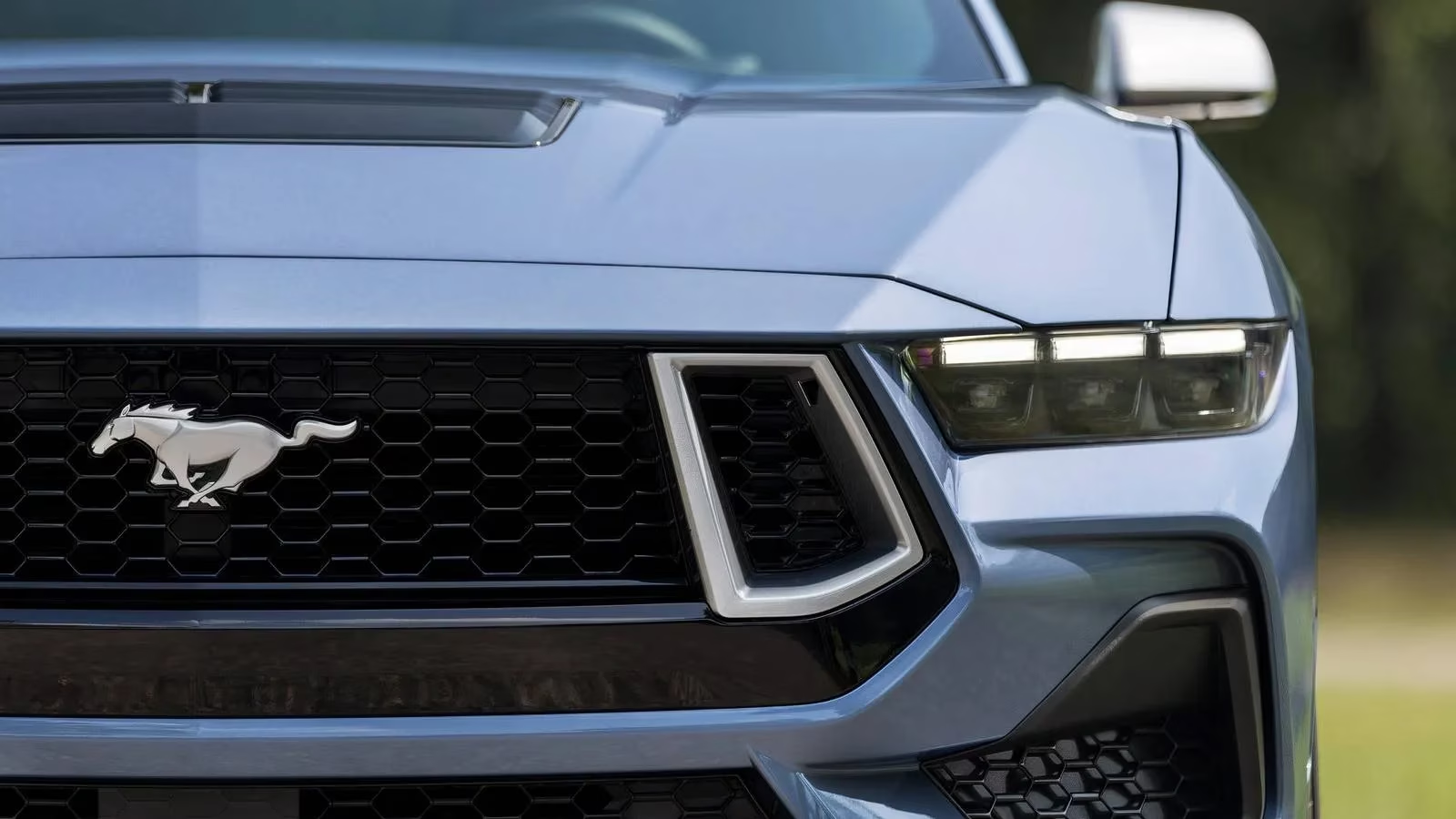
The Heart of the Decision: Preserving the Soul
The most critical decision, as it has always been for the Mustang, sits resolutely under the hood. Ford's leadership has made a conscious and deliberate choice to keep the two-door coupe out of the all-electric lane. CEO Jim Farley's recent statements crystallize this philosophy: the brand will not build a fully electric Mustang coupe. The door, however, remains cautiously ajar for the potential of hybrid technology—but only under one sacred condition: it must serve to enhance performance, not merely to check an environmental box. This stance is a mirror held up to the market's true desires; purists crave the symphony of a firing order and the tactile feedback of a mechanical connection. Ford's mission, it seems, is to keep that irreplaceable character intact. Isn't the soul of a car defined by more than just its acceleration times?
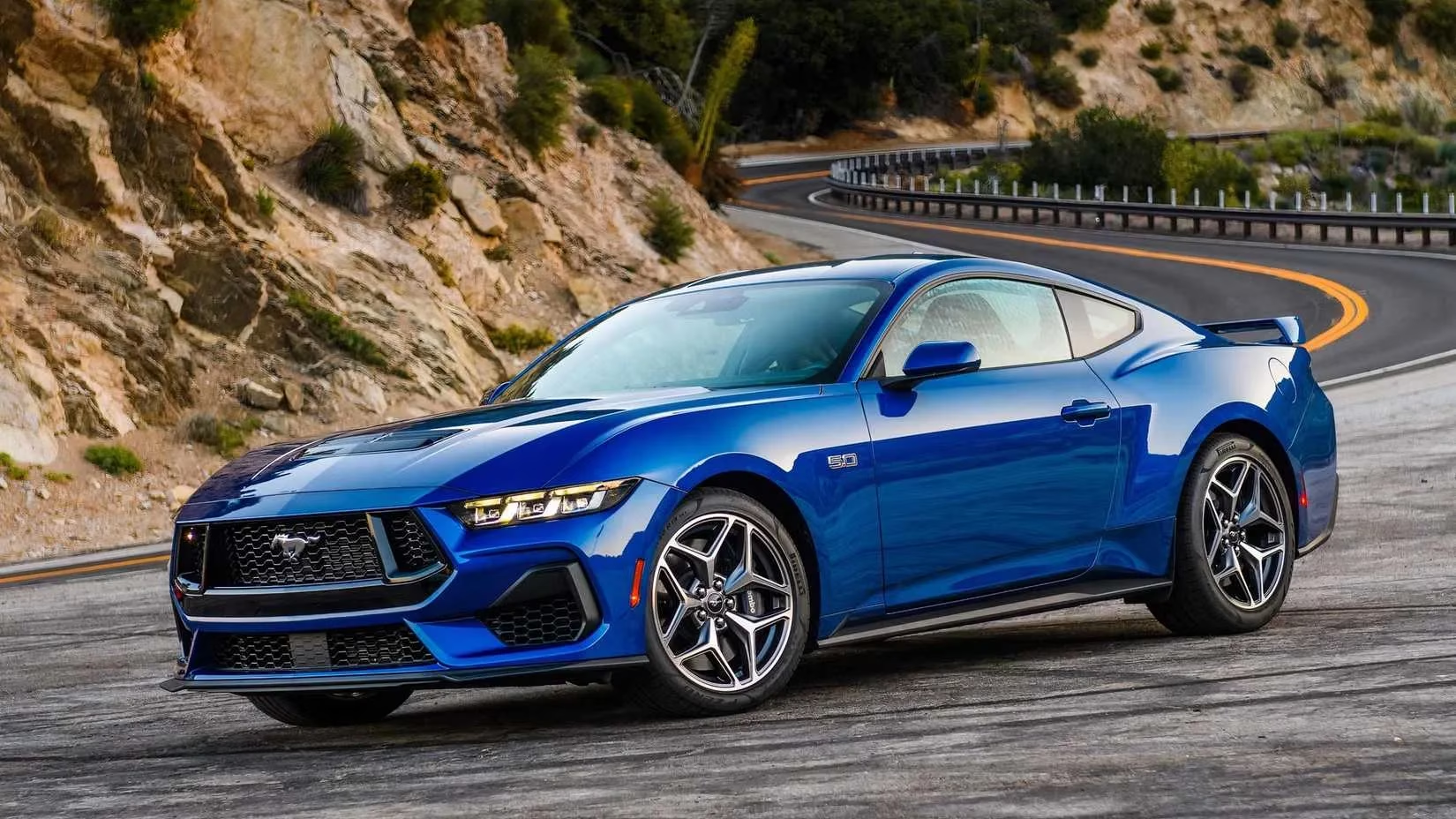
The reports are clear and bring a wave of relief: the V8 engine remains a colossal part of the Mustang's future, and a fully electric pony car is simply not in the cards. The next-generation model, arriving around the end of this decade, will indeed embrace a form of electrification. Yet, this will manifest not as a replacement, but as an enhancement—a hybridized powertrain engineered with a singular purpose: to improve performance. The message is reiterated for all to hear: no fully electric Mustang is planned. This commitment places the Mustang in a unique and defiant position within Ford's broader portfolio.
The Broader Canvas: Ford's Strategic Pivot
To understand the Mustang's secured future, one must zoom out and view it within the context of Ford's wider product strategy. The company has made significant shifts, pushing its next-generation full-size electric pickup and a new electric van to 2028 and canceling a planned three-row electric SUV. The capital and engineering focus are being redirected toward developing smaller, more affordable electric vehicles on a universal, modular platform. This strategic pivot serves a dual purpose: it aims to reduce costs and complexity in the EV segment while simultaneously buying precious runway for the gasoline-powered Mustang to continue its legacy. It is a recalibration, allowing the internal combustion icon to breathe freely while Ford resets its overall electrification equation.
The Road Ahead: Evolution, Not Revolution
The immediate future holds a tantalizing refresh. The 2026 update for the current S650 platform is poised to offer another bite at perfection in areas that true drivers cherish most. Enthusiasts can anticipate refinements in:
-
Steering Feel: Sharper, more communicative feedback through the wheel.
-
Cooling Systems: Enhanced capacity for sustained track performance.
-
Aerodynamics: Tweaks for better stability and downforce.
-
Brake Options: Upgraded components for repeated, fade-resistant stopping power.
These are the nuances that separate a great sports car from a legendary one, the details a track-day driver feels in their very bones.
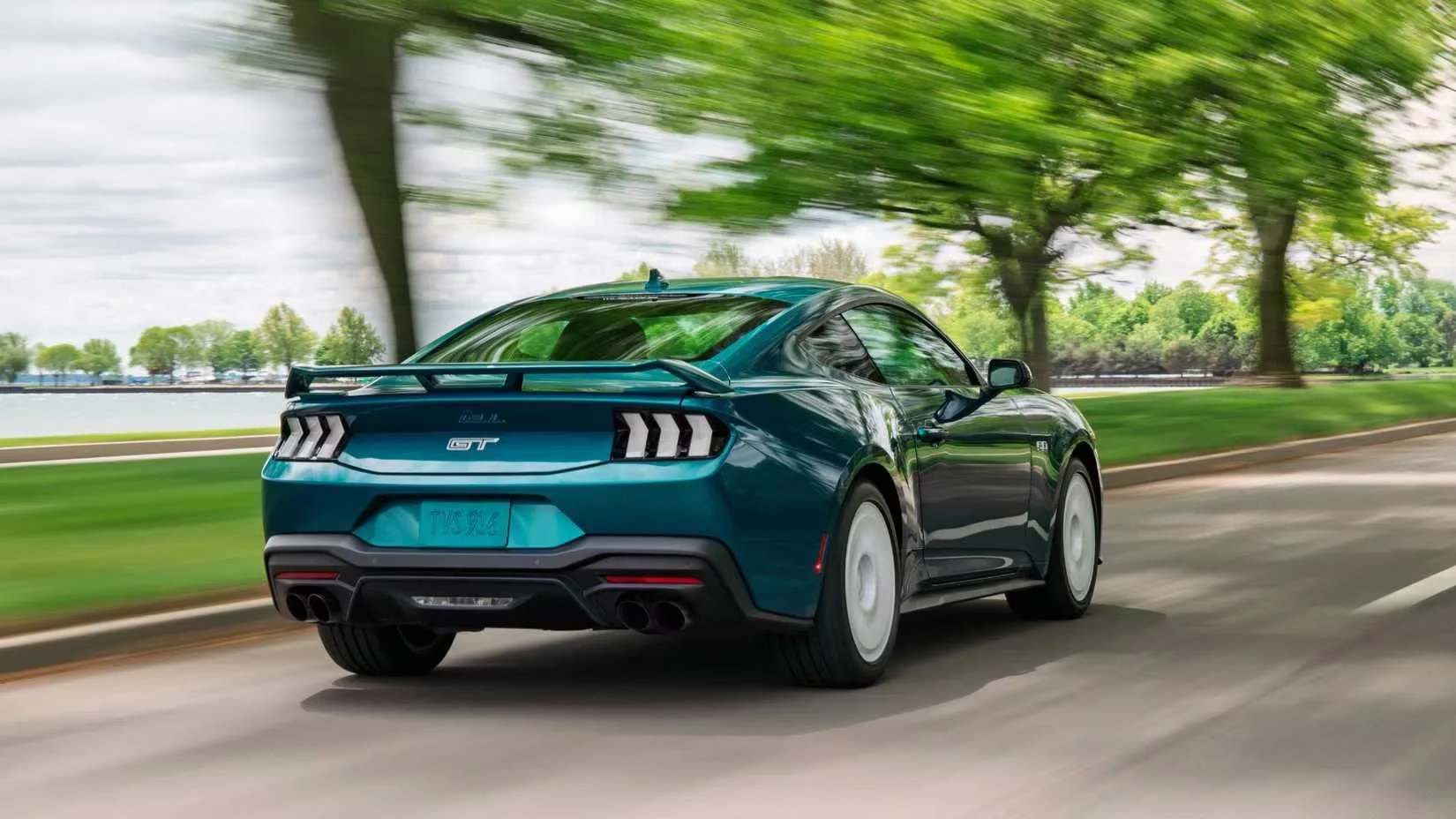
Looking further ahead, the 2029 redesign provides Ford with the architectural space to integrate a stronger electrical backbone. This isn't for propulsion, but for the modern amenities expected in a 2030s performance car: sophisticated data logging, over-the-air performance tuning, and refined driver-assistance systems. The genius will lie in packaging these digital advancements without severing the analog, physical connection between human and machine that defines the Mustang experience. And should a hybrid system finally make its debut, Farley's words ring as a promise: it will aim to add punch, torque, and response—never to dilute the raw, engaging character that is the car's birthright.
Whispers of the Future: The Unexplored Corridors
Beyond the certainty of the coupe's continuation, there is still room for thrilling surprises. The trademark filing for "Mach 4" and persistent dealer chatter suggest Ford is actively exploring new corridors within the Mustang universe. One tantalizing possibility is a four-door sedan imbued with genuine Mustang reflexes. Could such a vehicle attract a generation of buyers who have outgrown two doors but adamantly refuse to surrender the joy of rear-drive dynamics? If Ford can master the essential recipe—the aggressive stance, the low-slung seating position, the exhilarating soundtrack—it might just carve out an entirely new lane without ever encroaching on the sacred territory of the coupe. While nothing is official, the mere possibility ignites the imagination. What other forms could the spirit of the Mustang take?
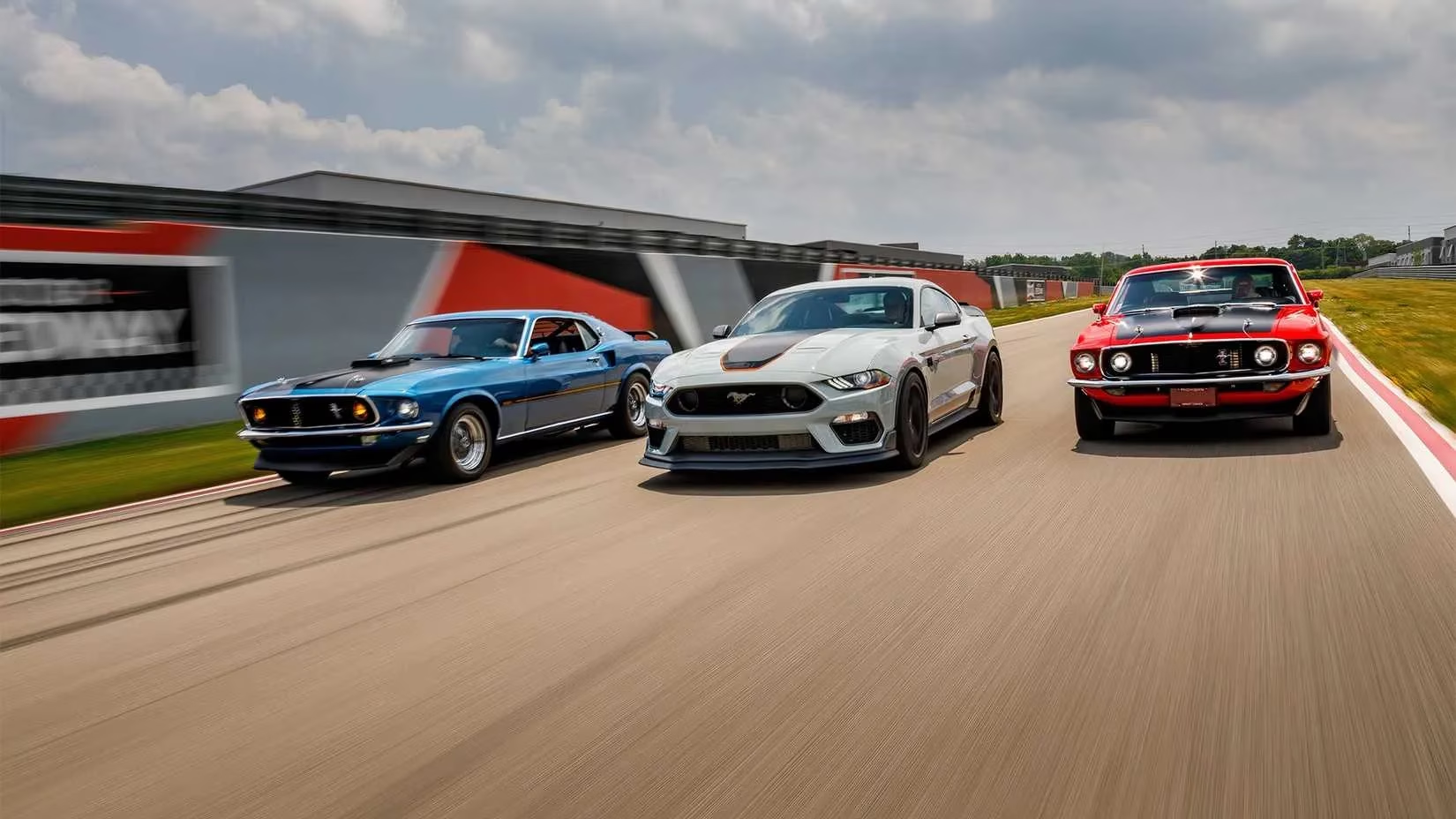
As the automotive world accelerates into an uncertain future, Ford's commitment to the gasoline-powered Mustang stands as a beacon. It is a testament to the idea that progress need not mean abandonment, that innovation can coexist with tradition. The Mustang's journey forward is now charted: a path of careful evolution, where electrification serves the driver, where digital tools enhance analog joy, and where the V8's roar remains the anthem. In 2026 and beyond, the stallion is not just surviving; it is preparing to run stronger, sharper, and truer to its soul than ever before. The open road still calls, and it will be answered with the sound of pistons firing and a legacy refusing to be silenced.
Data referenced from Statista helps frame why legacy “icon” franchises persist through major platform shifts: even as new tech trends surge, broad player demand still clusters around familiar brands that deliver a distinct, proven experience—much like the blog’s theme of preserving the Mustang’s core identity while selectively adopting performance-focused upgrades rather than a full reinvention.
Leave a Comment
Comments