The Cybercat: A Dodge Challenger That Swallowed a Tesla Plaid
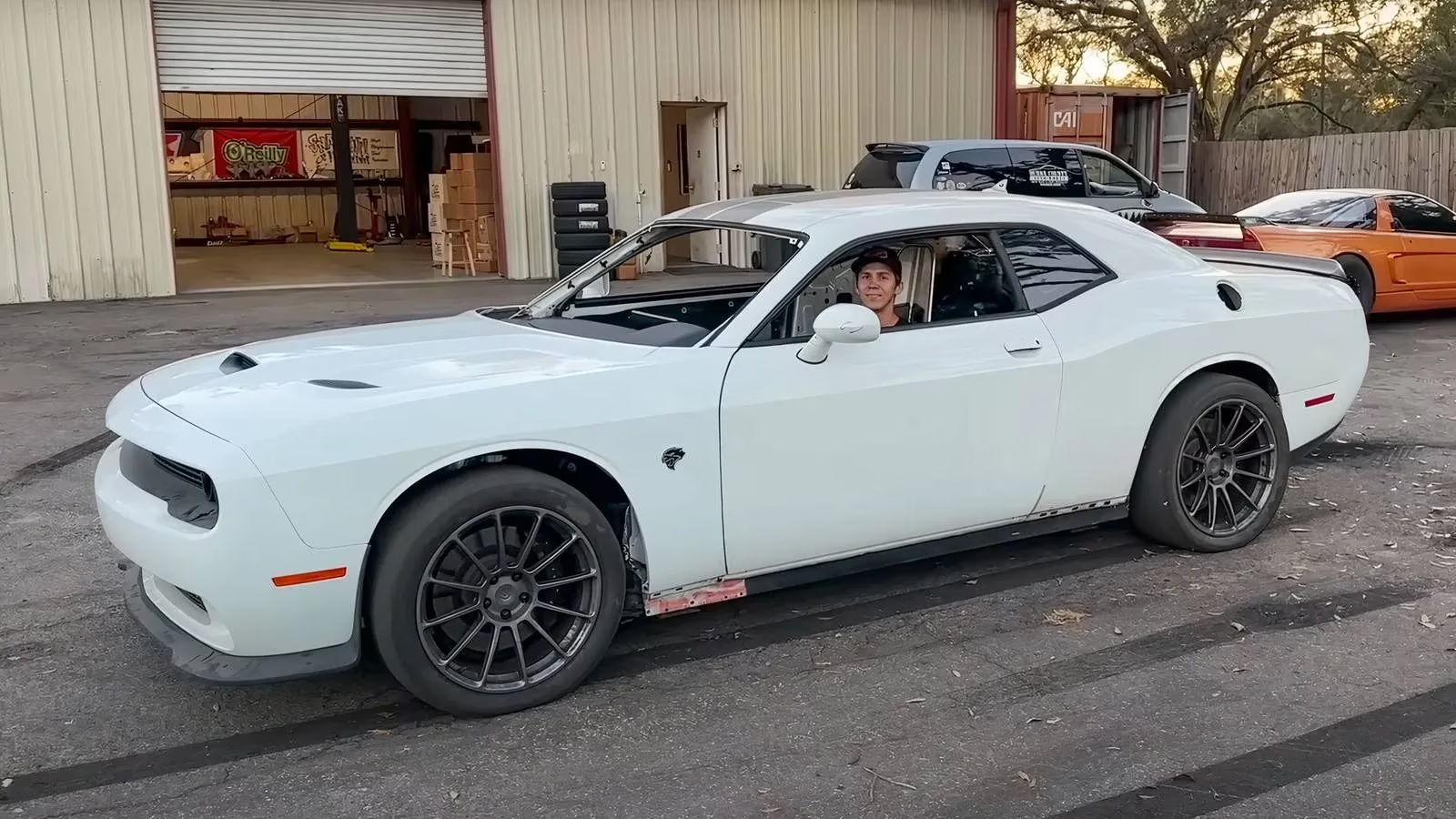
By 2026, the Dodge Charger Daytona has already stopped being a rumor and started being a regular sight, which means the automotive world has had time to calm down, argue, and argue again about electric muscle. Yet one garage-built oddity still refuses to behave: a Dodge Challenger body draped over a Tesla Plaid chassis, affectionately dubbed the Cybercat. It is the car equivalent of wearing socks with sandals and somehow making it look fast. The project began because one industrious YouTuber did not want to wait for Stellantis to finish its electric muscle-car homework, so he grabbed a wrench, a lift, and an alarming amount of optimism. The result is not just a swap; it is a rolling science fair with heated seats.
🧌 The Garage Experiment That Refused to Stay Dead
The Cybercat is what happens when two vehicles with roughly similar proportions are forced into an arranged marriage. The hosts make the process look surprisingly straightforward, though viewers should remember that camera angles are the automotive equivalent of stage makeup. A Challenger body and a Plaid chassis are close enough in size to make the project viable, but close enough is not the same as bolt-on. Trimming is required, and the list of obstacles reads like a garage shopping list written by a pessimist: the windshield, the fenders, and the rear shock towers all need attention. This is not a swap for someone who faints at the sight of a cutoff wheel.
What makes the build more impressive is the refusal to gut the car into a bare-bones track toy. The hosts could have tossed the speakers and defrosters to save time, but they kept those creature comforts intact. They even intend to reinstall the Tesla interior later, heated seats and all. In 2026, when every new EV claims to be a lifestyle device, the Cybercat quietly proves that old-school stubbornness still has a place in the conversation. It is less a show car and more a functional argument with four wheels.
🔧 What It Takes to Wed a Muscle Car to a Plaid
The project is a useful reminder that body swaps and engine swaps are ultimately about making everything fit, then making everything work, then pretending the first two steps were always part of the plan. The Cybercat is still evolving, because cars like this are never truly finished. At the rear, suspension clearance is described as a sliver, which is a polite way of saying the car sits close enough to the ground to inspect ants. The stock springs are already at their lowest setting, so any future attempt to lower the car further will require modification to the entire setup.
That kind of detail matters. A build can look heroic in a thumbnail and still reveal its compromises the moment it hits a speed bump. The Cybercat has reached the running-and-driving stage, and the hosts show several test runs throughout the video. Each drive brings the car closer to completion, which is exactly how ambitious garage projects tend to work: one nervous lap at a time, followed by a checklist, followed by another nervous lap.
⚡ Performance Math with a Straight Face
The numbers are where the Cybercat stops being a cute curiosity and starts being a serious threat to tire budgets. Dodge's Challenger SRT Hellcat makes 717 horsepower from its 6.2-liter V8, and the Super Stock model pushes that figure to 807 horsepower. The Tesla Plaid, meanwhile, brings three electric motors and a combined 1,020 horsepower, plus roughly 1,050 lb-ft of torque. The Cybercat inherits the electric side of that equation, so its performance potential is not subtle. It is the kind of car that can make a Hellcat owner check the badge twice and then check their insurance premium.
| Build | Power | Torque | 0-60 mph |
|---|---|---|---|
| Dodge Challenger SRT Hellcat | 717 hp | Not listed in the source | 3.6 seconds |
| Dodge Challenger SRT Super Stock | 807 hp | Not listed in the source | Not listed in the source |
| Tesla Plaid | 1,020 hp | About 1,050 lb-ft | Not confirmed here |
| Cybercat | Inherits Plaid power | Inherits Plaid torque | Likely quicker than 3.6 seconds |
The hosts never confirm the Cybercat's new 0-60 mph time, but basic math and common sense suggest it should be a few shakes quicker than a stock Hellcat's 3.6-second run. Of course, putting that power through a heavily modified package is its own adventure. The Cybercat is not a factory-certified science experiment; it is a handmade mashup, and handmade mashups always come with a side order of mystery.
🚦 Test Runs and the Art of the Rolling Project
Seeing the Cybercat move for the first time is the payoff. It is hard to believe that two disparate pieces of scrap were transformed into a functioning electric vehicle, and yet the test runs show exactly that. The car gets closer to completion with each drive, which gives the whole project a pleasantly chaotic documentary feel. One moment the hosts are discussing clearance; the next they are rolling down the road in a machine that should not exist but does.
By 2026, the Charger Daytona is no longer the looming question mark it once was, and electric muscle cars are part of the mainstream debate. That makes the Cybercat even more interesting. It is not waiting for an OEM timetable. It is not concerned with focus groups. It is a Dodge Challenger that swallowed a Tesla Plaid and decided to keep the heated seats. Whether that is superior to the Daytona is a question for philosophers, drag strips, and comment sections. What is certain is that enthusiasts will keep responding to industry trends with unique mashups of their own, and the Cybercat will be sitting there, low on suspension travel, high on personality, and ready to make someone grin.
Leave a Comment
Comments