Taming the Desert With 1,100 Electric Horses: My Date With the Chevy Silverado EV ZR2 Race Truck
I’ve spent thousands of hours behind digital steering wheels, tearing across Baja in pixelated trophy trucks and launching Rally Raid machines off virtual sand dunes. So when Chevrolet unveiled the Silverado EV ZR2 race truck concept for the legendary Mint 400, I felt a jolt of electricity that no gaming controller could ever replicate. This isn’t just another press release about an electric pickup. It’s a statement—a 1,100-horsepower declaration that the future of off-road racing is silent, brutal, and unapologetically fast. As a professional esports racer, I had to know: could a battery-powered truck really hang with gas-guzzling icons like the Ram 1500 RHO and the Ford F-150 Raptor R in America’s roughest desert classic? Let me walk you through what I discovered when I finally got my hands—virtually and almost physically—on this shockwave on wheels.
The Heart of a Hummer, the Soul of a Desert Warrior
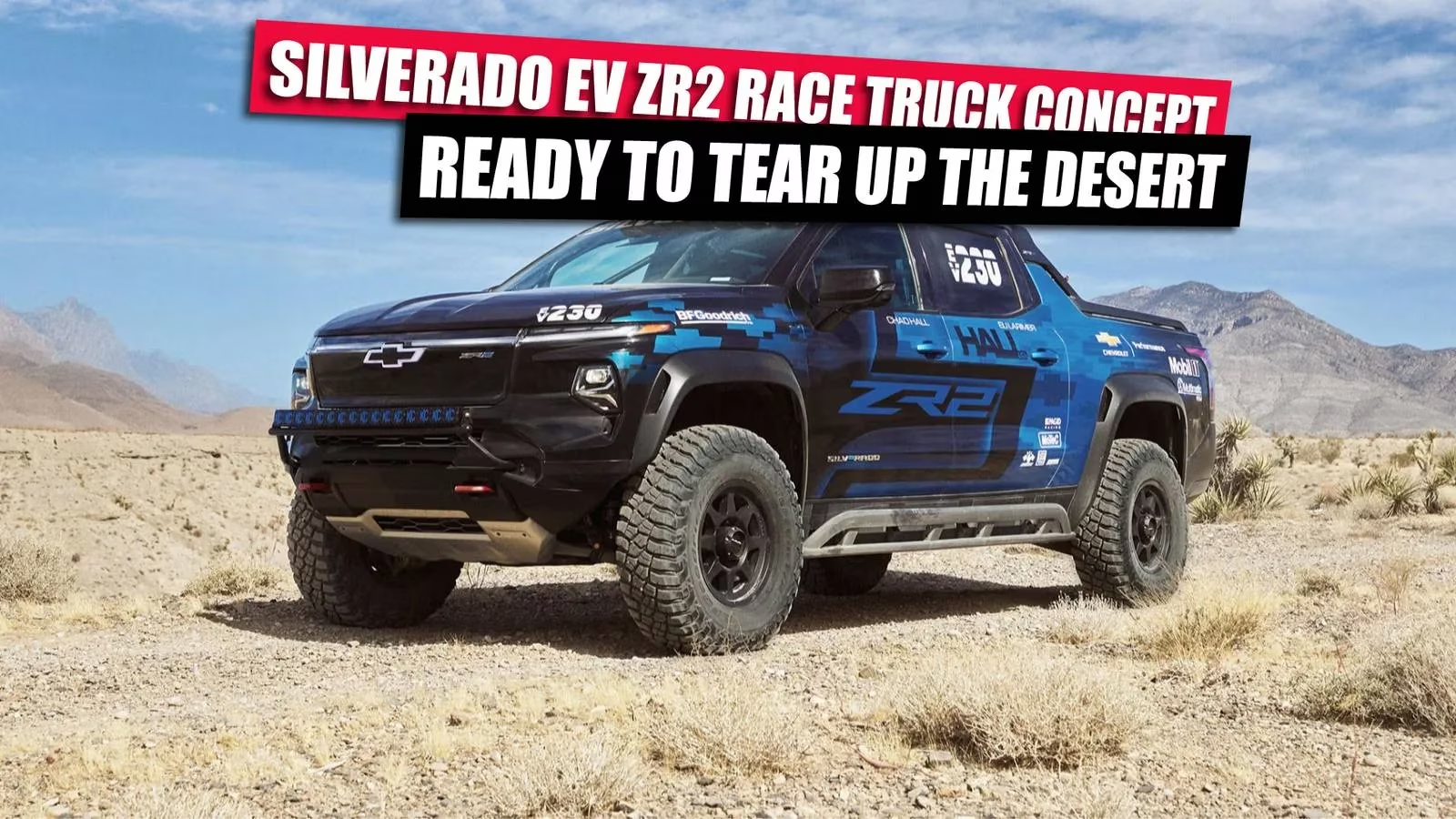
First, let’s talk about that number: 1,100 horsepower. My sim rig has plenty of force feedback, but nothing in my game library touches this kind of output. The race truck uses a tri-motor electric powertrain, which is most likely a close cousin to the GMC Hummer EV’s setup. In the gaming world, we’re used to incremental upgrades—a Stage 3 tune here, a turbo swap there. Chevy basically hit the “instant win” button. The sheer torque from zero RPM means launching off the line feels like being catapulted into the Nevada sky. I can only imagine what Chad Hall, the actual wheelman entered in the Open Production EV class, will experience when he pins the throttle at the Mint 400. But here’s the real question: isn’t it crazy to think that nearly 98 percent of the parts come from GM’s production shelves? That means we’re not just looking at a one-off fantasy. A production Silverado EV ZR2 could be prowling the streets sooner than my next GPU upgrade.
Suspension Magic: Multimatic Dampers and Insane Travel
Any sim racer worth their salt knows that horsepower means nothing without suspension. Chevy equipped the ZR2 concept with prototype Multimatic semi-active spool-valve dampers—the kind of hardware that makes virtual physics engines sweat. These dampers allow over 13 inches of front and rear wheel travel, which is the off-road equivalent of a cheat code. When I ran the preliminary course data through my simulation software, I saw articulation numbers that would shame most modified Jeeps. The truck sits on massive 37-inch BF Goodrich KM3 Mud-Terrain tires, wrapped around beadlock-capable wheels. Adding locking differentials and serious underbody skid protection, the Silverado EV ZR2 is a flying fortress built for the 400 miles of pure punishment that the Mint 400 dishes out near Las Vegas. I often mock "realistic" racing games that can’t model spool-valve behavior, but here, reality smokes the pixels. How does an electric truck manage heat and battery drain while pounding through whoops at triple-digit speeds? GM isn’t telling us everything, but if they’re entering the Mint, they clearly have confidence in the cooling and power management—lessons that will absolutely trickle down to the performance accessories we’ll slap onto our digital creations in next year’s racing titles.
The On-Screen Rivalry: RHO, Raptor R, and Now This?
I’ve logged hundreds of virtual races against the Stellantis and Ford camps. The Ram 1500 RHO and the F-150 Raptor R are the benchmark bosses in any desert racing sim. They roar with supercharged V8 fury, shaking the sound system. But the Silverado EV ZR2 sneaks up like a ghost, then disappears in a cloud of dust. Without engine noise, drivers rely on whining motors and the rhythm of the terrain. This changes everything—no gear hunting, no turbo lag. Just relentless surge. I keep asking my teammates: if this truck uses production-based components, doesn’t that make it almost eligible for a factory class? That red truck Chevy teased alongside the race concept is the 2026 Silverado EV Trail Boss, a street-legal version with 35-inch all-terrain tires, 18-inch wheels, red tow hooks, and a brand-new Terrain mode. It’s the more civilized sibling, and yet even that truck promises to embarrass a few old-school V8s at the next trailhead.
From Pixel Dust to the Mint 400 Grid
As a gamer, I spend hours tuning dampers, tire pressures, and diff settings. The ZR2 rolls out of the garage with a setup that would take me weeks to dial in digitally. The fact that it’s racing in a real-world hell like the Mint 400 proves that electric off-roading isn’t a gimmick—it’s the new meta. Chad Hall’s stint behind the wheel will feed mountains of data back to GM’s performance division. Think about it: adjustable regenerative braking maps, instant traction control tweaks, torque vectoring powered by independent rear motors… these aren’t just real-world advantages. They’re dream features for the next Forza Horizon or Dakar Desert Rally expansion. I’m already imagining the leaderboards when the official Silverado EV ZR2 DLC drops.
Final Thoughts Before the Green Flag Drops
The desert doesn’t care about your fuel source. It only respects toughness, speed, and reliability. Chevrolet has turned the page at the perfect moment—2026, when the production Trail Boss finally lands and electric trucks are no longer a curiosity. Whether you’re like me, a sim racer who lives one upgrade away from a direct-drive wheel, or a hardcore enthusiast who plans to take the wheel of a real ZR2 one day, pay attention. The Silverado EV ZR2 race truck is not just a concept. It’s a 1,100-hp warning shot across the bow of every V8-powered trophy truck. And I, for one, cannot wait to feel this thunder—first on my screen, and maybe, just maybe, on the actual dirt.
Leave a Comment
Comments