Slate Auto's $25K Electric Truck Finally Hits the Road After That Bizarre Cat Therapy Stunt
I spotted one in the wild yesterday – a boxy little electric thing with a camo wrap, rolling silently through a grocery store parking lot. It looked like someone had stitched together a classic Land Rover, a Tonka truck, and a golf cart in a dimly lit garage, then zapped it with a battery. That’s the 2026 Slate Pickup, and honestly, it’s been a long time coming. If you followed the breadcrumbs back in 2025, you’d remember this company didn’t just tease a vehicle; they built a whole alternate reality around a fake cat therapy business. I’m still not entirely sure we weren’t all part of a mass hallucination.
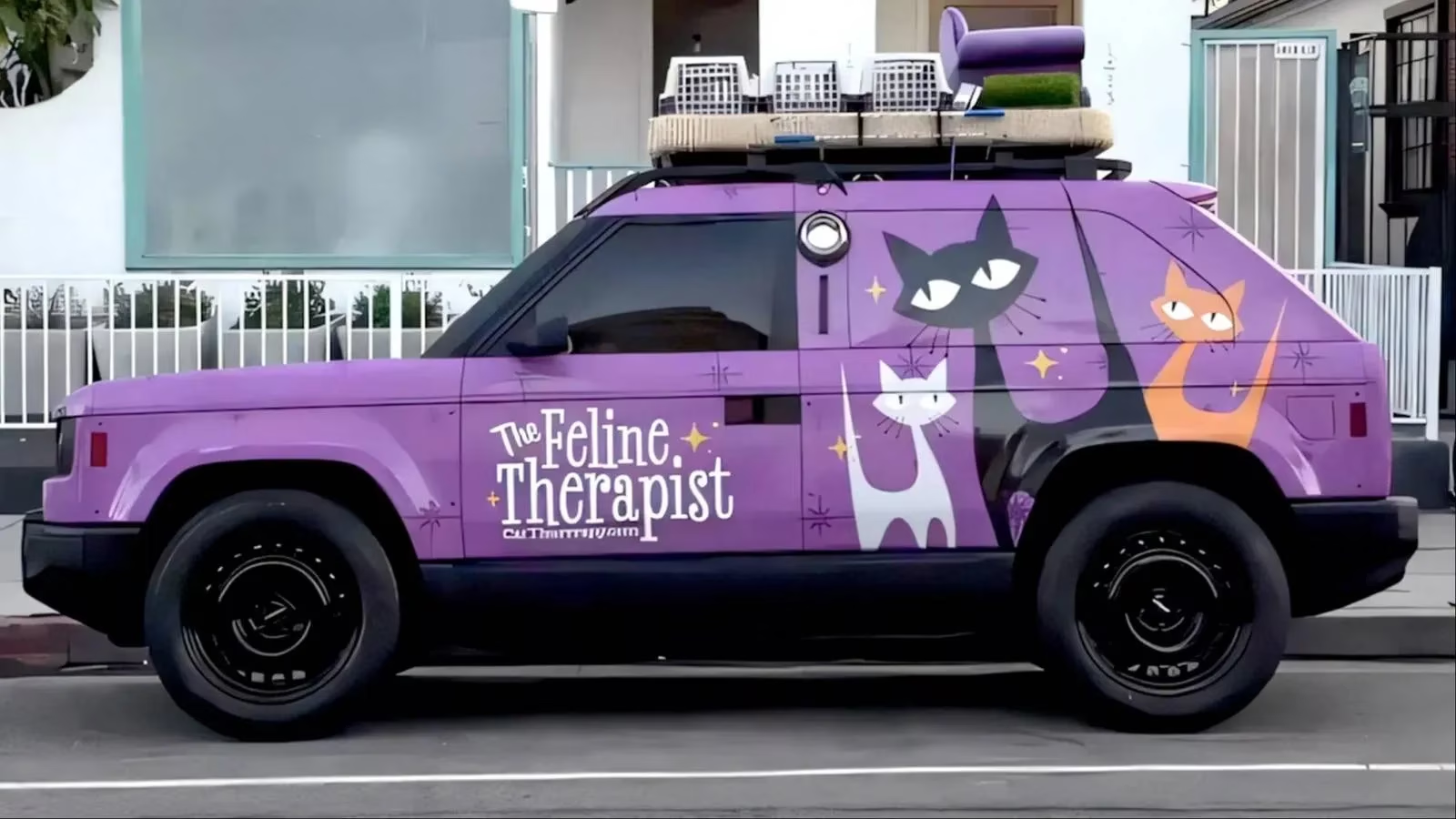
Back then, Slate Auto’s marketing felt like a digital treasure hunt designed by a cryptid. A TikTok video would appear showing a boxy SUV draped in a vinyl wrap screaming with neon cats and the phrase “The Feline Therapist.” You’d click through, land on a spoof therapy booking site, and sit staring at a countdown timer. No specs, no badges, just an ominous promise that something was coming. It was guerrilla marketing at its most unhinged – a cat playing with a laser pointer while the internet swiped at the dot. I remember thinking, “Either this is the most inventive car launch ever, or someone’s startup burned through $100 million on cat memes.”
Turns out, it was both. Slate Auto quietly spun out of Re:Build Manufacturing in Troy, Michigan, with funding from Jeff Bezos, Thomas Tull, and Mark Walter. They’d been hoovering up talent from Ford, GM, and defunct EV startups like Canoo and Fisker – a crew of engineers who knew that the real hole in the market wasn’t another six-figure luxury sedan, but a $25,000 electric pickup that normal humans could actually afford. Their comparison point wasn’t a Cybertruck; it was an electric Suzuki Samurai. Something you’d happily load with mulch, park downtown, and not lose sleep over if a shopping cart kissed the door.
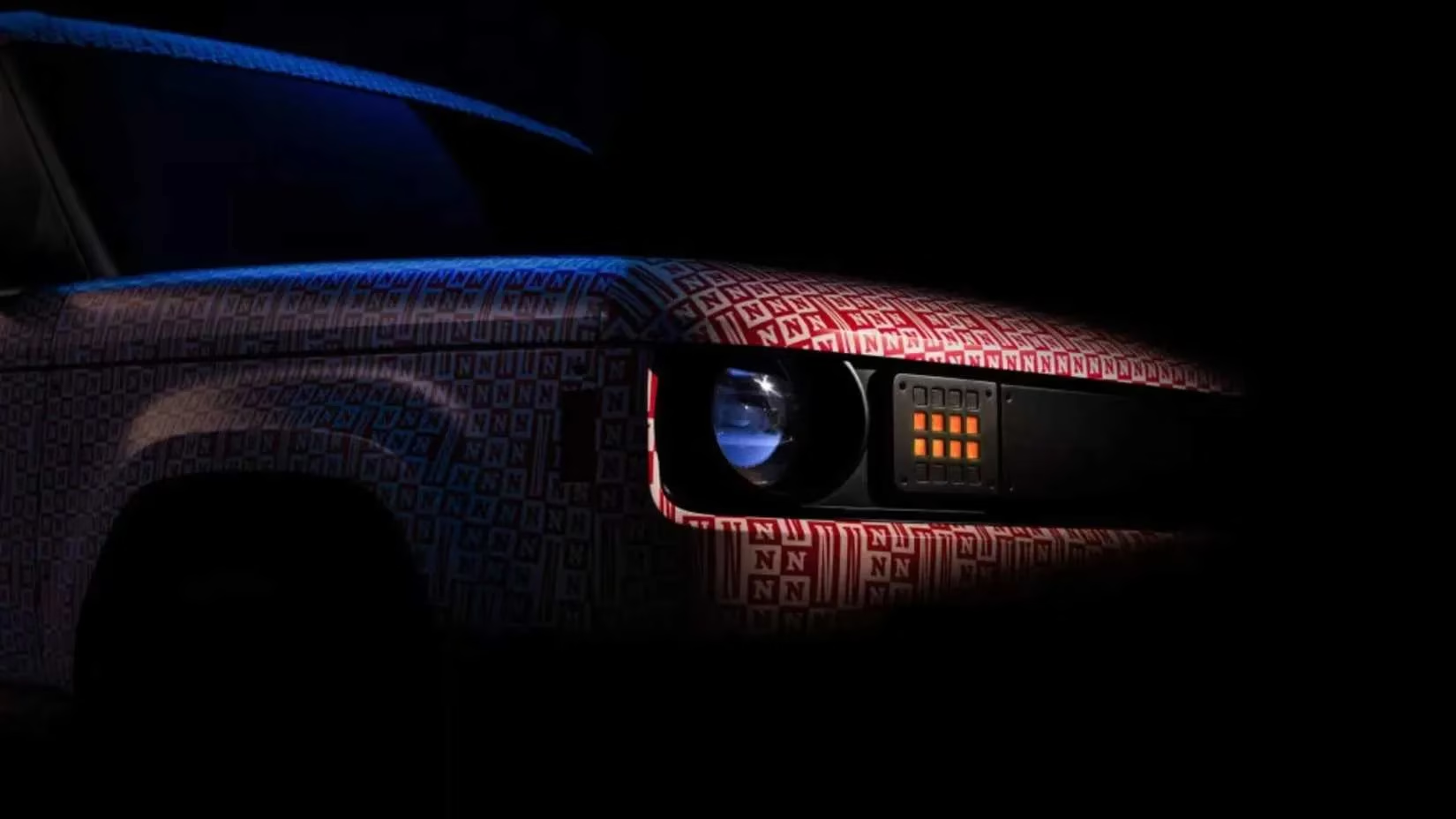
Fast forward to now, mid-2026, and the cat is finally out of the bag – and off the wrap. Slate started delivering the first batch of its battery-electric pickup in late spring, and I’ve already seen a handful sporting everything from mountain bikes in the bed to custom wraps that would make the factory camo blush. The base model really does start at $25,490, with a single-motor rear-wheel-drive setup and about 200 miles of range. It’s not trying to win a spec-sheet war; the cabin is refreshingly analog – physical knobs for the HVAC, a small screen that doesn’t feel like it’s judging your Spotify playlist, and seats you can wipe down with a damp rag. If the Rivian R1T is a precision screwdriver, the Slate is a well-worn leatherman: unpretentious, always useful, and small enough to forget it’s in your pocket until you need it.
The SUV variants, which the company calls the Slate Go and Slate Scout, have also started popping up. One of those earlier camo’d prototypes turned into the Scout, a two-door brick that channels the old Range Rover Classic so aggressively I half expected it to leak oil. The Go is a taller, four-door crossover with the face of a mini Defender and the footprint of a compact hatch. Both share the truck’s platform and that same sub-$30,000 entry price. Driving one around feels like piloting a cuckoo bird that laid its egg in Detroit’s nest – it hatched into something that doesn’t quite belong to the legacy flock, but somehow belongs exactly where it landed.
What really flips my lid is how Slate pulled off the cost. They didn’t reinvent the battery chemistry; they used off-the-shelf cells, simplified the body structure, and eliminated the thousand little electronic gremlins that add $10,000 to a window sticker. The assembly technique owes more to industrial furniture than to traditional automotive, with modular panels you could theoretically replace in your driveway after watching a 20-minute YouTube tutorial. And while the acceleration won’t pin your retinas back, the instant torque makes zipping through traffic feel like you’re in a go-kart that graduated high school.
Of course, it’s not all catnip and rainbows. Charging speed maxes out at 100 kW, so you’ll be scrolling Instagram for a bit longer on road trips. Some early owners report minor software hiccups – the backup camera occasionally forgets what planet it’s on – but over-the-air updates have been rolling out like clockwork. And that quirky marketing machine hasn’t stopped; Slate’s app now includes a “Cat Mode” that plays purring sounds through the pedestrian warning speaker while you’re parked. I’m not making that up.
Looking back, the whole “Feline Therapist” stunt wasn’t just a joke. It was Slate’s way of signaling that they don’t take themselves too seriously, even while they’re dead serious about building a simple, affordable EV. In a world where electric trucks keep getting bigger, heavier, and more expensive, a startup betting on small and cheap felt like a one-way ticket to obscurity. Instead, they’ve become the unexpected guest who showed up to the party in costume and ended up being the most interesting person there. Now if you’ll excuse me, I need to go check if my local dealer has a camo wrap with a cat on it. For research purposes, obviously.
Leave a Comment
Comments