Porsche's Pivot: The Quiet Cancellation of Cellforce and Its Implications for the High-Performance EV Dream
A subtle but significant tremor has rippled through the high-performance electric vehicle landscape, largely escaping mainstream discourse. The catalyst? Porsche, the storied marque synonymous with transforming engineering ambition into tangible automotive excellence, has quietly shelved one of its most audacious electrification endeavors. The company has officially scrapped its plans for a dedicated Cellforce brand battery factory, a project envisioned as the beating heart of its next-generation electric supercars. This strategic reversal, marked by canceled blueprints, eliminated jobs, and a shift in corporate focus, casts a long shadow over the once-unstoppable momentum of the performance EV revolution, prompting a critical inquiry: is the electric dream for the world's fastest cars decelerating more rapidly than anticipated?
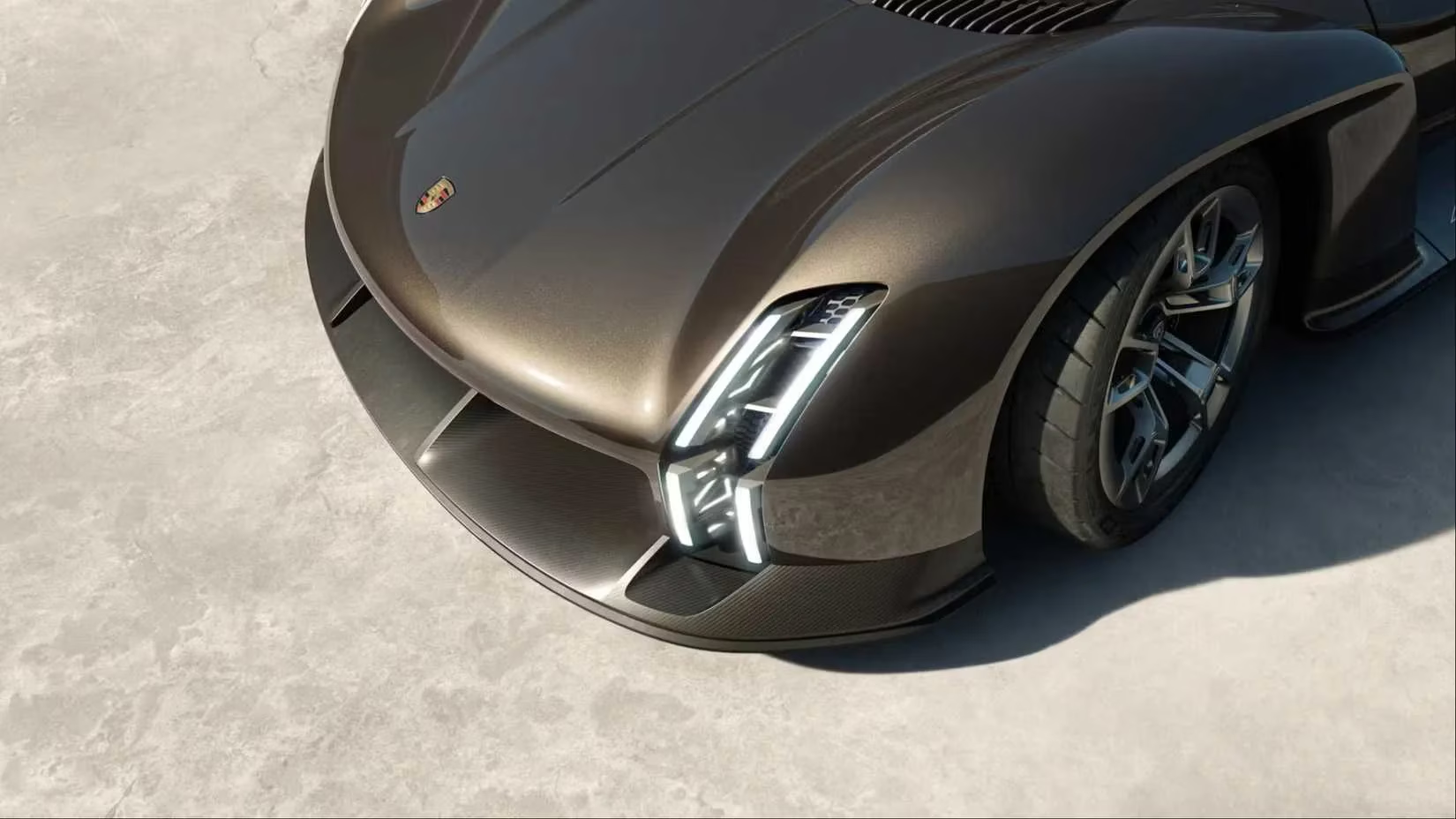
For years, Porsche has masterfully navigated a dual-path narrative, championing its electric Taycan lineup while simultaneously fueling rumors of a 918 Spyder successor and advocating for synthetic e-fuels to preserve the internal combustion legacy. However, behind this public-facing strategy, a foundational pillar has fractured. The Cellforce initiative was far from a mere side project; it was conceived as Porsche's proprietary arsenal in the global EV technology arms race. The ambition was to develop and manufacture bespoke lithium-silicon performance cells, engineered to propel future Taycan variants and hypercar concepts to realms of power, efficiency, and thermal management unreachable by off-the-shelf solutions from giants like LG or CATL. With plans for not one, but two production facilities, it represented a bold declaration of technological independence.
The narrative, however, has undergone a profound rewrite. According to statements from CEO Oliver Blume, who also oversees the broader Volkswagen Group, the core issue is one of scale and economic viability. Porsche's projected sales volume for its ultra-high-performance electric models is insufficient to justify the colossal capital expenditure required for scaling up in-house cell production. In a segment where profit margins are perpetually scrutinized, the cost advantages of vertical integration evaporate without massive manufacturing scale. Consequently, the standalone factory dream has been decommissioned. The Cellforce name will persist, but its mission has been dramatically downgraded from a production powerhouse to a research and development laboratory. While not without value, this new role is a pale shadow of the originally promised end-to-end control over the most critical component in an electric vehicle.
This pivot is emblematic of a broader, industry-wide recalibration. The European battery manufacturing push, once hailed as the continent's answer to Asian dominance, has faced significant headwinds throughout 2025 and into 2026. The high-profile struggles and restructuring of Northvolt, Sweden's battery champion, serve as a stark parallel. Across the premium automotive sphere, executives are confronting a sobering reality: consumer demand for electric vehicles, particularly in the lofty price brackets of performance and luxury, has not ascended according to the once-rosy forecasts. This cooling sentiment is most pronounced in key markets like the United States and China.
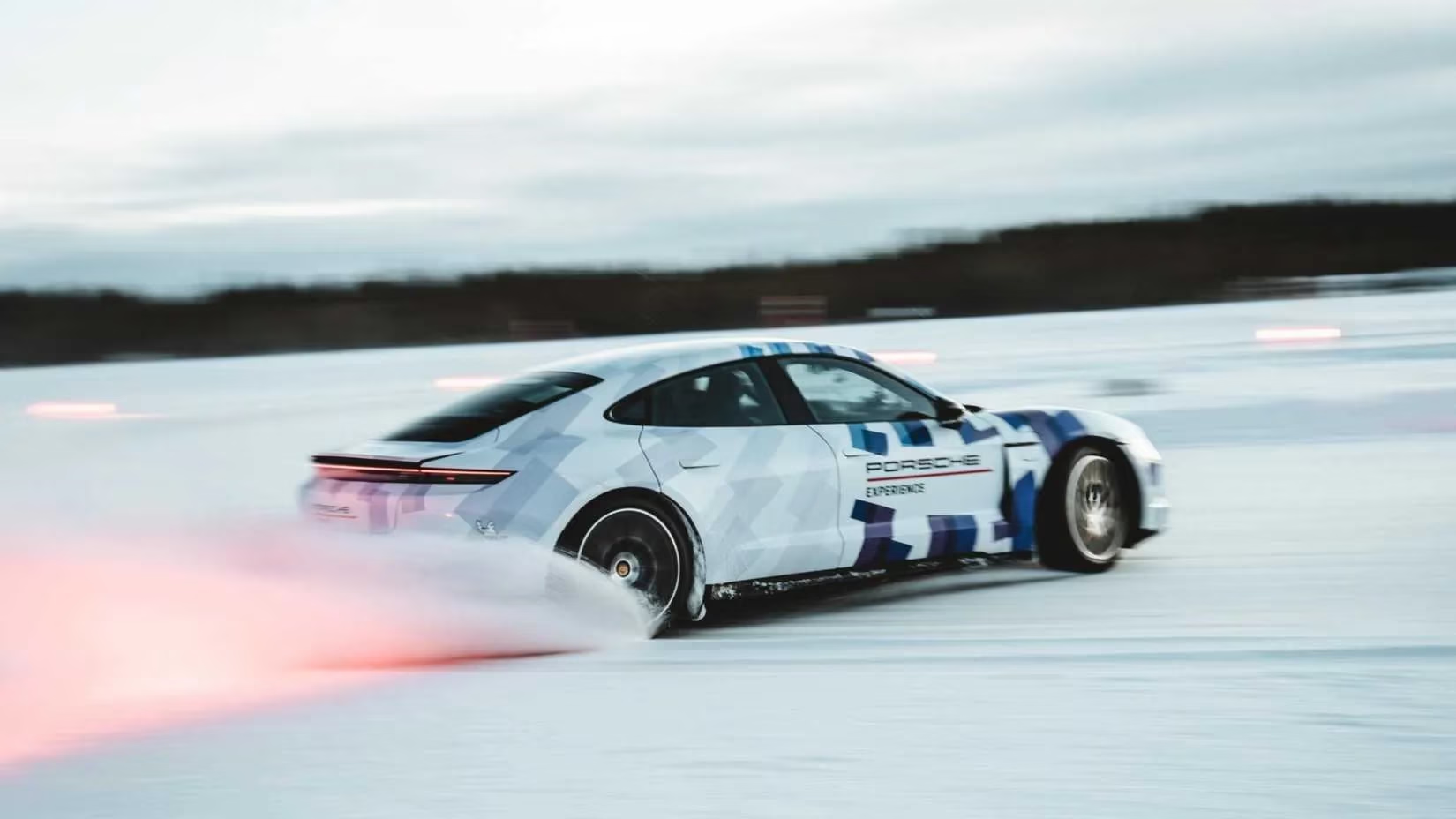
The implications of Porsche's retreat extend far beyond its own corporate balance sheet. If one of the world's most profitable and desirable automotive brands cannot construct a compelling business case for its own performance battery production—despite the clear marketing and engineering benefits of proprietary technology—what signal does this send to the entire sector? The decision underscores a fundamental tension in the high-performance EV space: the conflict between the engineering ideal of complete vertical integration and the harsh commercial realities of economies of scale.
-
The Domino Effect: Porsche is not an isolated case. The industry is witnessing a widespread strategic pause.
-
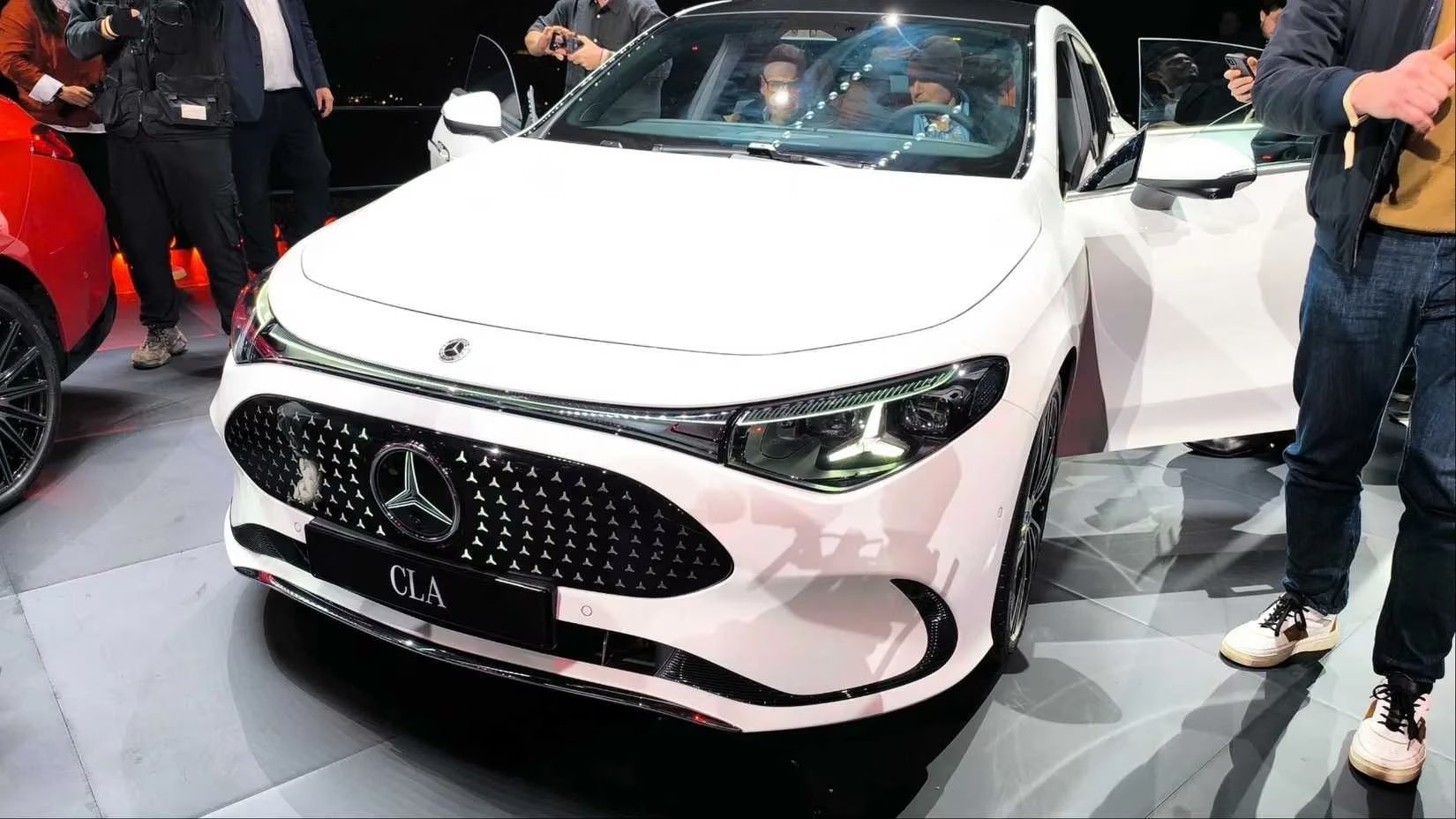
Mercedes-Benz has publicly reevaluated its aggressive all-electric targets, delaying some model launches and extending the lifecycle of combustion-engine platforms.
-
Audi has similarly pushed back the timelines for several key EV introductions.
-
Ferrari has delayed its much-anticipated first fully electric model, opting for a more cautious development timeline.
-
BMW has temporarily paused or adjusted production schedules for certain electric models in response to market conditions.
-
Lamborghini initiated this trend earlier, postponing its flagship EV launch back in 2024.
-
This collective hesitation suggests a pivotal moment of introspection. The initial wave of performance EV hype, characterized by staggering acceleration claims and futuristic concept cars, may indeed be past its zenith. The industry is now entering a more mature, pragmatic, and challenging phase where sustainable profitability and real-world market demand are taking precedence over technological bragging rights.
What remains of the Cellforce vision? The intellectual property and some personnel are likely to be absorbed into the Volkswagen Group's larger PowerCo battery division. Cellforce may also contribute to other battery ventures within the corporate umbrella. However, the dream of a Porsche-branded, factory-forged battery pack powering a new generation of electric 918 successors is, for now, confined to the research bench. The promised head-to-head competition with the cutting-edge battery systems from Tesla and Rimac using wholly Porsche-developed cells has been indefinitely deferred.
Ultimately, the quiet cancellation of the Cellforce factory is more than a corporate restructuring; it is a symptom of a shifting paradigm. It reveals that the path to an all-electric, high-performance future is far more complex and economically fraught than early evangelists predicted. Battery innovation continues, but the model for bringing that innovation to market is being rewritten in real-time. For Porsche and its peers, the future may involve less about owning every step of the battery supply chain and more about strategic partnerships, targeted R&D, and a diversified powertrain portfolio that includes both electric and synthetic fuel options. The race for electric performance is far from over, but the strategies for winning it are undergoing a silent, significant transformation.
Leave a Comment
Comments