Maserati's EV Dreams Are Stalling After Stellantis Pulls $1.5 Billion
As I watch Stellantis shuffle its brands like a dealer with too many cards in early 2026, Maserati keeps catching my eye for the wrong reasons.
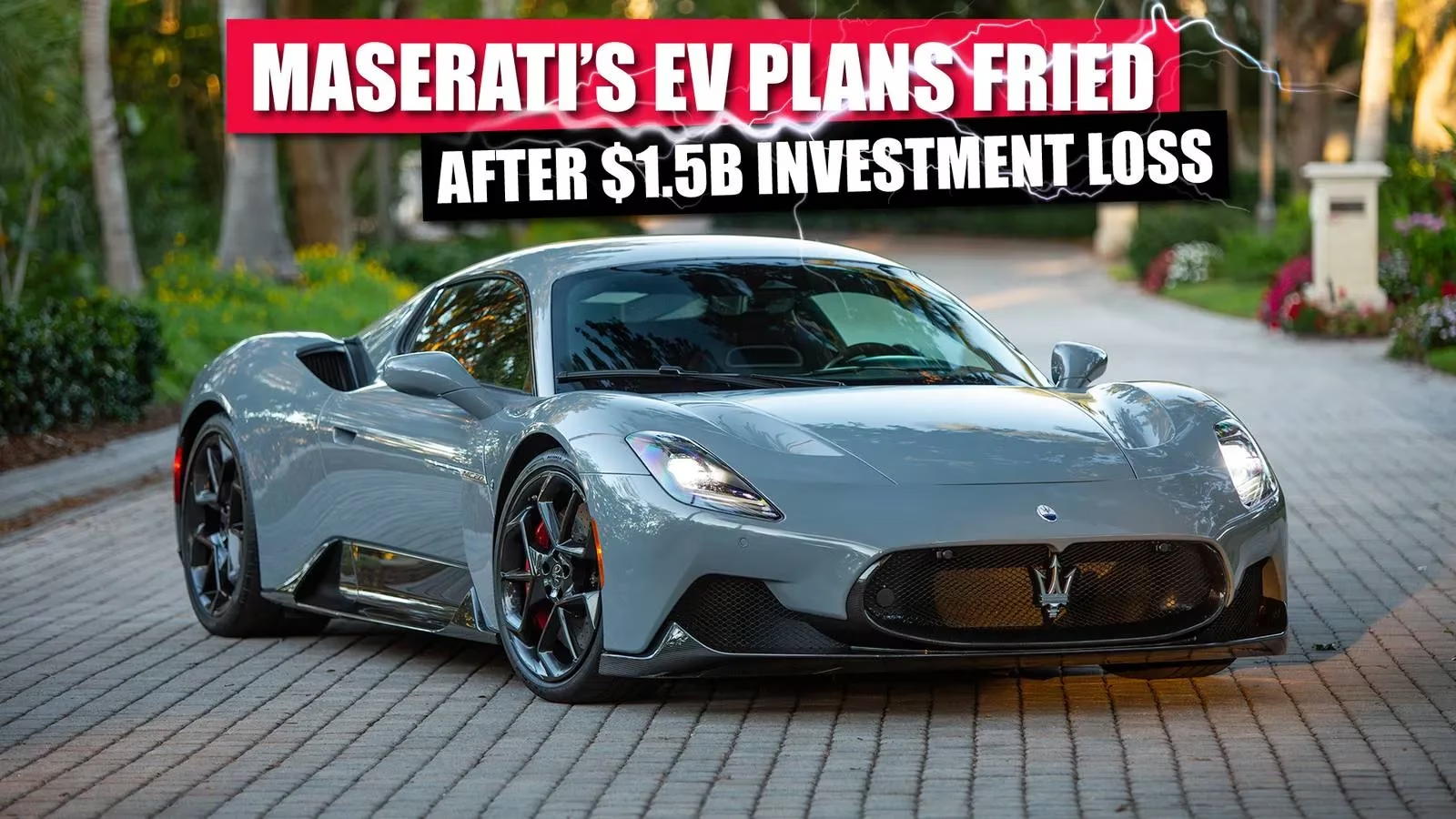
Things have been rough at Stellantis for a while now, and Maserati’s electrification roadmap has gone from ambitious to uncertain. Stellantis had reportedly agreed to pump more than $1.5 billion into Maserati over the next few years—cash that was supposed to be oxygen for the luxury brand’s EV shift. Now that money is being pulled back, and the rug has basically been yanked out from under the trident.
The Money Problem Just Got Real
Maserati was supposed to be fully electric by 2029, which already sounded like a moonshot. That target feels even further away today. The missing funding was especially important for the MC20 Folgore and the next-generation Quattroporte and Levante. The electric MC20 was originally aimed at a 2025 debut, but here we are in 2026 and it still feels like it’s waiting in the wings, drumming its electric fingers while the calendar keeps flipping.
Stellantis chief financial officer Doug Ostermann didn’t sugarcoat it. He said the financial documents would lead to “the cancellation of certain projects prior to launch.” He also pointed to the Chinese luxury market, where the expected lightning-fast switch to electrification hasn’t materialized the way Stellantis hoped. That’s corporate speak for: the math changed, so the money changed with it.
The Numbers Sting More Than a Cold Start
Maserati’s most recent year-end figures showed a loss of around $271 million. Global sales collapsed from roughly 26,600 units to 11,300 during 2024. That’s not a gentle decline—that’s a cliff. Cutting more funding won’t exactly help Maserati claw its way back.
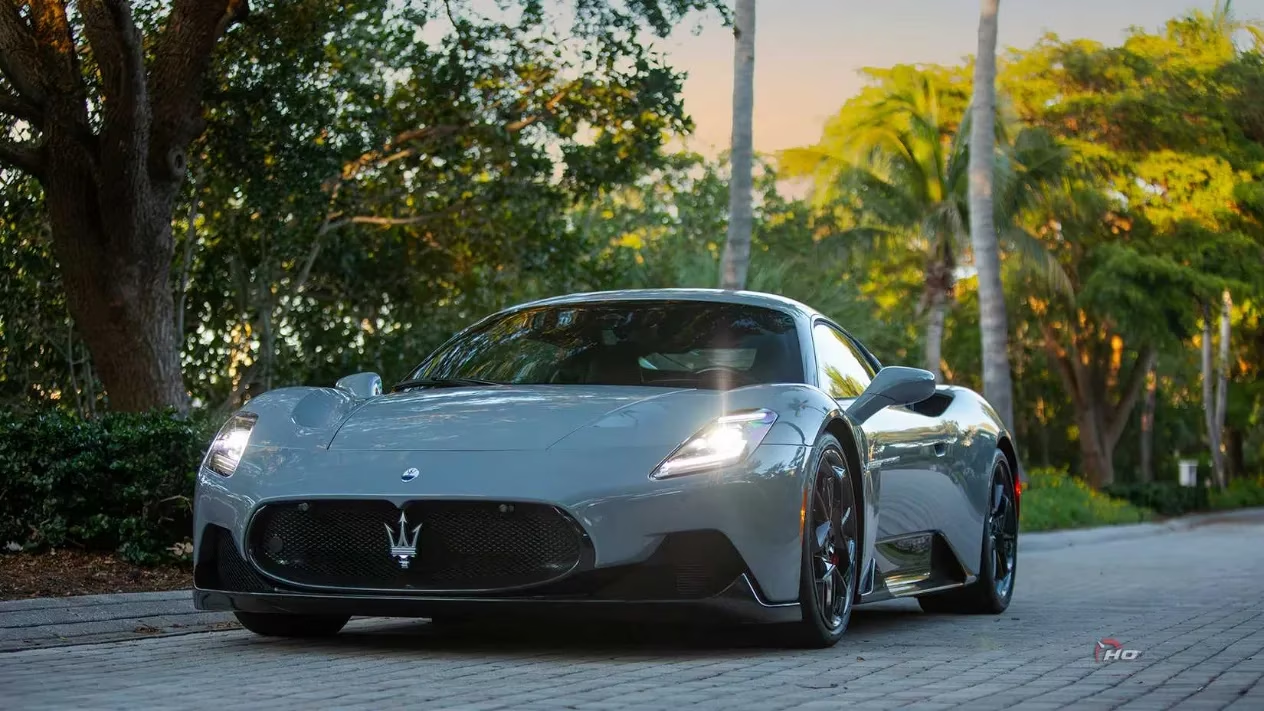
The current lineup still has personality. You’ve got the Ghibli and Quattroporte sedans, the Levante and Grecale SUVs, the GranTurismo and GranCabrio GT cars, and of course the MC20. But when it comes to electrified options, Maserati is lagging behind rivals that are already several EV generations deep.
| Model / Family | Where Things Seem to Stand |
|---|---|
| MC20 | A gas-powered superstar with an electric Folgore sibling that keeps getting pushed back |
| Quattroporte | Its EV successor was tied to the funding plan—now delayed |
| Levante | Same Folgore-shaped question mark hanging over its replacement |
| GranTurismo / GranCabrio | Genuinely charming GT cars, but the broader EV lineup still feels thin |
A Slower EV Path Might Actually Be Smart
Here’s where I land as someone who has driven the MC20 multiple times: it is an absolute riot. The twin-turbo Nettuno V6 is a little symphony that doesn’t want to retire quietly. But the MC20’s high price and low production numbers mean it can’t rescue Maserati all by itself.
Honestly, keeping some internal-combustion models around longer and rolling out EV nameplates more gradually might be the right move. Delays aren’t glamorous, but they beat launching half-baked electric cars into a market that still isn’t fully ready—especially in the luxury segment.
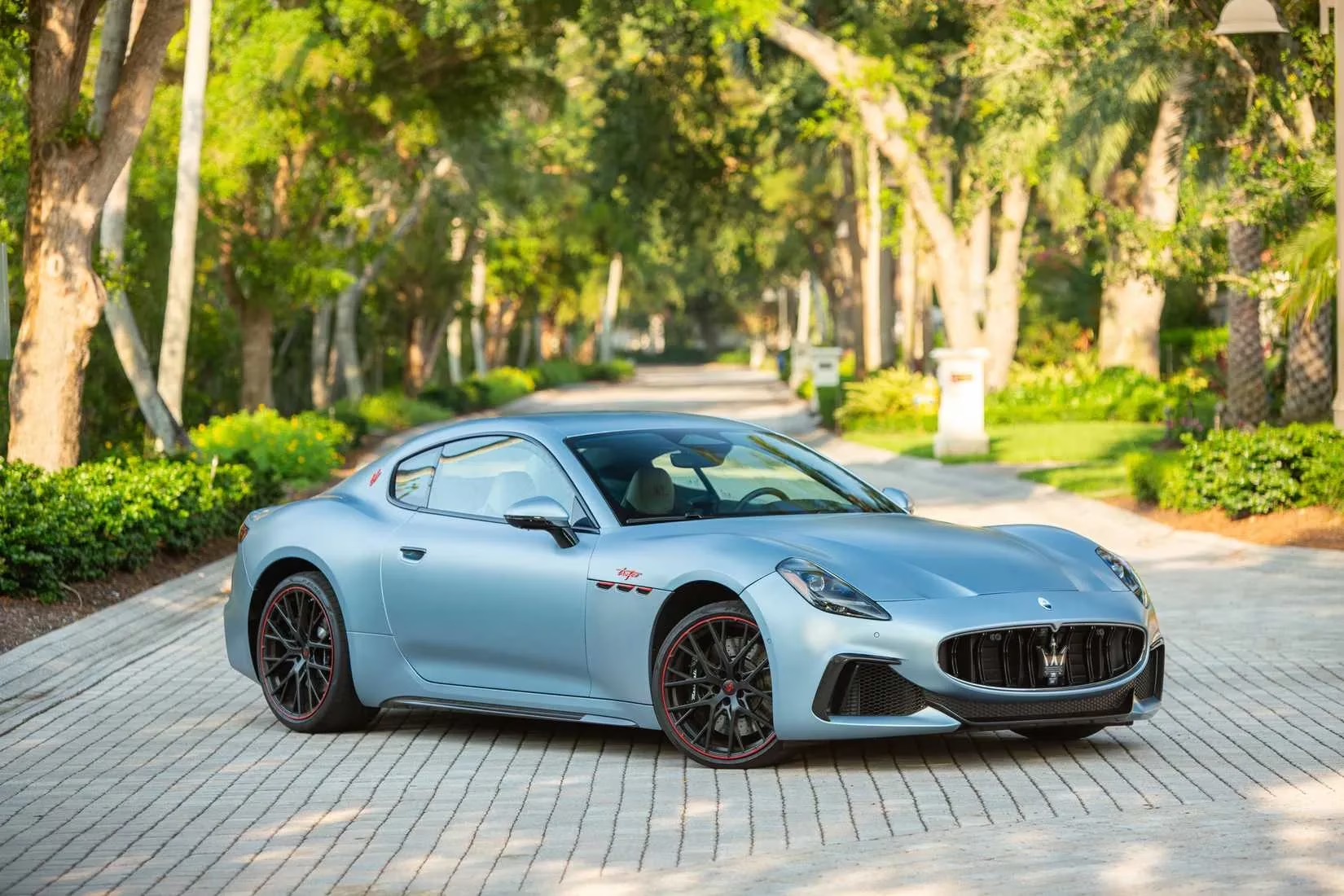
Right now, Maserati still makes some genuinely lovely machines. The problem is that the strategy around them feels about as clear as fogged-up glass. Hopefully things turn around soon. Until then, I’ll keep crossing my fingers—and maybe holding onto that V6 soundtrack a little longer.
Leave a Comment
Comments