Lucid Gravity vs. Rivian R1S: A 2026 U-Drags Showdown of Electric SUV Philosophies
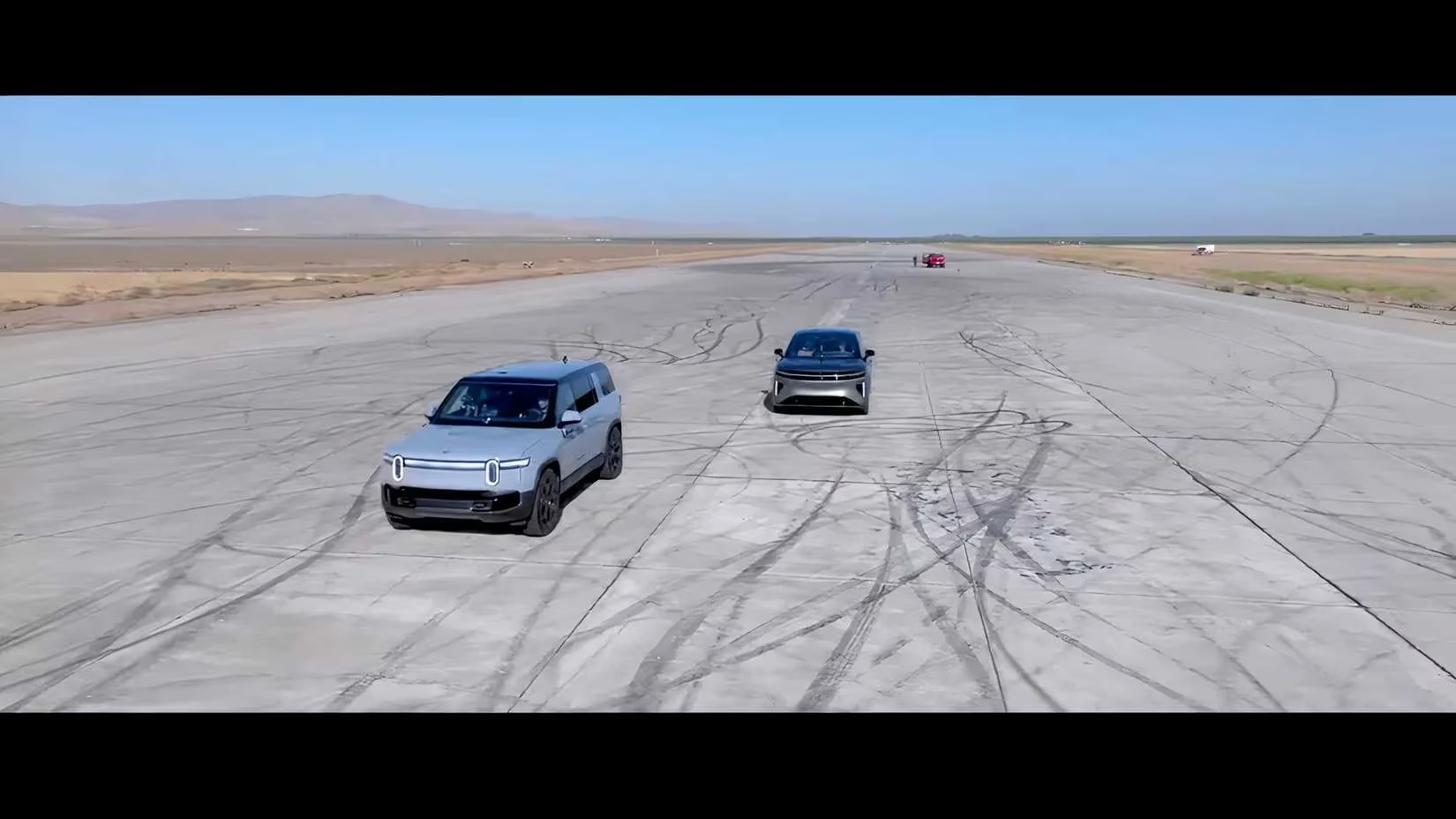
Put 12,917 pounds of electric SUV on a drag strip and it's not a race; it's a gravitational event. Yet, somehow, the 2026 Lucid Gravity and the Rivian R1S managed to turn all that mass into a physics-defying sprint, proving modern EVs aren't just quick for their size—they're quick, period. In a recent U-Drags matchup, these two three-row bruisers lined up for a unique test: a quarter-mile launch, a full-stop 180-degree turnaround, and a flying finish back to the start line. What unfolded was less about brute force and more about how well each automaker understands the strange new world of high-performance electric SUVs. This wasn't just a straight-line dash; it was a test of poise, engineering philosophy, and what happens when you ask a mountain to dance.
The Contenders: Specs on Paper
On paper, both machines look like absolute overachievers. Let's break down the numbers for 2026:
| Feature | 2026 Lucid Gravity Grand Touring | 2025 Rivian R1S Tri-Motor |
|---|---|---|
| Horsepower | 828 HP | 850 HP |
| Torque | 909 LB-FT | A whopping 1,103 LB-FT |
| Curb Weight | 6,122 lbs | 6,795 lbs |
| Power-to-Weight Ratio | 7.39 LB/HP | 7.9 LB/HP |
Alistair Weaver piloted the Lucid, while Jonathan Elfalan took the wheel of the Rivian. Right off the bat, the Rivian packs more muscle, but the Lucid is the leaner machine. It's a classic heavyweight bout where the stats only tell half the story.
Round 1: The Launch & Quarter-Mile
When the lights went out, the Rivian struck first with its explosive torque. It's got that brutal immediacy—it basically throws itself forward, no questions asked. The R1S blasted from 0-60 mph in a clean 3.0 seconds, edging out the Gravity's 3.5-second effort. That initial punch carried through the quarter-mile, where the Rivian posted a time of 11.3 seconds at 121.8 mph. The Gravity was a hair behind at 11.4 seconds, but its trap speed of 127.4 mph was a big clue that this race was far from over. The Lucid was just getting its legs under it.
The Turning Point: Where Physics Gets Real
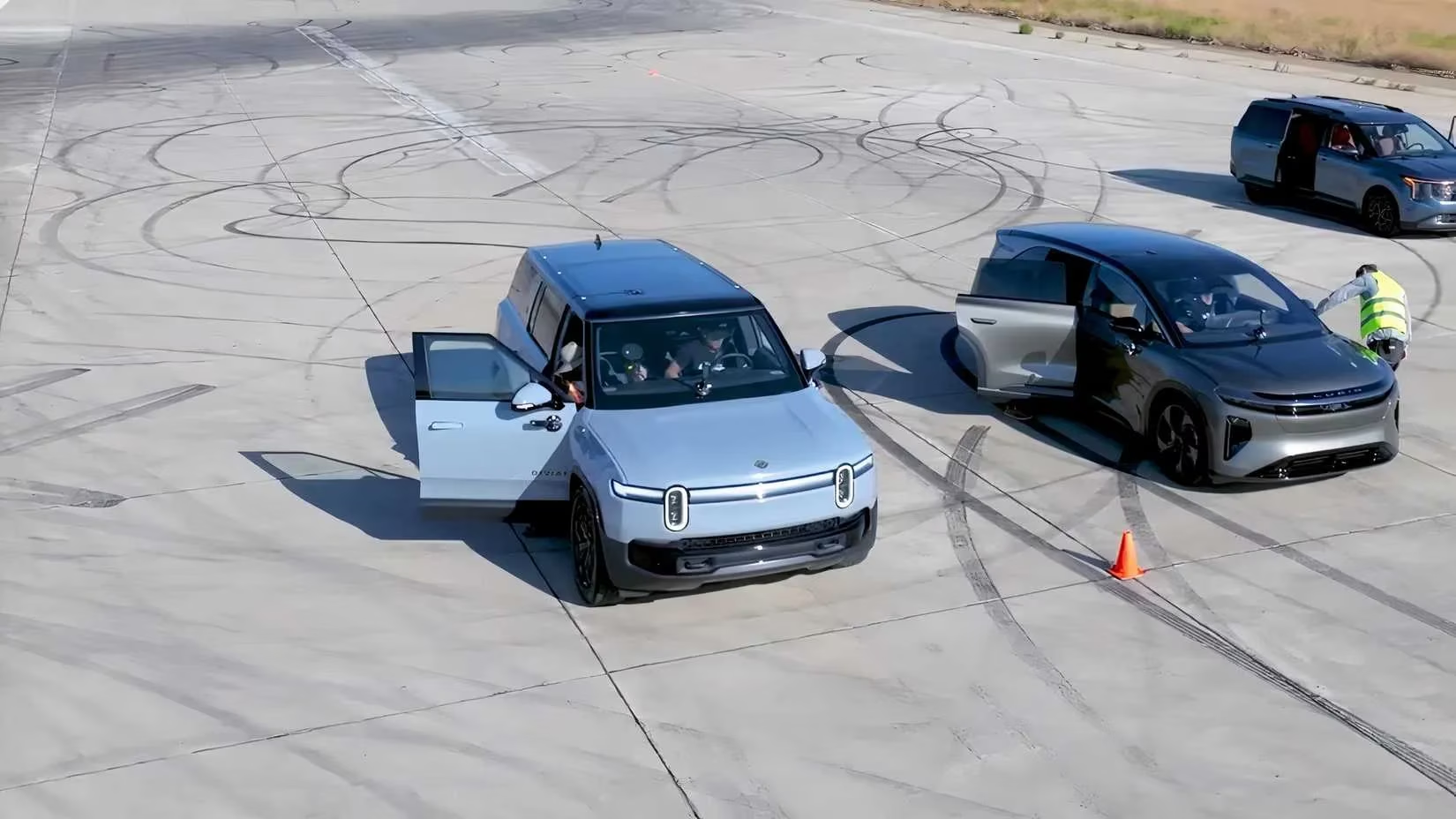
Here’s where U-Drags separates the quick cars from the truly great ones. It's not just about who gets to 1,320 feet first. The real test begins after the first run, exposing weaknesses in braking feel, chassis balance, and throttle response. Both SUVs slammed on the brakes, pivoted 180 degrees, and prepared to launch again. This is where the Gravity showed an advantage the R1S simply didn't have: poise.
The Lucid Gravity recorded an impressive 1.05 G of cornering force during the turnaround. Its chassis settled quickly and calmly. The R1S, despite its heroic acceleration, felt more unsettled under hard braking. Test driver Elfalan noted it wasn't dramatic, but there was enough movement to cost precious time. When you're dealing with nearly seven thousand pounds, keeping it tidy is everything.
The Final Sprint: The Limiter vs. The Legs
Once straightened out for the return run, the script completely flipped. The Gravity, now in its element, surged forward and hit a blistering 136.9 mph. It used its long-legged top-end power to full effect. The Rivian, however, ran into a brick wall: its software speed limiter at 112 mph. In a competition where the return leg is everything, hitting a hard electronic ceiling is, well, a buzzkill. The final total times weren't even close: 33.2 seconds for the Lucid versus 34.5 seconds for the Rivian. The heavier SUV won? Not exactly—the more composed SUV won.
Behind the Wheel: Driver Modes & Feel
So, what was it like for the drivers?
-
In the Lucid Gravity: Elfalan followed factory guidance, using "Sprint Mode" with stability control partially engaged. Launch control fired cleanly, the transition was smooth, and momentum was maintained. It felt like a well-rehearsed performance.
-
In the Rivian R1S: Weaver set the SUV to Sport mode, dropped the suspension, and activated launch control. He praised the ferocity of the initial launch—it's an acceleration monster, no doubt—but that braking wiggle was the differentiator. It's a bit like a rocket with a slight wobble; still incredibly fast, but not as pinpoint.
Rivian fans are right to champion its brutal acceleration. But this specific format rewarded the complete package: stability, consistency, and top-end capability. And that, folks, is where Lucid's engineering shone.
The Big Picture: Diverging EV Philosophies
This showdown was a brilliant case study in how automakers are tackling performance for heavy, powerful electric SUVs in 2026. Their approaches are starting to split into distinct philosophies:
-
Rivian's Philosophy: 🚀 "Electric Adventure Truck with Supercar Power." It's all about explosive torque and brutal immediacy. It's for the driver who wants their SUV to feel like a punch in the gut (in a good way) the moment they touch the pedal.
-
Lucid's Philosophy: 🎻 "Luxury EV that Handles Like a Grand Tourer, Regardless of Size." It's tuned for a broader spectrum: strong launches, yes, but also composed handling, high-speed confidence, and thermal durability. It's the SUV that wants to be graceful.
Lucid's victory doesn't make the R1S any less formidable. If you need to win a stoplight grand prix, the Rivian might still be your pick. But this test signals where the high-end EV segment is heading. It's not just about one big number anymore. It's about how all the systems work together when you ask the impossible.
When nearly thirteen thousand pounds of electric SUV can square off and the result looks like a legitimate motorsport event instead of a slow-motion physics lesson, you know the game has changed. The future of performance EVs is here, and it's surprisingly elegant.
Leave a Comment
Comments