Longbow Motors' Featherweight EV Roadster Could Redefine Sports Cars by 2026
I still remember the first time I drove a Lotus Elise. It was so light, so communicative – you could feel every ripple in the pavement through your fingertips. Ever since then, I've been a sucker for lightweight sports cars. But for years, I'd all but given up on the idea that an electric drivetrain could ever produce something that nimble. Then, out of nowhere, Longbow Motors comes along in 2026 and claims they've built an EV sports car lighter than a Miata. How is that even possible? And does it actually work on a twisty back road, or is this just another ambitious startup's fantasy?
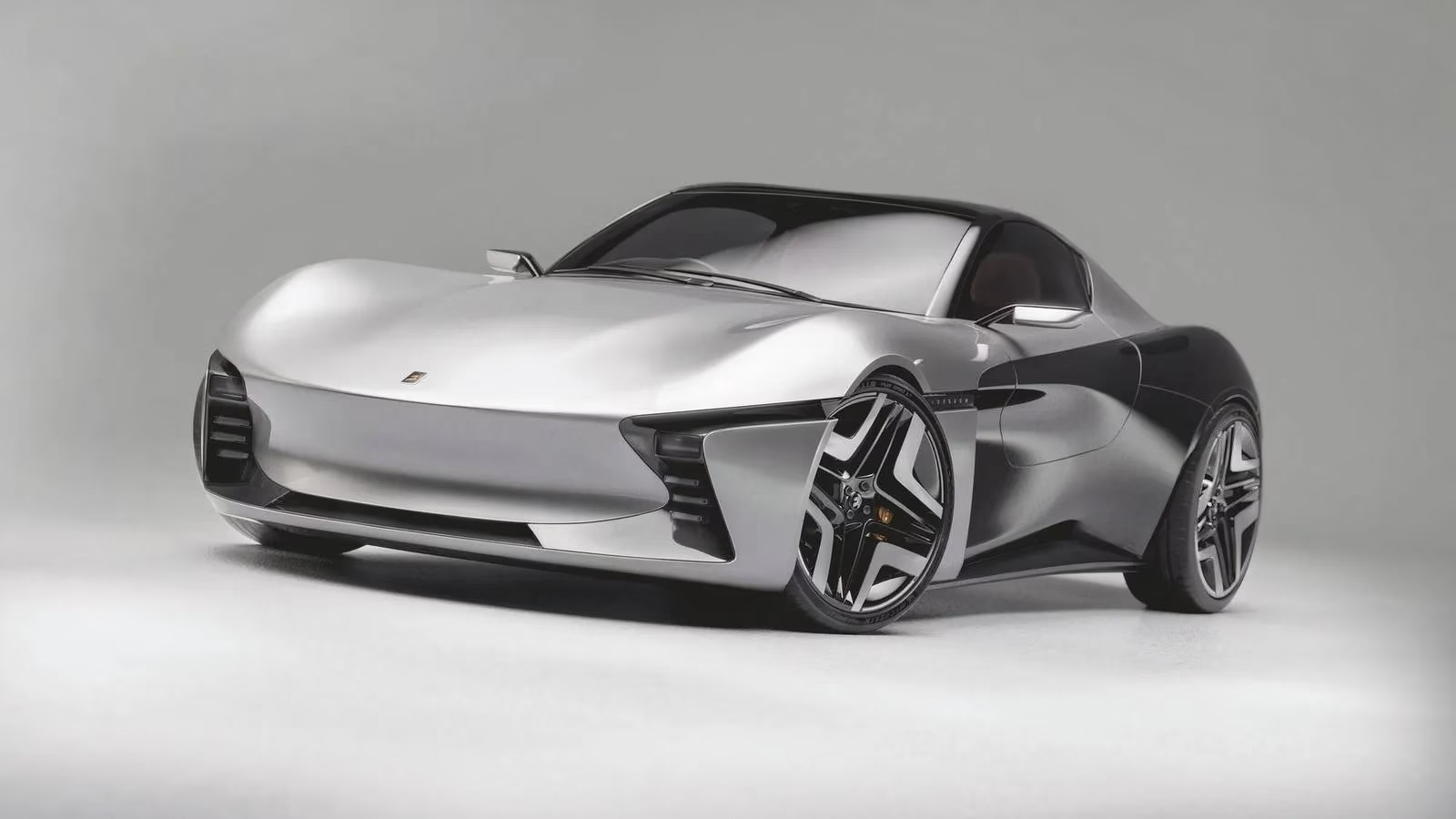
The people behind Longbow aren't exactly garage tinkerers. The crew has experience from Lotus, Lucid, and Formula E – arguably the dream team for making an EV that handles like a proper sports car. Lotus knows lightness, Lucid knows efficiency, and Formula E knows instant torque management. When I heard that lineup, my skepticism started to melt a little. Maybe they really could pull off a sub-2,200-pound electric roadster. After all, the original Tesla Roadster – which borrowed heavily from the Elise – weighed around 2,700 pounds and already felt revolutionary two decades ago. But back then, battery tech was primitive. Today, with solid-state cells and next-gen energy density, building something even lighter while keeping usable range is entirely plausible.
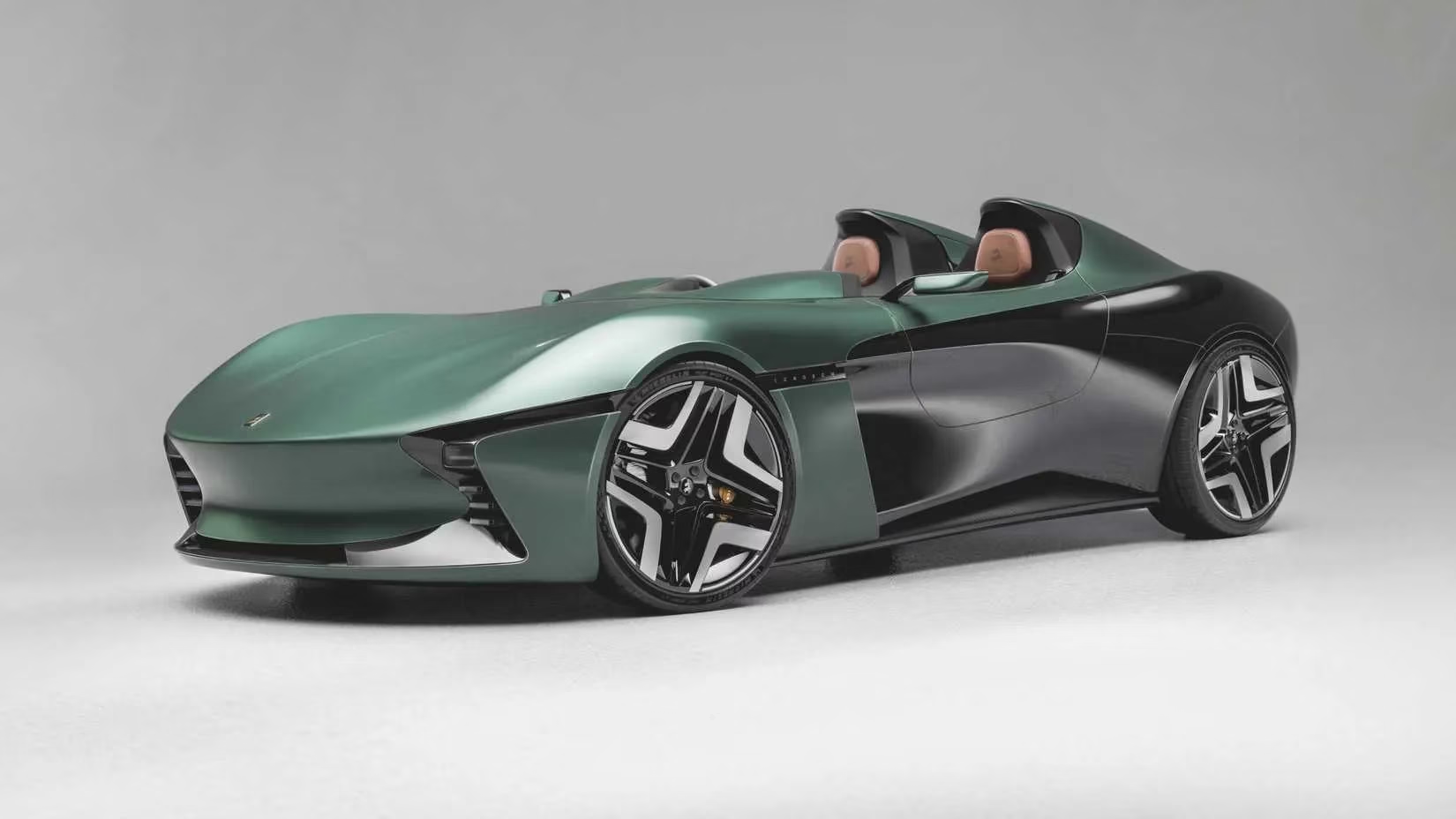
The Longbow Roadster tips the scales at just 2,194 lbs. That's a full 500 pounds lighter than that Tesla Roadster, and it's lighter than any combustion-engined Lotus currently in production. And if that's not hardcore enough, there's a Speedster variant that shaves even more mass. Can you imagine driving that roofless thing on a summer evening? I'm already picturing the wind in my hair and the electric whine behind my ears.
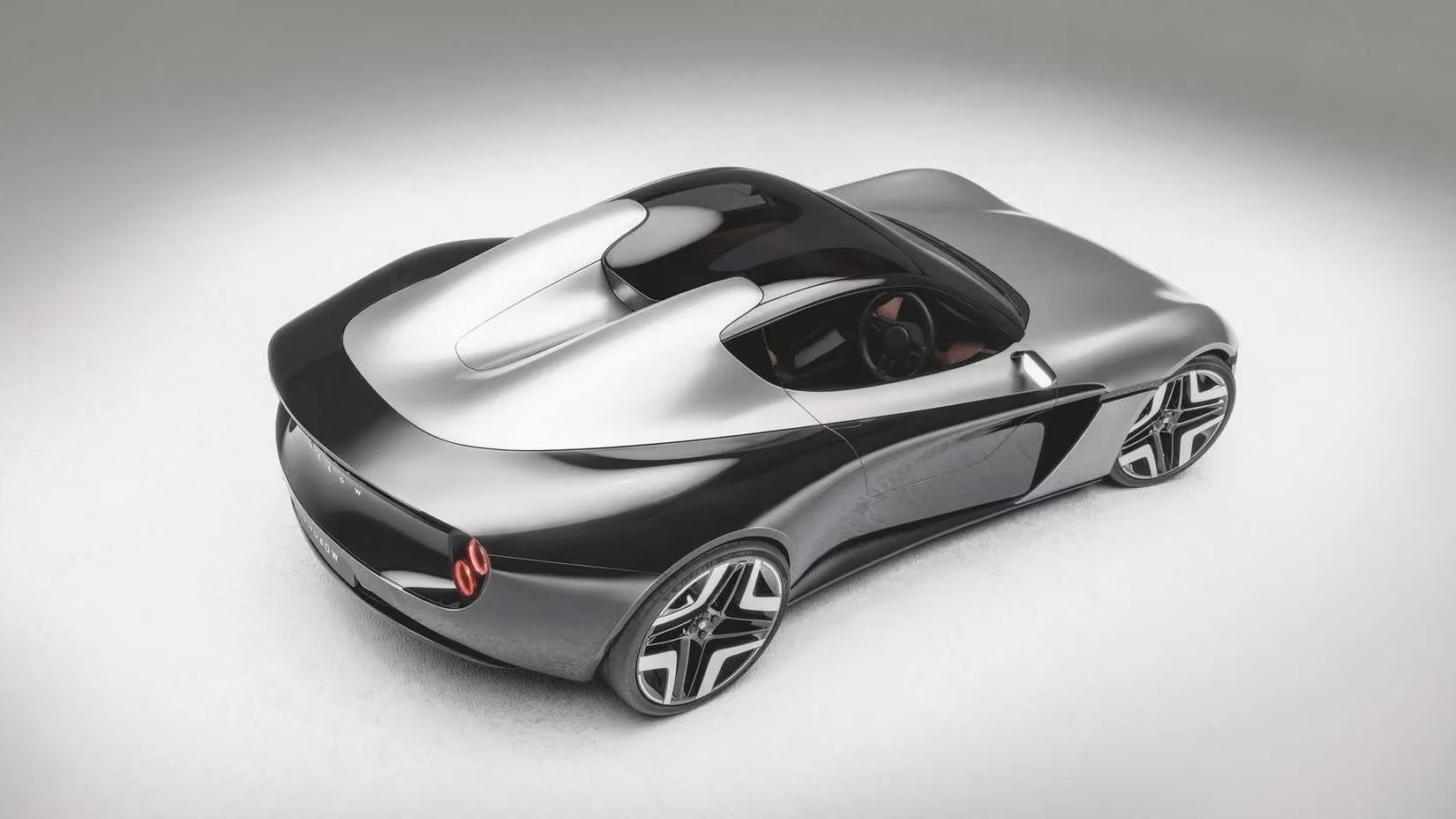
One of my biggest fears with lightweight EVs has always been range. If you strip out heavy batteries, won't you end up with a car that can barely make it to the next town? Longbow claims 275 miles on the WLTP cycle, which in real-world American highway driving means maybe 200 to 220 miles. That's perfectly fine for a weekend toy or a daily commute if you plug in at home. No, it won't cross continents without careful planning, but who buys a two-seat British sports car for road trips anyway? You buy it for the corners, for the dab of oppo on a wet roundabout, for the sheer joy of instant throttle response without a pound of turbo lag.
And that instant response is the key. With zero delay from an electric motor, a car this light will leap out of corners in a way that even the most responsive naturally aspirated engines can't match. I’ve driven quick EVs before, but they all felt heavy, like they were wrestling their own mass. Longbow's approach flips the script: keep the weight down, and let the electric torque be the cherry on top rather than a crutch for a bloated chassis. How will that feel? Probably like a Miata that’s been given a shot of adrenaline.
Of course, there's a catch. Prices are said to be "Cayman-esque" – around $84,000 for the Roadster. That puts it in the same bracket as a Porsche 718 Cayman or a well-optioned Alpine A110, both of which are brilliant driver’s cars. Can a tiny startup convince buyers to take a chance on an unknown badge when Porsche’s flat-six sings just a few dollars away? It’s a tough ask, especially when the aftermarket, dealer network, and resale value remain big question marks. Caterham’s Project V is hovering in a similar space, promising lightweight EV thrills for about the same money, but neither has reached showrooms in volume yet.
And yet, I can’t help but root for Longbow. The car industry needs more brave, lightweight projects that prioritize driving feel over spec-sheet wars. In 2026, when most EVs are still ridiculously heavy luxury barges, a 2,194-lb British roadster feels like a rebellious act. The big question is whether Longbow can survive long enough to get these cars onto b-roads and canyon runs, not just trade-show turntables. If they do, and if that featherweight claim holds true once real owners get behind the wheel, we might look back on this moment as the birth of the second golden age of the electric sports car. What do you think – would you trade your gas-powered weekend toy for an electric one that actually weighs less? Because I’m starting to consider it.
Leave a Comment
Comments