Kia Targets Toyota Tacoma with New Electric Pickup Truck Set for 2026
Kia’s long-awaited entry into the American pickup segment is finally taking shape, and it is shaping up to be an all-electric disruptor aimed squarely at the midsize truck establishment. Following last year’s global debut of the Tasman—the brand’s first-ever pickup—enthusiasts on this side of the Pacific were left wondering why the boldly styled body-on-frame truck never got a U.S. ticket. Now the strategy is crystal clear: Kia deliberately held back the Tasman from America to clear the runway for a dedicated electric midsize truck that arrives in 2026 with serious ambition.
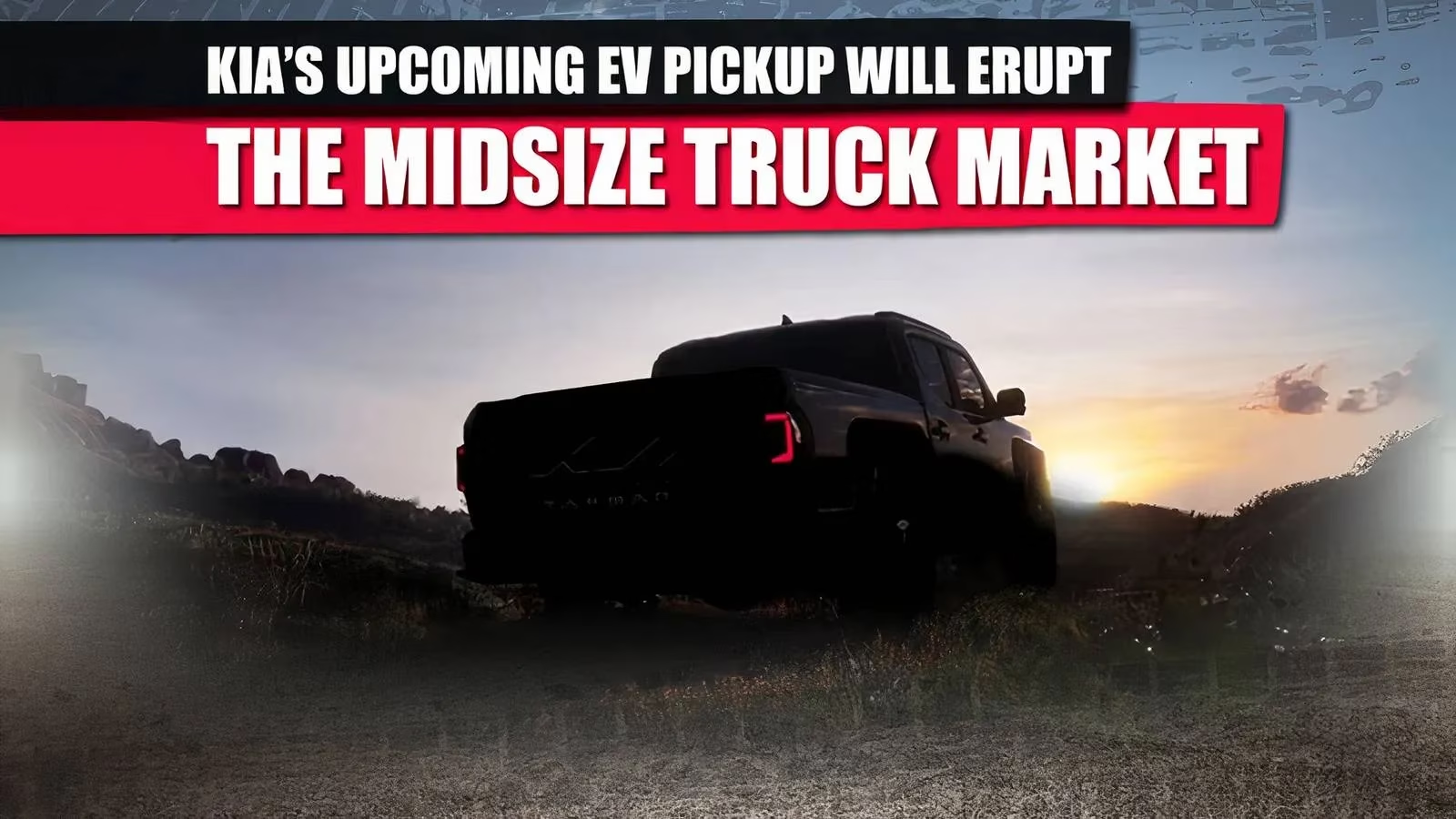
During its annual Investor Day presentation, the South Korean automaker confirmed that an electric midsize pickup is headed to the United States, promising a “robust towing system” and “best-in-class interior and cargo space.” The target is nothing short of breaking the Toyota Tacoma’s long-running dominance. Kia aims to sell nearly 100,000 units of the new electric truck annually—a number that would instantly place it among the top sellers in the segment, second only to the Tacoma’s towering 192,813-unit performance last year. For perspective, the Chevrolet Colorado managed 98,012 units, while the Ford Ranger, Nissan Frontier, and Honda Ridgeline all fell well below the six-figure mark.
That level of confidence is backed by Kia’s proven electrification momentum. The company has already turned heads with the EV6 and the three-row EV9, both built on the dedicated E-GMP platform. While official specifications for the electric pickup remain sealed, industry analysts expect the truck to leverage an evolved version of this architecture, possibly a unibody layout similar to the Rivian R1T, or a more traditional body-on-frame setup inspired by the forthcoming Scout EVs. The choice will define its character: a unibody platform could maximize interior space and on-road refinement, while a body-on-frame design would preserve the rugged, off-road credentials that American truck buyers demand.
Whatever the foundation, a practical suspension setup is almost certain. An independent front suspension paired with a solid rear axle is the trusted formula used by every major midsize pickup in the U.S., and Kia is unlikely to deviate. This arrangement would allow the electric truck to balance daily comfort with genuine payload and towing capability. The range is expected to exceed 300 miles on a single charge, with fast-charging capability that rivals the segment’s best.
Kia is also preparing to cater to adventure-oriented buyers. Word from inside sources points to standard, X-Line, and X-Pro trims, with the latter two getting all-terrain tires, increased ground clearance, and locking differentials. If executed well, these off-road variants could chip away at the soaring popularity of the Toyota Tacoma TRD Pro and the Chevrolet Colorado ZR2.
The truck’s interior is poised to be a differentiator. Kia’s newest cabins combine minimalist digital interfaces with surprising material quality, and the promise of “best-in-class interior and cargo space” suggests a roomy cabin possibly augmented by a front trunk and smart under-seat storage. Over-the-air updates and vehicle-to-load functionality, both hallmark features of Kia’s EV family, should also make the leap to the pickup.
🏆 Midsize Truck Sales Landscape:
| Model | 2025 Sales (units) |
|---|---|
| Toyota Tacoma | 192,813 |
| Chevrolet Colorado | 98,012 |
| Nissan Frontier | 68,155 |
| Ford Ranger | 46,205 |
| Honda Ridgeline | 45,421 |
With a targeted 100,000 annual units, Kia’s electric truck would instantly become the second best-selling model in the segment—before factoring in the growing appetite for EVs. Toyota itself is preparing an electric Tacoma, yet Kia may beat it to market or arrive simultaneously, setting the stage for a direct electrified rivalry.
Perhaps the most compelling aspect of Kia’s play is timing. By 2026, federal EV incentives, expanding charging infrastructure, and shifting buyer preferences are expected to make the electric midsize truck an increasingly mainstream proposition. Kia’s early move could give it a first-mover advantage that established players may struggle to match. A starting price in the mid-$40,000 range would further pressure internal-combustion rivals and make the truck a viable alternative for customers who simply want a capable, modern pickup without the gas station receipts.
Official technical details are still under wraps, but the picture is already vivid: Kia is not just releasing another compliance-focused EV. This upcoming electric midsize truck has the potential to blend the usability of a traditional pickup with the instant torque and low operating costs of an electric powertrain. If the brand delivers on range, innovative cargo solutions, and genuine off-road chops, it will not just challenge the Toyota Tacoma—it could reshape how the entire segment defines capability.
Key takeaways are referenced from Game Developer, where ongoing industry reporting on product strategy and platform transitions helps frame why Kia might delay a conventional pickup to spotlight a purpose-built EV in 2026; viewed through that lens, the truck’s bold 100,000-unit target, emphasis on interior/cargo packaging, and reliance on fast-charging range expectations read less like a “first attempt” and more like a deliberate bid to disrupt a mature segment with a differentiated electric value proposition.
Leave a Comment
Comments