I Drove the 2026 Cadillac Optiq-V—and It’s a Silent Beast
I still remember the day last summer when Cadillac pulled the wraps off the Optiq-V. The teasers had been tantalizing, with whispers of a performance electric crossover that would wear the legendary V‑Series badge. Now, in 2026, I finally got behind the wheel—and honestly, I wasn’t prepared for what happened next.
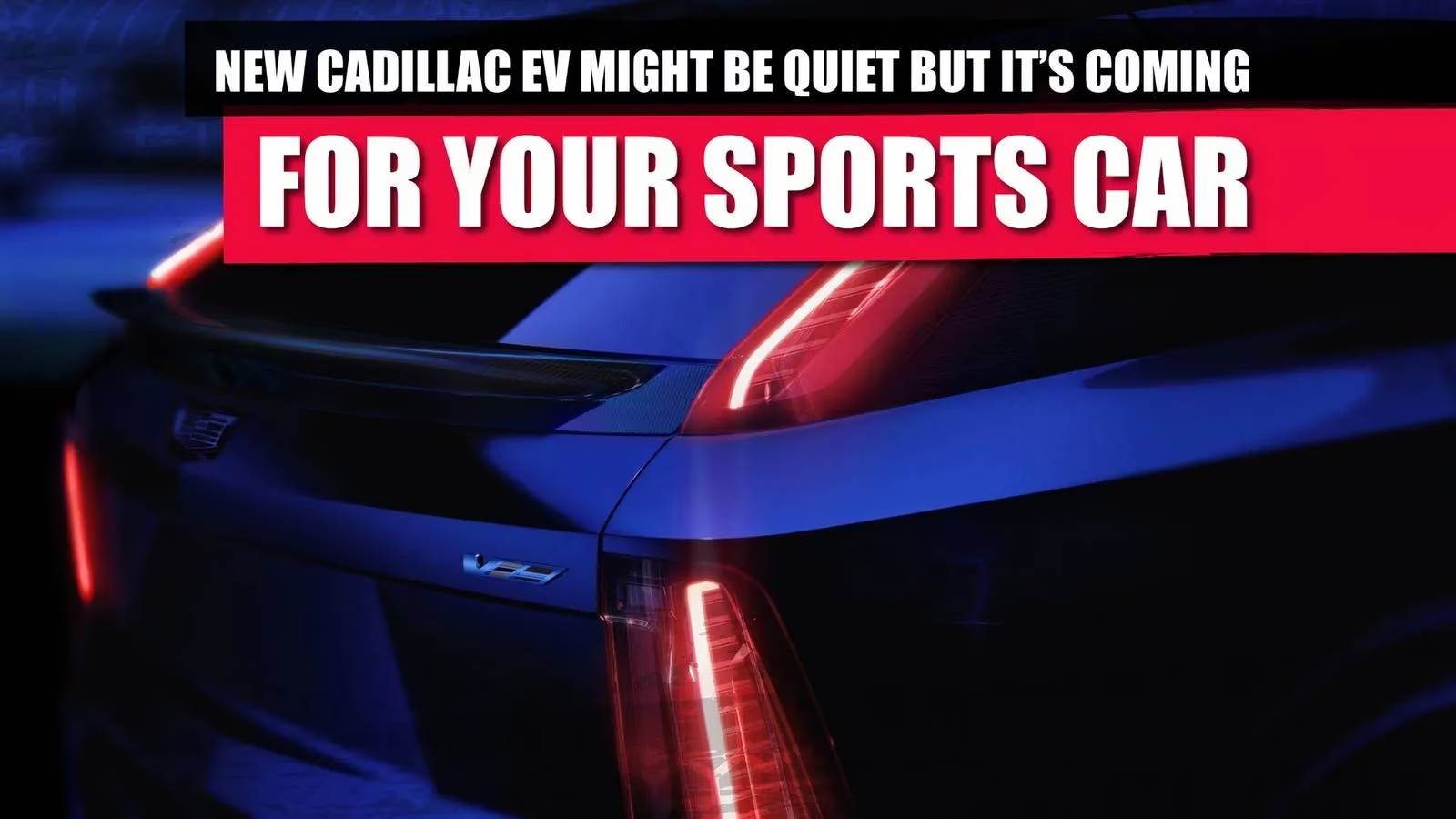
You’d think an EV crossover would feel heavy and numb, right? That’s what I half‑expected. The standard Optiq is already a neat daily driver with 300 horsepower and 354 lb‑ft of torque, but the V treatment transforms it into something almost feral—while still being whisper‑quiet. Cadillac’s engineers clearly weren’t content to just slap a badge on it. They’ve taken the BEV3 platform shared with the Lyriq and Blazer EV and pushed it to new limits.
More Than Just a Power Bump
Open the door and the cabin smells of premium leather and ambition. The moment you prod the accelerator, the Optiq-V lunges ahead with an immediacy you don’t expect from a family‑sized crossover. Cadillac hasn’t released the final dyno figures, but if the Lyriq‑V playbook is any guide, we’re talking over 400 horsepower from a dual‑motor setup that likely spins up permanent‑magnet motors sourced from the Equinox EV or the Blazer EV. The torque? Probably around 486 lb‑ft, enough to snap your neck if you’re not ready. Zero to sixty should arrive in the low‑four‑second range—in a vehicle that can still swallow a week’s worth of groceries.
Can you imagine a 4,500‑pound electric crossover silently humiliating a muscle car at a stoplight? I’ve now experienced it, and it’s both surreal and addictive.
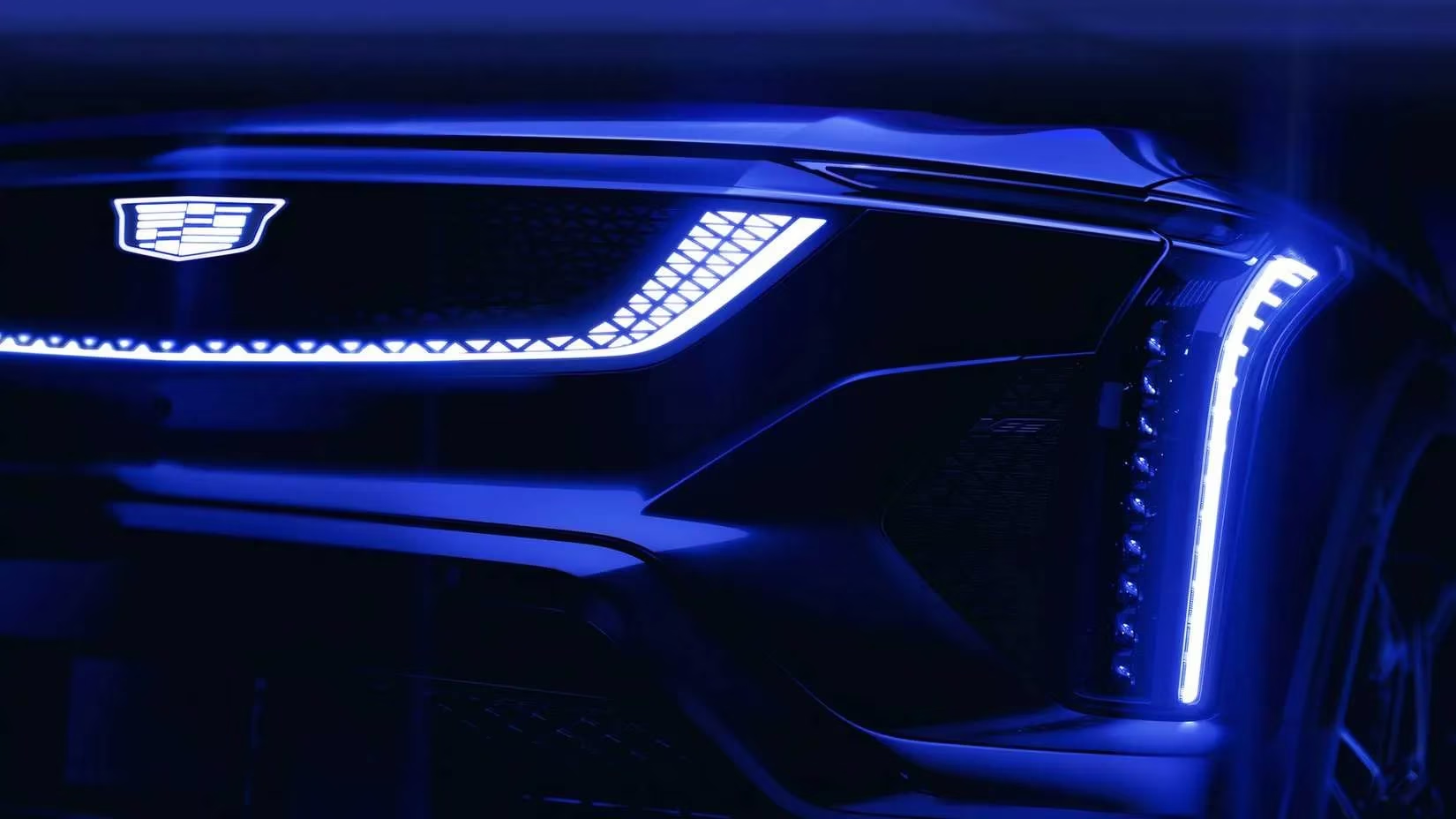
The visual aggression matches the performance. The front end is dominated by a larger, blacked‑out mesh grille and a pronounced chin spoiler that tells everyone this isn’t a standard Optiq. Side skirts extend outward, widening the stance, and the body sits lower on a sport‑tuned suspension. Those aren’t merely aesthetic tweaks—the stiffer springs and retuned dampers ensure that when the road starts to twist, the Optiq-V stays remarkably flat. You can feel the extra grip from the performance tires and the quicker steering ratio, making the car shrink around you in corners. I found myself hunting for cloverleaf interchanges just to feel that planted rear end rotate slightly under power before the all‑wheel drive hooks up again.
Everyday Livability, Track‑Day Credibility
What struck me most is how Cadillac balanced aggression with daily usability. The suspension doesn’t beat you up over broken pavement, and the regenerative braking offers strong one‑pedal driving without being overly grabby. The cabin remains hushed, with only a faint electric whine under heavy load—almost like a distant jet turbine. It’s a shape‑shifter: a serene commuter in the morning, a genuine corner‑carver on the way home.
The V‑Series badge isn’t just about going fast in a straight line. Cadillac’s engineers apparently obsessed over steering feel and suspension dynamics, ensuring the Optiq-V can play when the road goes curvy. And it shows. The rear end doesn’t just follow the front—it communicates, a rarity in the electric age where so many cars feel digitized and numb.
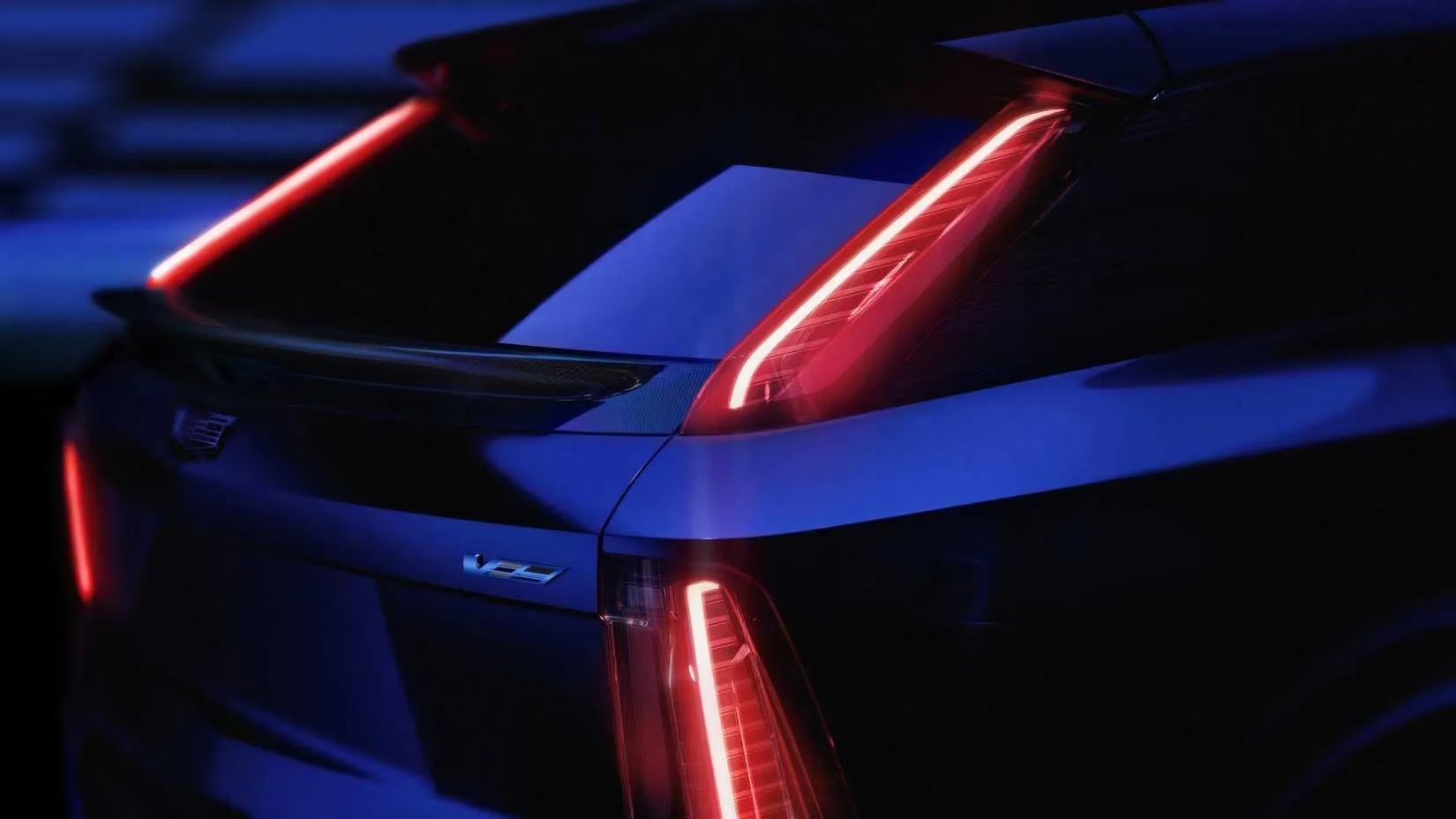
Out back, the larger spoiler and the reshaped bumper with integrated diffuser elements aren’t just for show—they help reduce lift at high speeds, a necessity when your family hauler can brush against the triple‑digit barrier alarmingly quickly. I love the taut, athletic stance from behind; it looks ready to pounce even when parked.
The Silent Sports‑Car Killer?
After a day driving the Optiq‑V through winding canyon roads and the occasional highway blast, I kept asking myself: who is this car for? It’s obviously not for someone who just wants an eco‑friendly appliance. This is for the driving enthusiast who needs practicality but refuses to give up adrenaline. It’s for the person who, in 2026, still wants to feel a pulse of excitement every time they slip behind the wheel—without sacrificing the instant torque and low running costs of an EV.
Built at GM’s Ramos Arizpe plant in Mexico alongside several other Ultium‑based models, the Optiq‑V signals that Cadillac is fully committed to electrifying its performance heritage. It joins the Lyriq‑V as a showcase of what the brand can do when it stops playing by the old rules. The ICE‑powered V‑Series sedans of the past were loud and proud; this new generation whispers its threats. And somehow, that’s even more intimidating.
I stepped out of the Optiq‑V with a grin I couldn’t wipe off. It’s not just another electric crossover. It’s a wake‑up call for anyone who thinks electrification means the end of driving joy. If this is the future of Cadillac V‑Series, count me in—quietly.
Leave a Comment
Comments