Ford's Q2 2025 Sales Report: EV Momentum Stalls as Hybrids Surge
The automotive landscape in 2026 continues to be defined by the industry's complex transition towards electrification. Ford Motor Company, a key player in this evolution, has just released its second-quarter sales figures for 2025, revealing a significant and perhaps strategic shift in its trajectory. While the Blue Oval's overall vehicle sales demonstrated robust growth, the data paints a contrasting picture for its dedicated battery-electric vehicle (BEV) lineup, which has experienced a notable downturn. This divergence highlights a broader market trend where consumer preference appears to be tilting decisively towards hybrid powertrains, a segment where Ford is currently excelling.
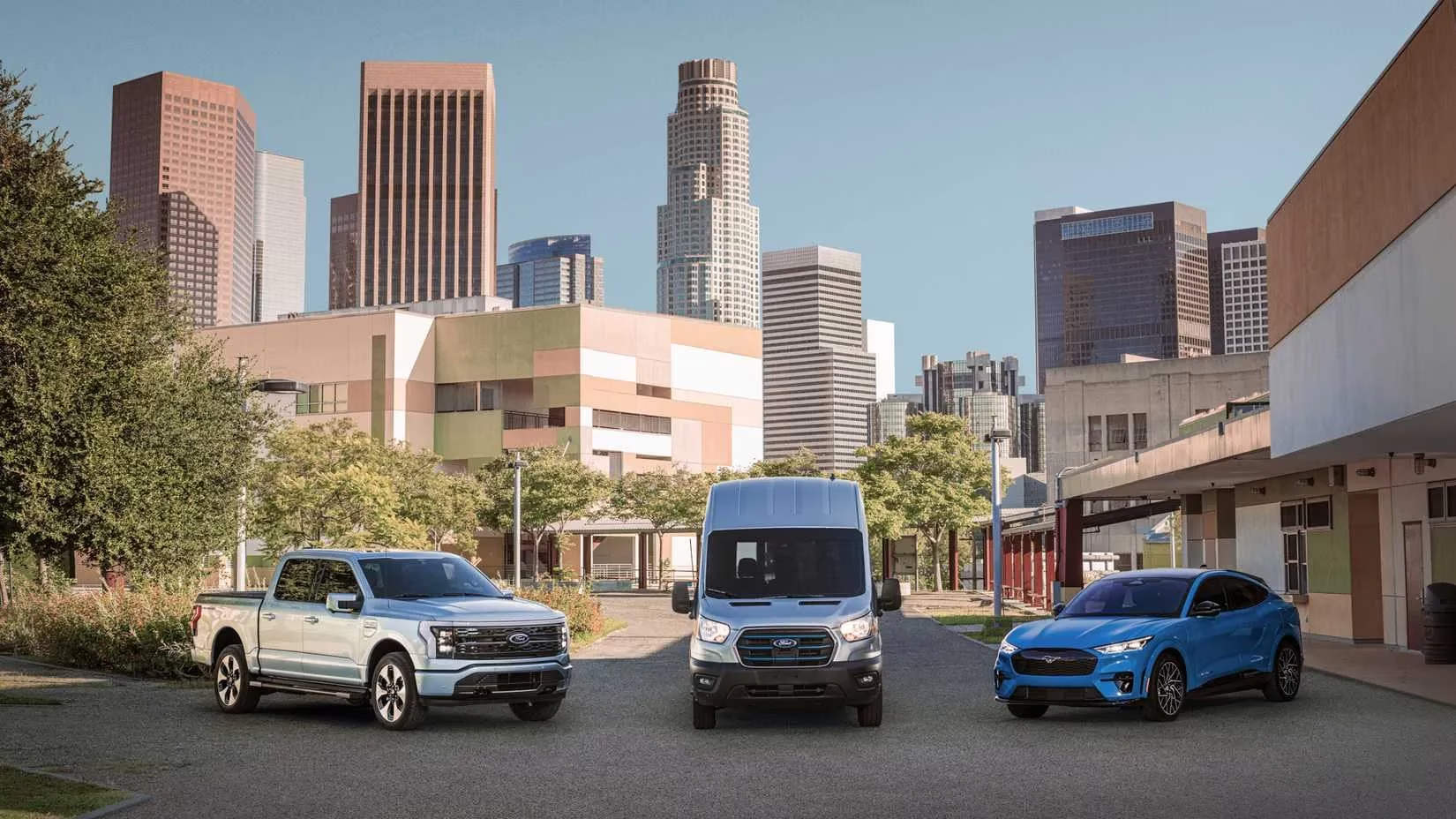
A Tale of Two Powertrains: Diverging Sales Trajectories
Ford's overall performance for Q2 2025 was undeniably strong, with total sales climbing by an impressive 14.2%. This positive headline, however, masks a concerning trend beneath the surface for its pure electric models. When isolated from the broader sales mix, Ford's EV portfolio suffered a sharp decline. Sales of battery-electric vehicles plummeted by 31.4% compared to the same period in 2024, dropping from 23,957 units to just 16,438. This quarterly slump contributes to a year-to-date decrease of 11.8%, with 38,988 EVs sold in the first half of 2025 versus 44,180 in the first half of the previous year.
The decline was felt across Ford's core electric nameplates:
-
Mustang Mach-E: Sales dipped by 19.5%.
-
F-150 Lightning: Experienced a 26.1% decrease.
-
E-Transit: Faced the most severe drop, with sales down 87.7%.
This reversal is particularly striking given the promising start to 2025, fueled by initiatives like the Power Promise incentive program. That campaign had previously propelled the electric Mustang Mach-E to even outsell its iconic gasoline-powered sibling—a milestone that now seems a distant memory. In Q2 2025, the internal combustion engine Mustang decisively retook its lead, with approximately 14,174 units sold compared to 10,178 Mach-Es.
The Hybrid Resurgence: Ford's Strategic Stronghold
In stark contrast to its EV struggles, Ford's hybrid vehicle division is experiencing a remarkable boom. The second quarter of 2025 saw the company sell 66,448 hybrid models, a substantial 23.5% increase from the 53,822 units sold in Q2 2024. This momentum is not a fleeting anomaly but part of a sustained upward trend. For the first half of the year, Ford's hybrid sales have surged by 27.4%, reaching 117,521 units compared to 92,243 in the first six months of 2024.
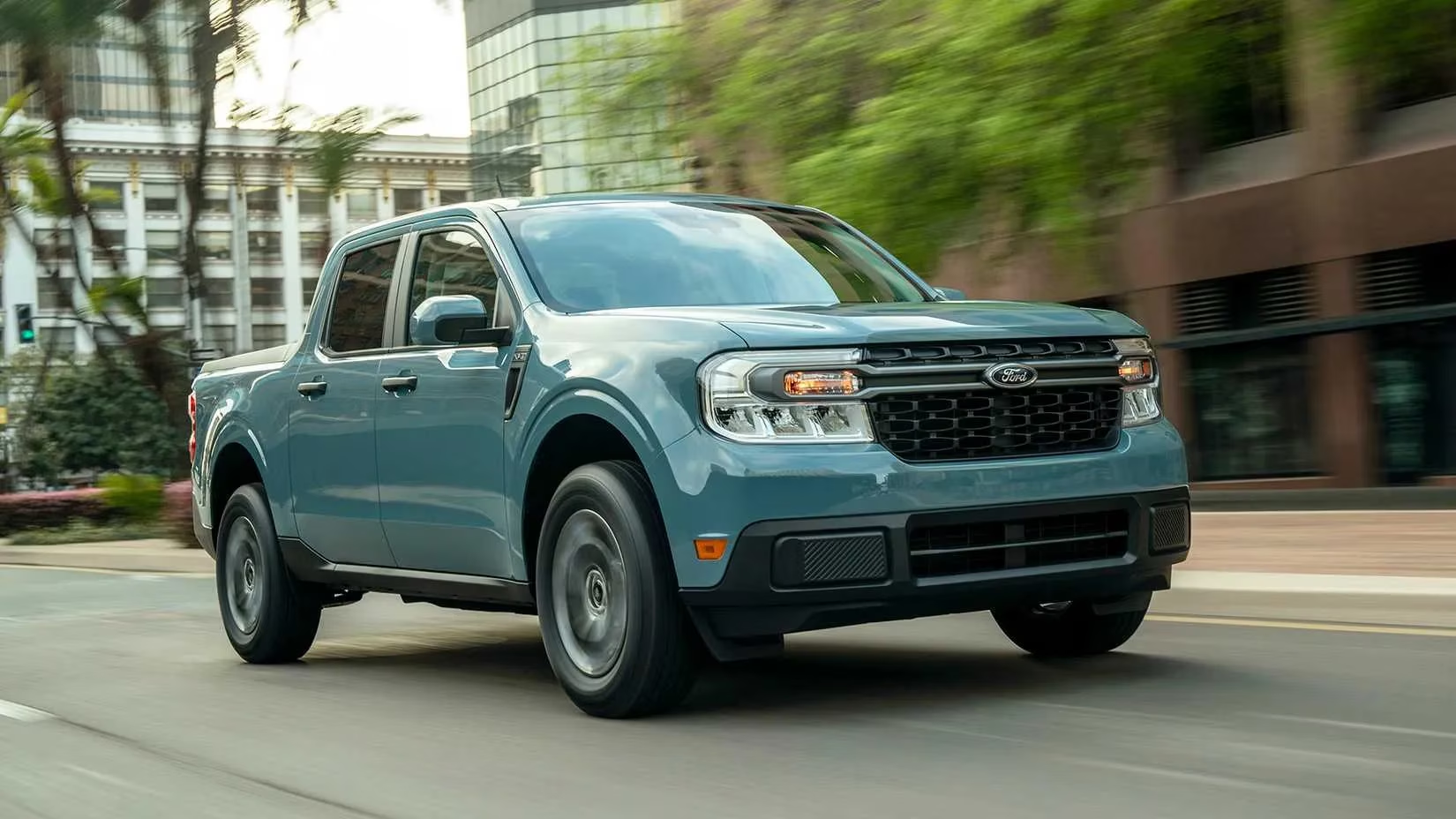
This hybrid success story is central to Ford's current strategy. Company leadership, including CEO Jim Farley, has long positioned hybrid technology not merely as a transitional step but as a vital and permanent fixture in its future lineup. This perspective is increasingly validated by market dynamics. Hybrids offer consumers a pragmatic compromise, delivering enhanced fuel efficiency and reduced emissions without the range anxiety or charging infrastructure concerns associated with pure EVs. For the automaker, a robust hybrid portfolio provides crucial diversity and resilience in a fiercely competitive market.
Analyzing the Shift: Market Forces and Strategic Pivots
Several interconnected factors are likely contributing to this pronounced shift in Ford's sales composition:
-
Changing Consumer Sentiment: The initial wave of early EV adopters may be plateauing, while mainstream buyers are exhibiting caution. Factors like charging network reliability, vehicle pricing, and geopolitical influences on battery supply chains are influencing purchase decisions.
-
Intense Competitive Pressure: Ford executives have openly acknowledged the formidable challenge posed by agile, often Chinese, manufacturers in the EV space. This competitive humility may be prompting a tactical reassessment of resource allocation.
-
Political and Regulatory Flux: The regulatory environment for vehicle emissions and electrification in the United States remains in a state of flux. A hybrid-centric strategy represents a lower-risk pathway, ensuring compliance and market relevance regardless of how policies evolve.
-
Product Lineup Practicality: Hybrids, particularly in popular segments like trucks and SUVs, often present a more immediately practical and cost-effective solution for a wider range of customers, from businesses to families.
The data suggests that Ford's apparent EV sales troubles may be less a failure and more a conscious, or market-enforced, pivot. By strengthening its hybrid offerings, the company is effectively occupying the middle ground in the ongoing powertrain debate. This strategy guarantees a steady revenue stream and customer base while it continues to develop and refine its next-generation electric vehicle technologies for a future where infrastructure and consumer readiness have caught up.
Looking Ahead: Implications for Ford's Electrified Future
As of 2026, Ford's sales report from Q2 2025 serves as a critical benchmark. The company's ability to post strong overall growth while its pure EV sales contract indicates a powerful brand resilience anchored in its hybrid and internal combustion engine vehicles. The narrative is no longer a simple progression from gasoline to electric; it has become a multifaceted journey with hybrids as a dominant and enduring destination for the foreseeable future.
Ford's challenge will be to manage this dual-path strategy effectively. It must continue to invest in and innovate its EV platform to remain a credible player in the long-term zero-emissions market, while simultaneously capitalizing on the booming demand for hybrids. The performance of models like the Maverick Hybrid exemplifies the potential of this approach. The coming quarters will reveal whether the Q2 2025 EV sales dip was a temporary correction or the beginning of a more permanent strategic realignment towards a hybrid-centric portfolio, as the automotive industry navigates an unpredictable road to electrification.
Leave a Comment
Comments