Ford's Mustang Mach-E Demonstrators Turn Electric Hype Into Tire-Shredding Theater
When Ford unleashed the Mustang Mach-E in 2020, the Blue Oval wasted no time selling the electric crossover as a cool piece of kit. High-voltage concepts and bold claims followed, but the company soon turned its attention to other electric projects, including the SuperVan 4.2 and the F-150 Lightning Supertruck. By 2026, the electric performance game has grown far more serious, and Ford has returned to its modern pony car with two demonstrators that are ready to tear up some tires. These are not polite showroom specials. They are loud, winged, carbon-fiber calling cards for what electric performance can become.
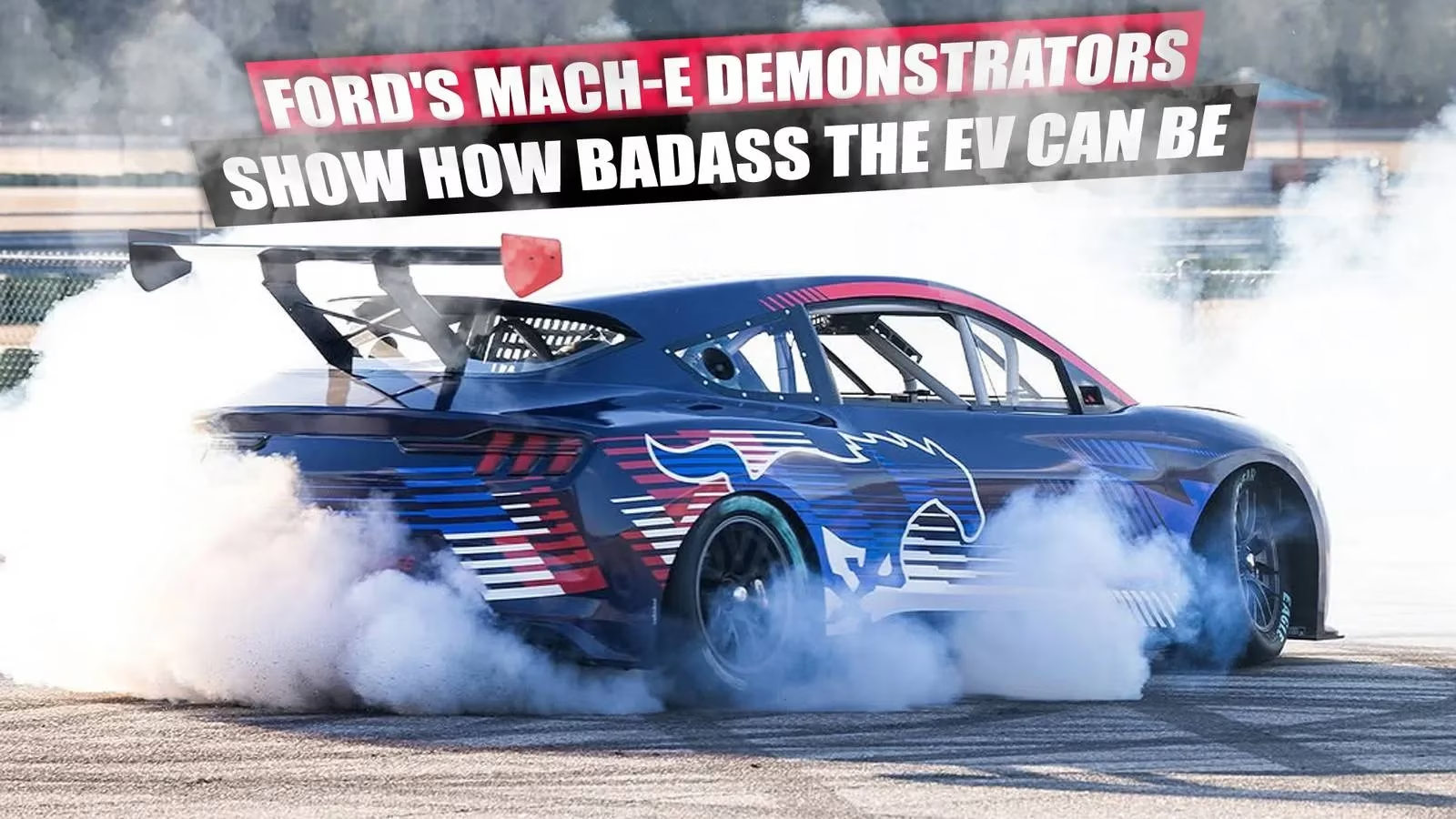
The first machine is the Mustang Mach-E NASCAR Prototype. Ford did not spill every bean about the conversion, but the details that did escape are enough to raise eyebrows. The prototype borrows suspension, brakes, steering, and wheels from the current Cup Series competitor. The street car's dual-motor setup has been tossed aside for a tri-motor arrangement, and Ford added a full carbon-fiber tub plus a 78 kWh battery. That is no small beer. It is a proper race-bred rethink of an electric crossover, not just a sticker package with a big rear wing.
On the outside, the NASCAR prototype stays surprisingly close to the production Mach-E. The body wears the usual racing graphics, the ride height has dropped dramatically, and the giant wing and rear diffuser would never survive a trip to the grocery store. Otherwise, it still looks like a crossover. That matters. It shows that an EV can look like a proper performance vehicle without turning into a spaceship from a science-fiction film. Ford is clearly keen to prove that electric crossovers can have muscle, attitude, and a little bit of menace.
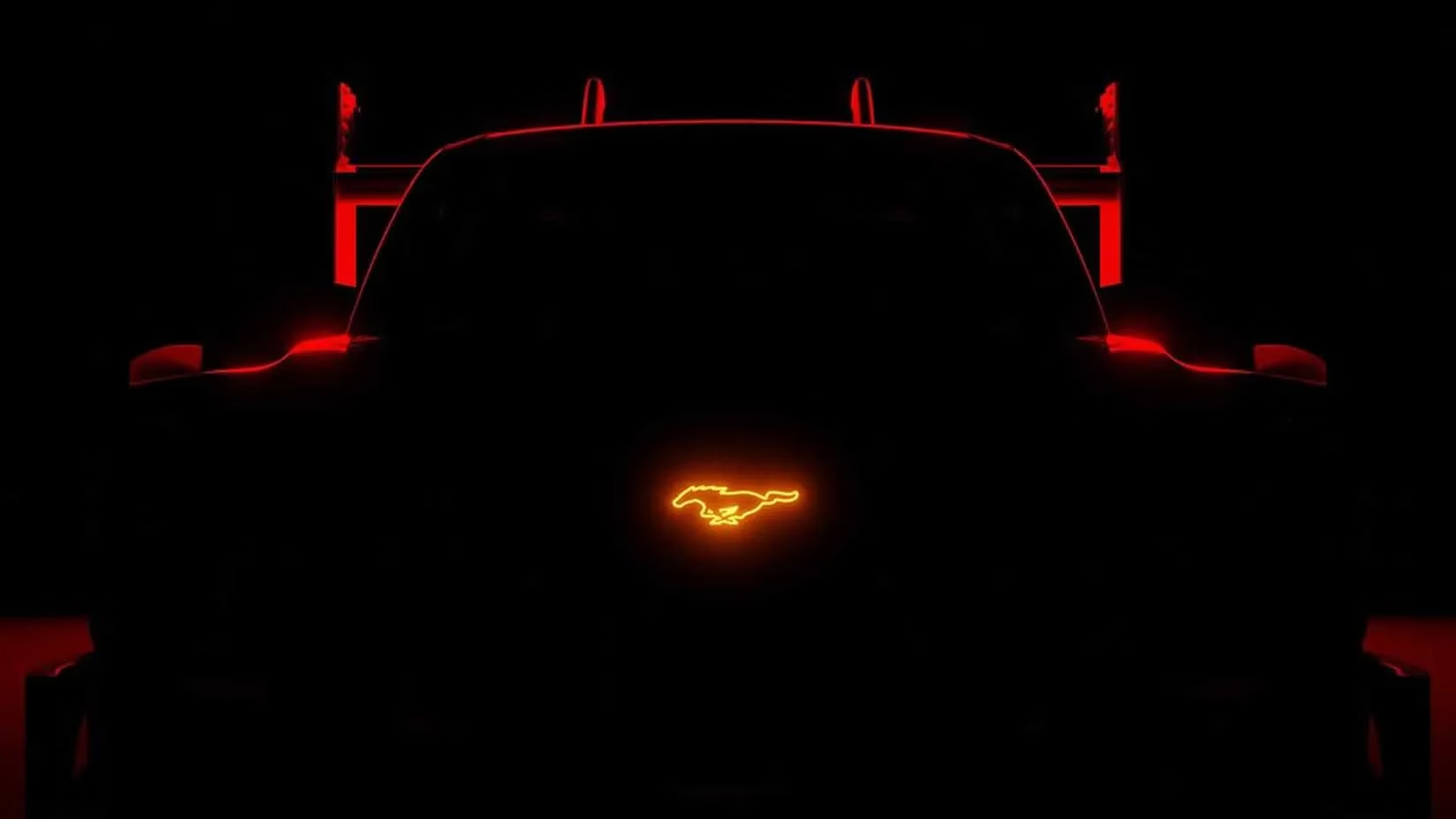
Alongside the NASCAR prototype, Ford also teased the rear end of its Pikes Peak entry. At that stage, the rest of the hill-climb car remained under wraps, but the expansive wing and wide arches told their own story. This looks like a true performance weapon. Past Ford EV demonstrators have been anything but shy. The SuperVan 4.2 and the F-150 Lightning Supertruck each boasted outputs in excess of 1,000 horsepower, with downforce figures of 4,400 lbs and 6,000 lbs respectively. If the Mach-E follows that playbook, it will not be subtle.
To maximize its chances on the mountain, Ford has put Pikes Peak veteran Romain Dumas behind the wheel. Dumas still holds the fastest time on the hill climb, a blistering 7:57.148 set in a Volkswagen I.D. R back in 2018. He has also spent the past two years working with Ford Electric Vehicle Demonstrators at Pikes Peak. In 2023, he set the Open Class record in the SuperVan 4.2 with a time of 8:47.682, and in 2024 he claimed King of the Mountain with the Supertruck. By 2026, that resume still carries serious weight. Having Dumas in the seat gives Ford both credibility and a fighting chance when the mountain decides to bite back.
| Demonstrator | Key hardware | Why it matters |
|---|---|---|
| Mustang Mach-E NASCAR Prototype | Tri-motor setup, carbon-fiber tub, 78 kWh battery, Cup Series suspension, brakes, steering, and wheels | Links the stock crossover to NASCAR's electric future |
| Mustang Mach-E Pikes Peak entry | Huge wing, wide arches, unknown powertrain details | Could translate Ford's 1,000+ hp EV playbook to the Mach-E |
| SuperVan 4.2 | 1,000+ hp, 4,400 lbs of downforce | 2023 Open Class record at Pikes Peak |
| F-150 Lightning Supertruck | 1,000+ hp, 6,000 lbs of downforce | 2024 King of the Mountain |
Why does this matter in 2026? Because electric performance is no longer just about bragging rights at the traffic lights. It is about credibility, cooling, aerodynamics, and making heavy batteries dance. Ford's demonstrators are a loud answer to anyone who still thinks electric crossovers are appliances. The NASCAR prototype says the Mach-E can wear race hardware. The Pikes Peak car says it can climb into thin air and come back with records. Together, they show that Ford is not content to let the Mustang name go soft in the electric era.
There is a marketing angle too. Ford knows that gearheads can smell vaporware from a mile away. A demonstrator has to do more than look badass. It needs lap times, data, and a little rubber on the tarmac. The Blue Oval is walking the walk, or at least laying rubber where its mouth is. The lessons from these cars, from battery thermal management to chassis tuning and aero, can trickle down to future production EVs. In plain English, Ford is using racing as a pressure cooker.
The story is not finished. The NASCAR prototype still has to prove itself on track, and Pikes Peak always writes its own script. Weather, altitude, and a single mistake can turn a hero into a cautionary tale. But Ford has already sent a message: the Mustang Mach-E is not just an electric crossover. It is a platform for performance experiments. In 2026, that message lands harder than ever. If Ford keeps this up, the skeptics may have to eat humble pie, and maybe a little tire smoke too. 😎
Leave a Comment
Comments