Electric Power: Ford's EV Dominance in Drag Racing Against V8 Muscle Cars
In the automotive world of 2026, the debate between electric vehicles and their combustion-powered counterparts continues to rage on. While EVs face legitimate criticisms regarding their premium pricing, limited driving range compared to traditional vehicles, and the ongoing challenges with public charging infrastructure, they possess one undeniable and often jaw-dropping advantage: instantaneous, hypercar-rivaling acceleration. This raw, electric power isn't just theoretical; it's being proven on drag strips and circuits around the globe, where heavyweight electric vehicles are surprisingly outpacing legendary V8-powered muscle cars.
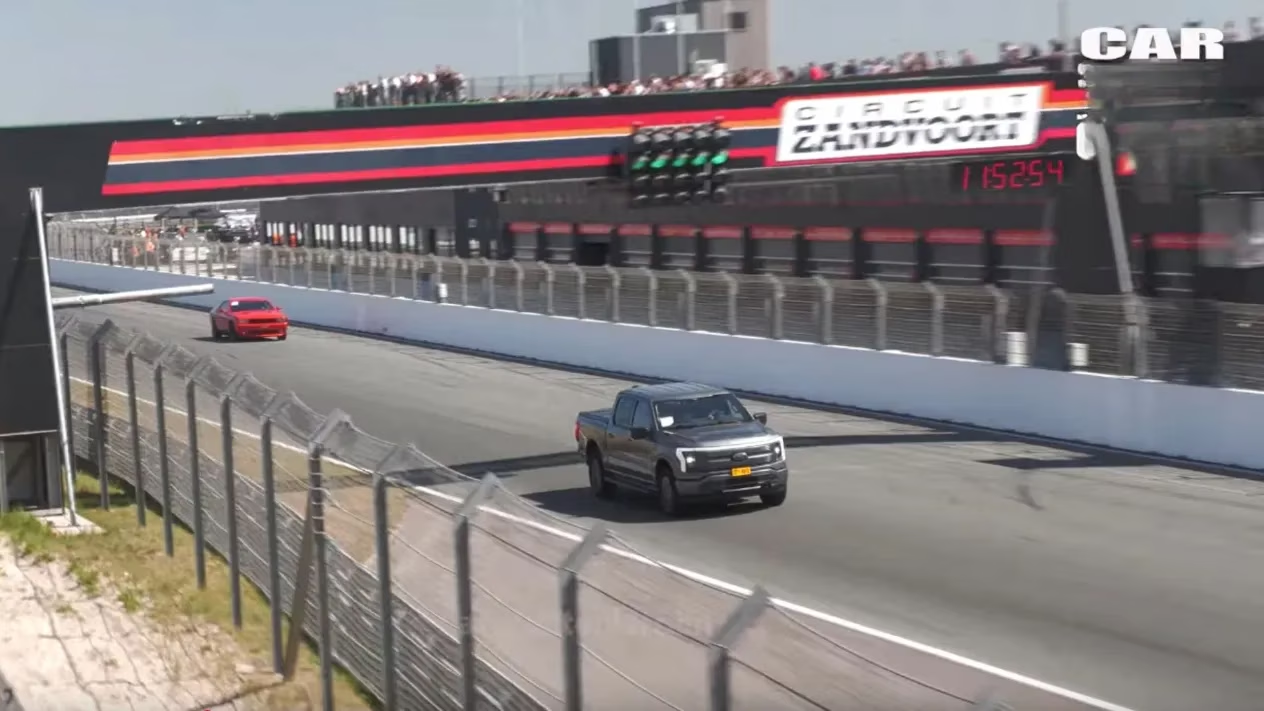
A compelling demonstration of this electric supremacy was captured in a viral video from the Carspotter Jeron YouTube channel. The scene was Circuit Zandvoort in the Netherlands, but the action was a series of straight-line sprints. The star of the show was a silvery-gray Ford F-150 Lightning, a full-size electric pickup truck that most would assume is built for hauling, not racing. Yet, this hulking beast didn't just compete; it absolutely dominated several pumped-up performance cars. The video served as a stark reminder that in a short-distance drag race, torque—and specifically, electric torque—is king.
The Lightning Strikes: Pickup vs. Pony Cars
The first challenger to line up against the silent Ford pickup was a roaring Dodge Challenger. While the exact model of the Mopar muscle car was unclear, the deep, thunderous rumble unmistakably signaled a potent V8 under its hood—likely the standard 5.7-liter Hemi engine. Despite the auditory drama from the Challenger, the result was one-sided. When the lights went out, the F-150 Lightning leaped off the line with ferocious urgency, its four-wheel-drive system efficiently translating immense electric torque into forward motion without wheel spin or drama. The Dodge was promptly left behind, its roaring engine note fading in the Ford's rearview.
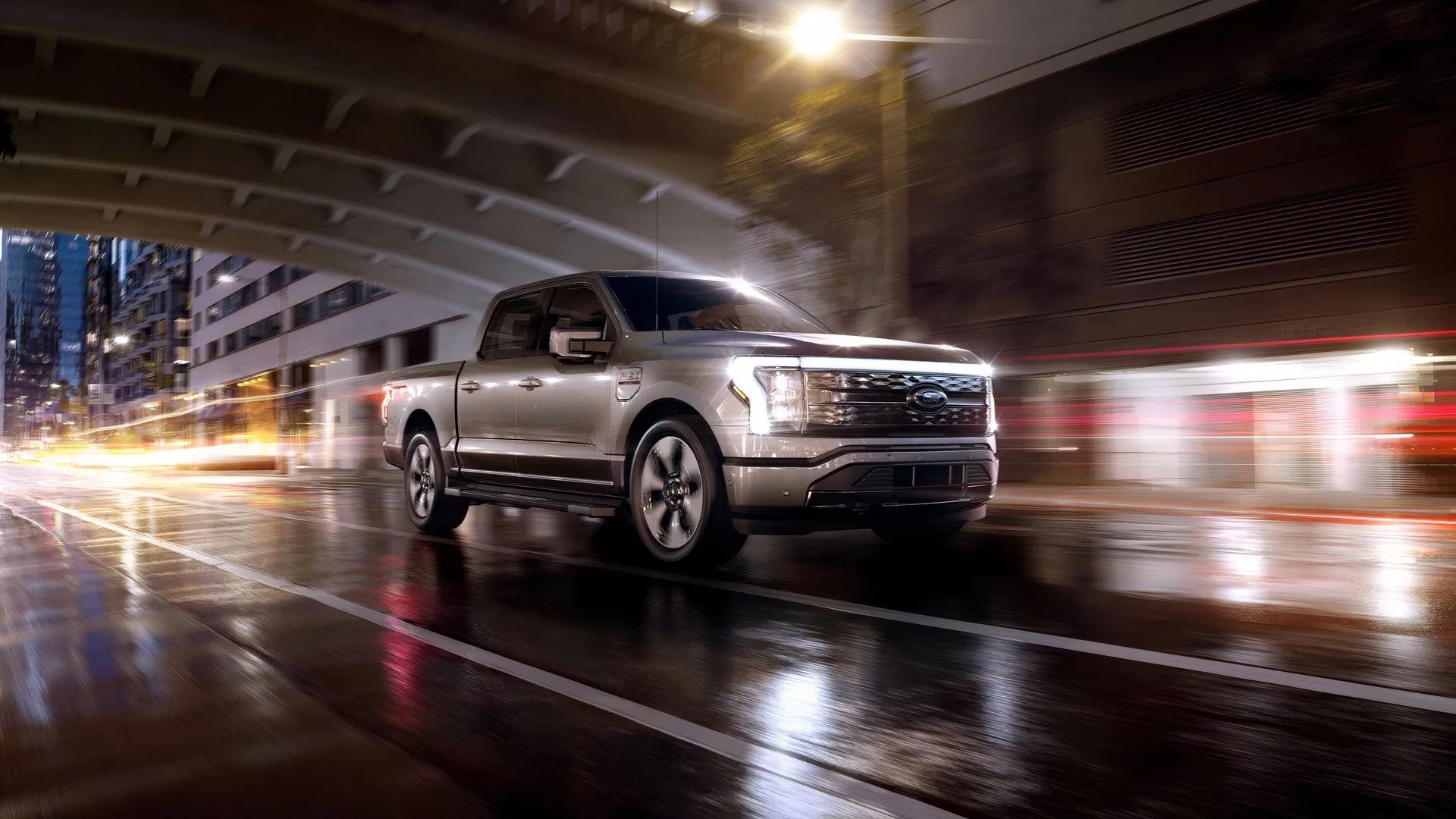
Not to be discouraged, another American icon stepped up: a fifth-generation Chevrolet Camaro. This V8-powered muscle car managed a significantly better launch than the Challenger, but it was still insufficient. The Lightning, nearly silent in its operation, simply walked away, demonstrating a decisive victory. The truck's advantage lies in its specifications: with up to 580 horsepower and a staggering 775 lb-ft of torque available instantly from zero RPM, it can propel its nearly 6,900-pound frame from 0 to 60 mph in a mere 4.0 seconds. This performance is nothing short of astonishing for a vehicle of its size and purpose.
However, the Lightning's winning streak wasn't infinite. It finally met its match in the form of a classic, fiery-orange Pontiac GTO (likely a 1970 model). The vintage muscle car, presumably heavily modified, unleashed enough horsepower to outrun the electric pickup by several car lengths, proving that well-tuned combustion engines still have a place in the drag racing arena.
The Mach-E Joins the Fray
The video didn't stop with the pickup truck. Ford's other electric performance star, the Mustang Mach-E GT, also entered the competition. This all-electric SUV is positioned as a true performance vehicle, and it lived up to that billing.
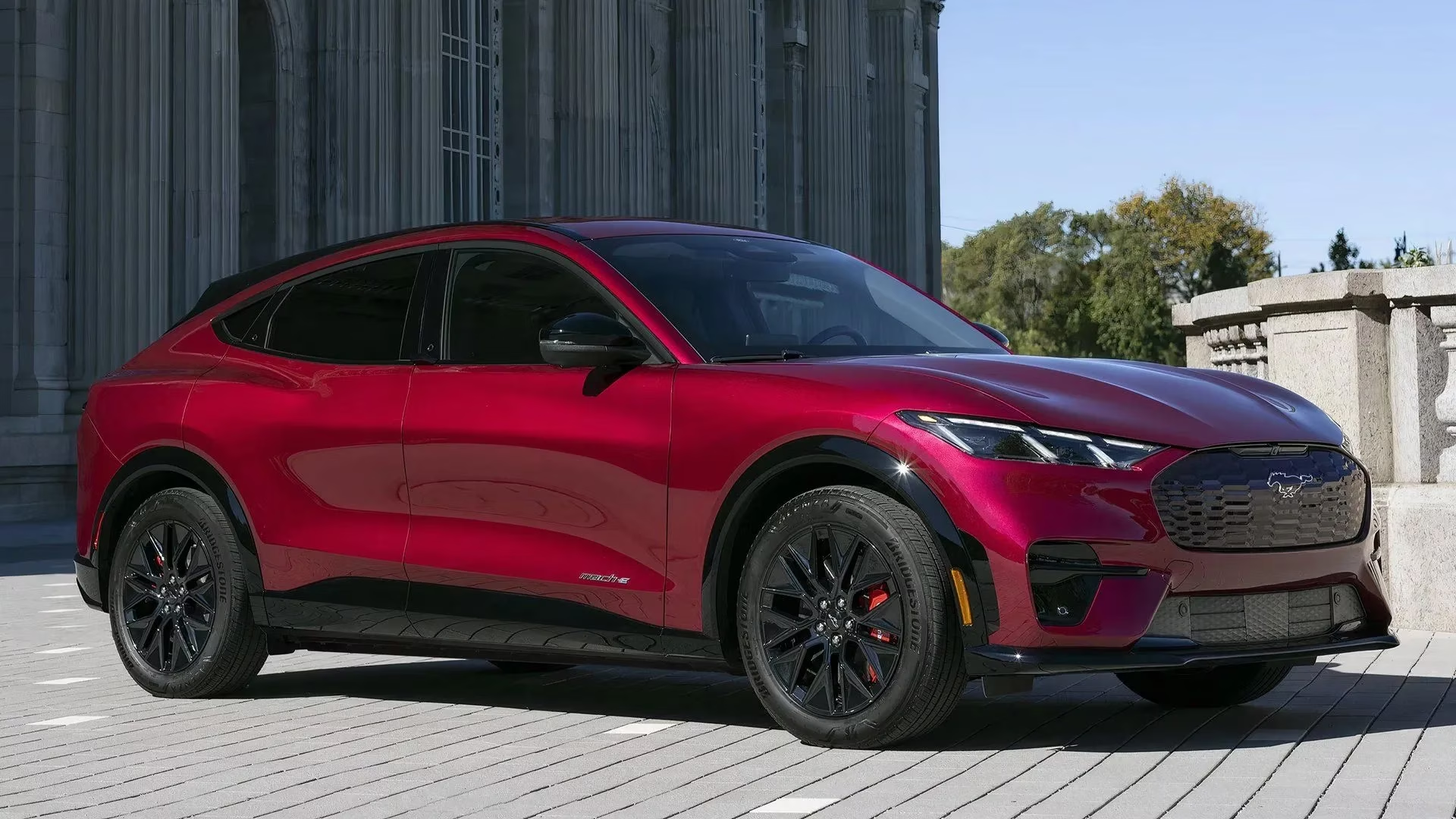
First, it faced a C5 Chevrolet Corvette. The sports car got an early jump, but a poor launch plagued by wheel spin allowed the Mach-E GT to capitalize and gallop away for an easy win. The electric SUV's momentum didn't stop there. It proceeded to outrun a modified Chevrolet C10 pickup truck and even a sixth-generation Camaro. For anyone harboring doubts about the straight-line potency of modern electric vehicles, this sequence of races should have eradicated them completely.
The 2025 Mustang Mach-E GT is a formidable machine in its own right. Its dual-motor, all-wheel-drive powertrain generates 480 horsepower and up to 700 lb-ft of torque. This translates to a 0-60 mph sprint time of just 3.3 seconds, putting it in supercar territory. Energy comes from a sizable 91-kilowatt-hour battery pack, though its estimated range of 280 miles per charge is considered decent but not class-leading.
The Physics of Electric Performance
So, how can these electric vehicles, particularly the bulky F-150 Lightning, so decisively outrun dedicated sports cars? The answer lies in the fundamental differences between electric and internal combustion engines.
| Performance Factor | Electric Vehicles (e.g., F-150 Lightning) | Combustion Muscle Cars |
|---|---|---|
| Torque Delivery | Instantaneous, maximum torque from 0 RPM | Builds with engine RPM, requires gear shifts |
| Traction | Precise, computer-controlled AWD | Often RWD, prone to wheel spin on launch |
| Launch | Consistent, drama-free "bolt" | Requires perfect clutch/throttle modulation |
Electric motors deliver 100% of their torque the instant the driver presses the accelerator. There's no waiting for turbo spool, engine RPM to climb, or for a transmission to find the right gear. This gives EVs a monumental advantage off the line. Furthermore, the sophisticated all-wheel-drive systems in these Fords manage power delivery with precision, minimizing wheel spin and maximizing grip.
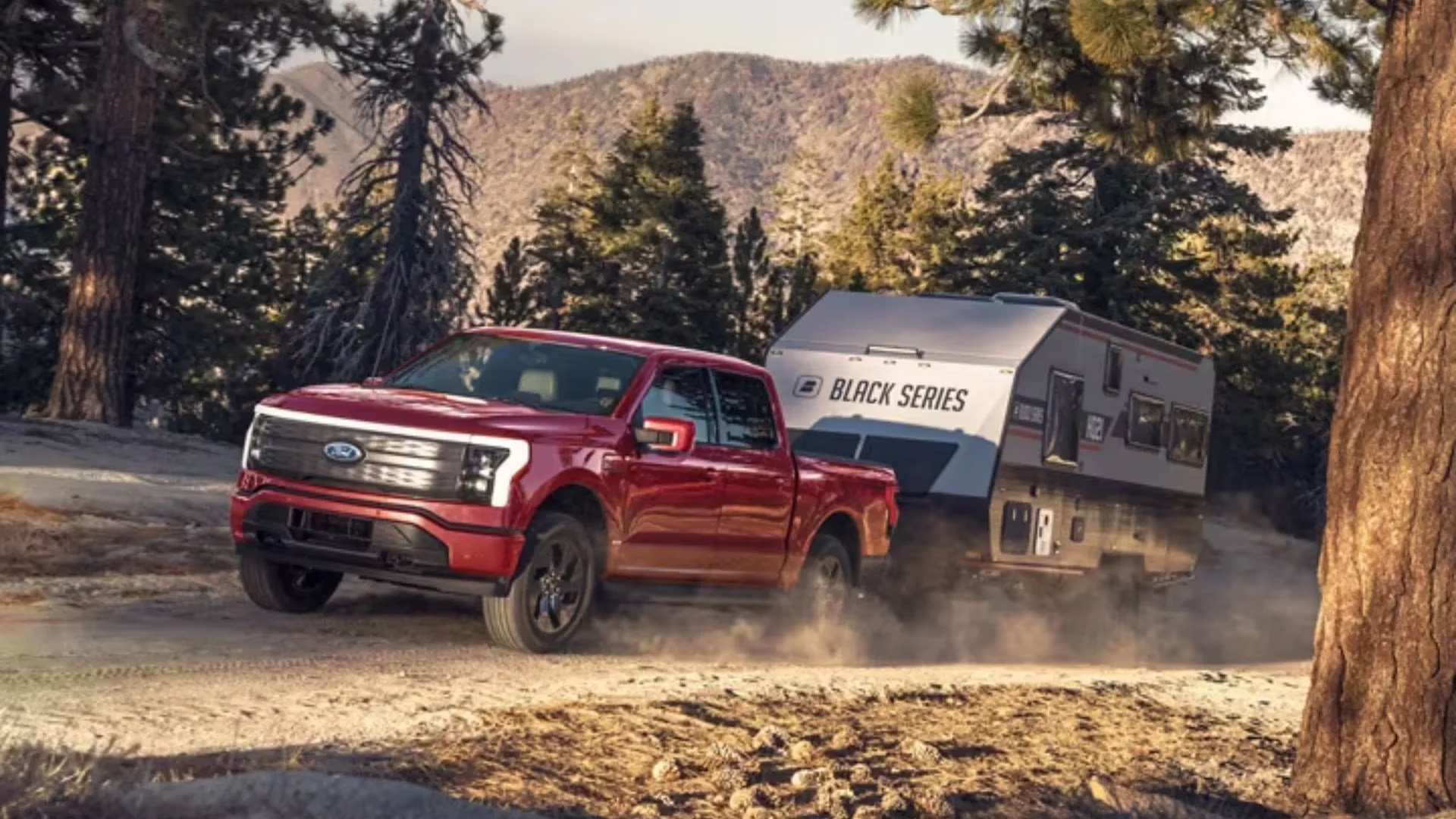
However, the video also hints at the inherent limitations of electric performance vehicles. Physics cannot be cheated. The primary drawback is weight. The massive battery packs needed for range add hundreds of pounds. The F-150 Lightning can weigh nearly 6,900 pounds, over two tons more than a typical Camaro. This extreme mass is a severe handicap in cornering, where agility and lateral grip are paramount. Tires can only provide so much adhesion, and a heavier vehicle will always struggle to change direction compared to a lighter one.
Other limitations include:
-
Thermal Management & Battery Degradation: Repeated hard launches cause battery packs to heat up, which can lead to reduced power output to prevent damage. Performance can fade after a few back-to-back runs.
-
Aerodynamic Drag: The brick-like shape of the F-150 pickup creates significant aerodynamic drag at higher speeds, unlike the sleek profile of a Camaro or Corvette.
-
High-Speed Performance: Electric motors often lose their relative advantage at higher speeds. While their low-end torque is devastating, many combustion engines can make more power in the top end of the rev range. This is compounded by the F-150 Lightning's electronically limited top speed of 110 mph, meaning a powerful muscle car could potentially catch and pass it on a longer strip.
In conclusion, the drag races at Zandvoort offer a fascinating snapshot of the 2026 automotive landscape. Electric vehicles, represented by Ford's Lightning and Mach-E GT, have decisively conquered the realm of instant, accessible acceleration. They can humble legendary V8 muscle cars in a short sprint, making blistering performance available in practical packages like trucks and SUVs. Yet, the victory of the classic Pontiac GTO and the acknowledged handling limitations serve as a reminder that the combustion engine, especially in lightweight, focused performance cars, is far from obsolete. The future is not a simple replacement but a compelling and diverse coexistence of powertrains, each with its own thrilling strengths.
Leave a Comment
Comments