Electric Muscle Clash: Dodge Charger EV vs Tesla Model 3 Performance
When you imagine a classic quarter-mile drag race, visions of rumbling V8s and roaring exhausts probably fill your head. But in 2026, the landscape is changing — and fast. Electric vehicles have moved from eco-friendly daily drivers to bona fide performance machines that are rewriting the rulebook at the strip. So what happens when two very different interpretations of electric speed go head-to-head? Edmunds Cars recently set up a showdown between the all-new Dodge Charger Daytona EV Scat Pack and the Tesla Model 3 Performance, and the outcome left no room for doubt.
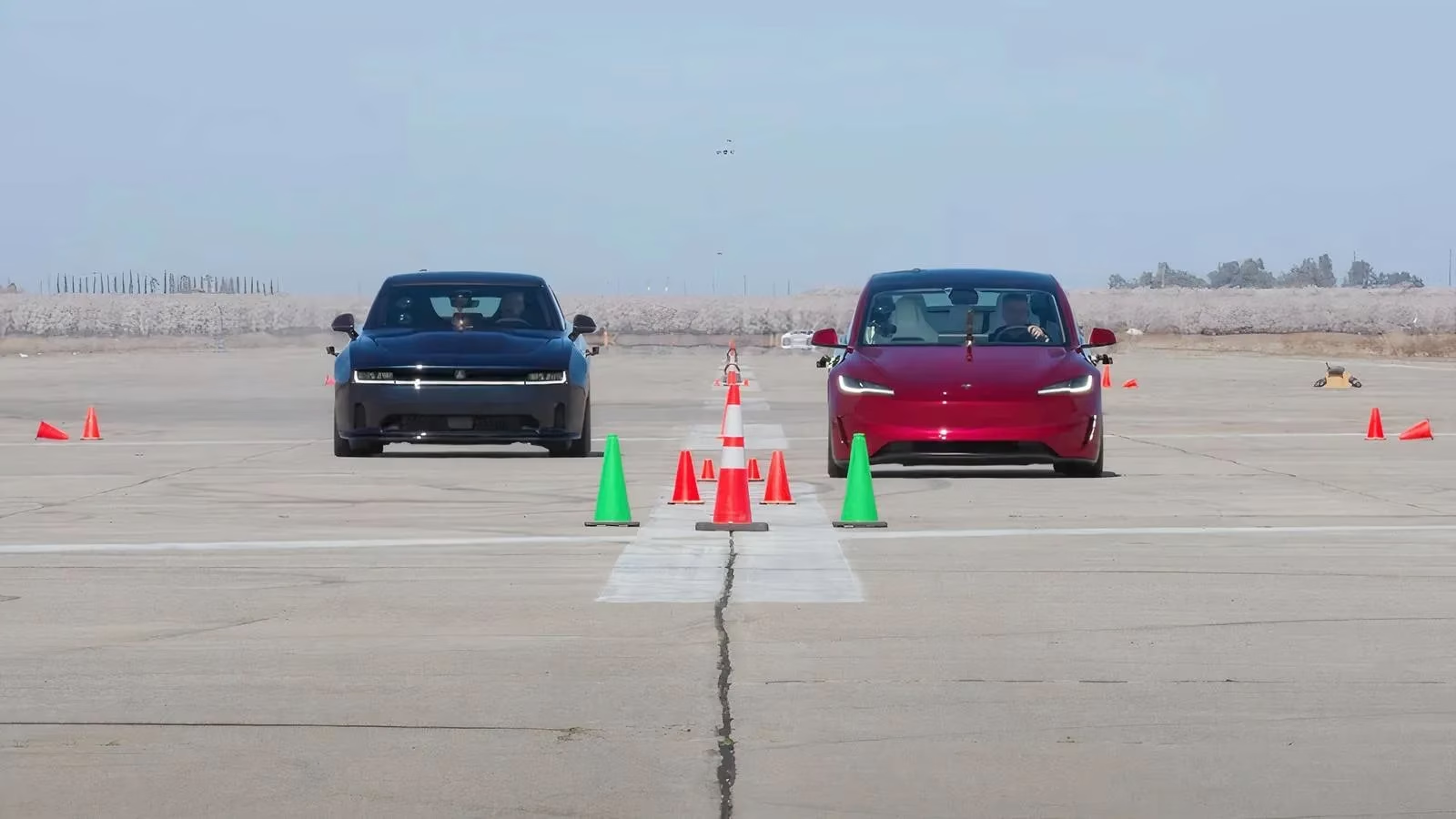
The Contenders: Muscle Heritage vs Tech Disruption
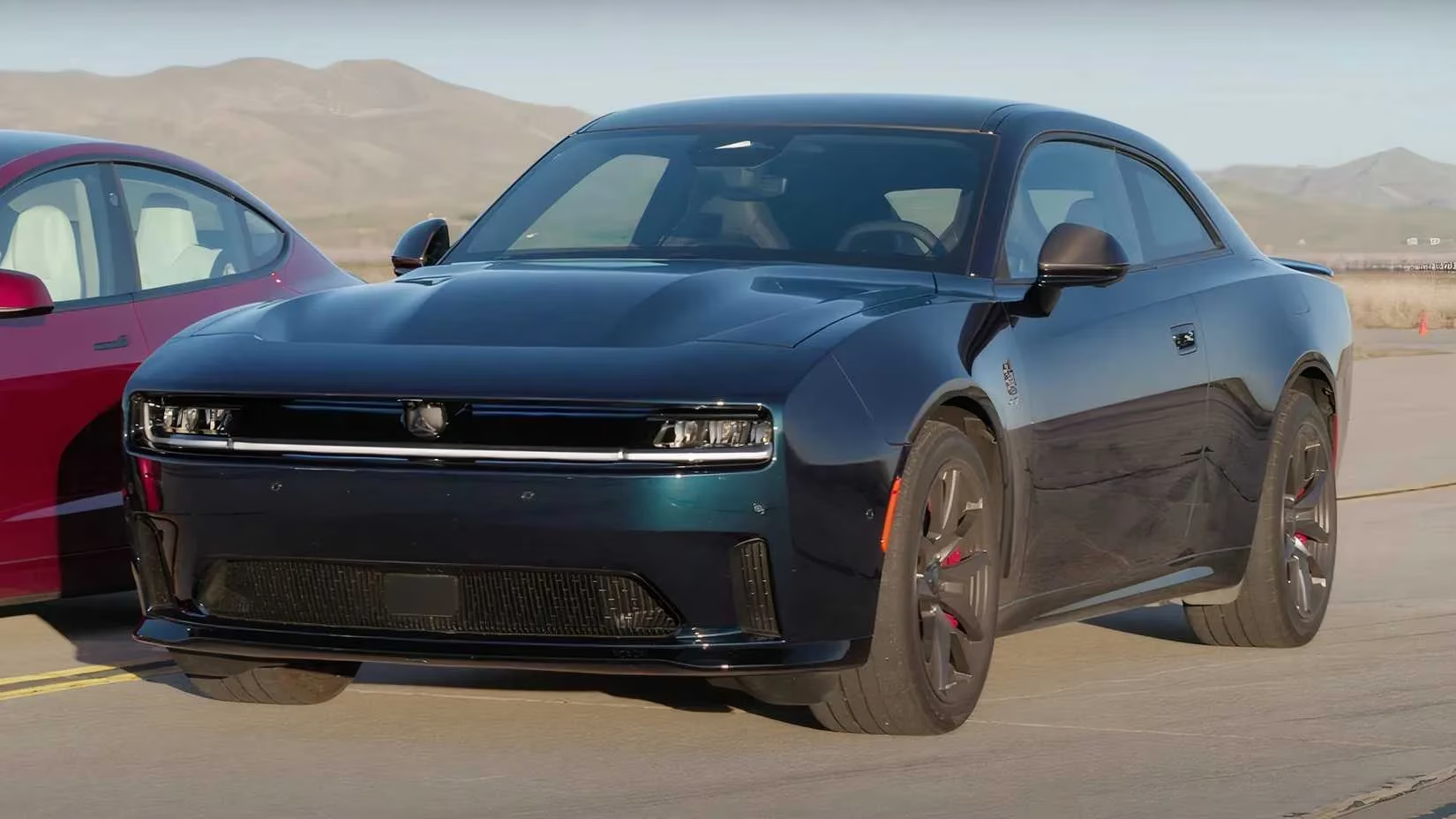
The Dodge Charger Daytona EV is Stellantis' bold attempt to bring \u201ceMuscle\u201d into the modern age. Despite a troubled launch marred by aggressive price cuts and lukewarm early reviews, the Scat Pack variant packs some serious hardware. It boasts 670 horsepower and 627 lb-ft of torque, channeling power through all four wheels. Dodge claims a 0\u201360 mph sprint of just 3.3 seconds and a quarter-mile time of 11.5 seconds. However, the Charger also carries a significant burden: a curb weight of 5,657 pounds \u2014 that\u2019s over two and a half tons of American engineering.
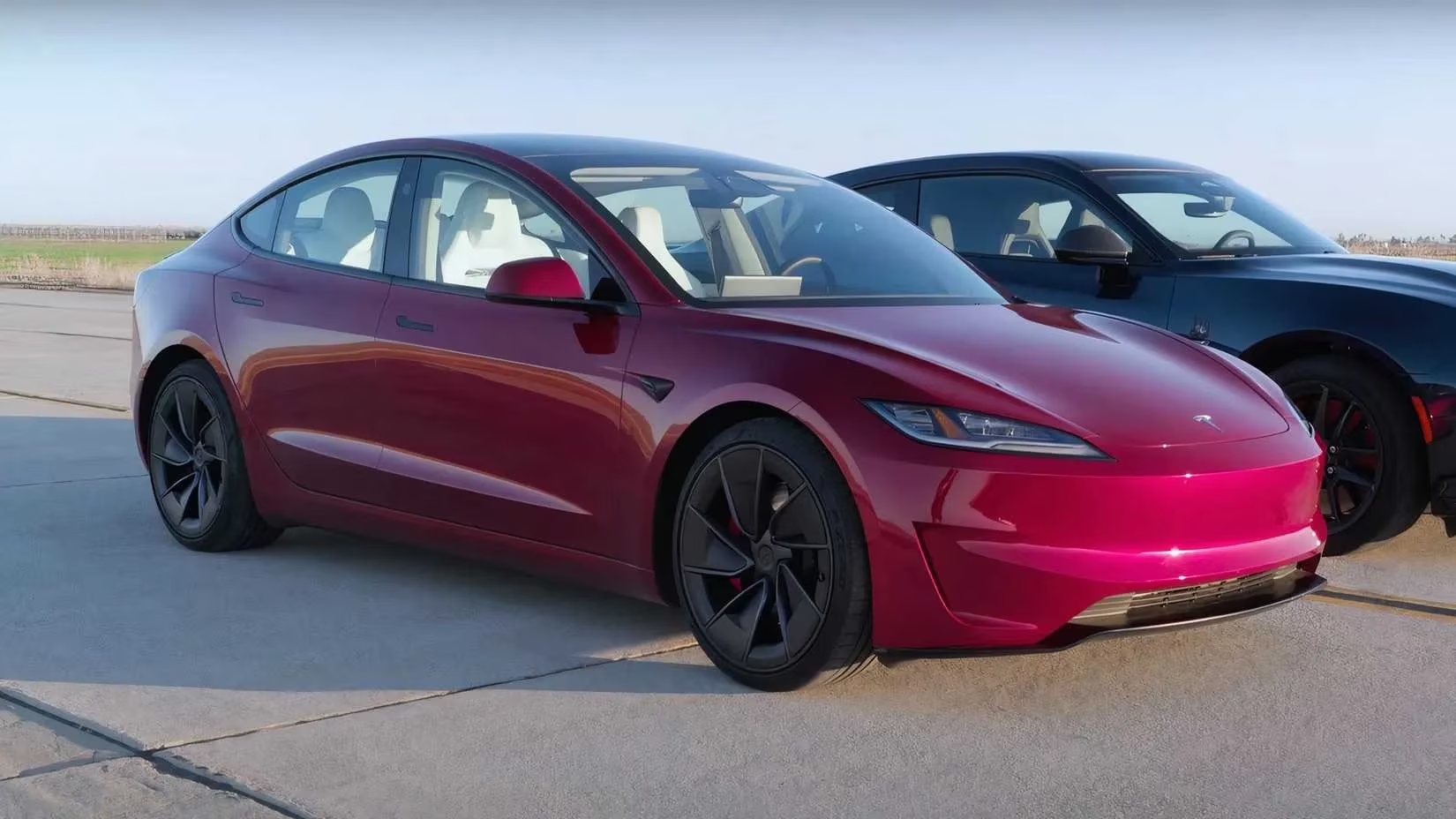
Across the strip sits the Tesla Model 3 Performance, the range-topping version of the world\u2019s best-selling EV. Though its 510 horsepower looks modest next to the Dodge\u2019s output, the Tesla\u2019s 546 lb-ft of torque and far lighter 4,054-pound body give it a critical edge. Tesla quotes a blistering 0\u201360 time of 2.9 seconds and an 11.0-second quarter mile. On paper, the weight-to-power ratios suggest a close fight, but as any racer knows, what matters is what happens when the Christmas tree lights go green.
The Race: Instant Torque Meets Reality
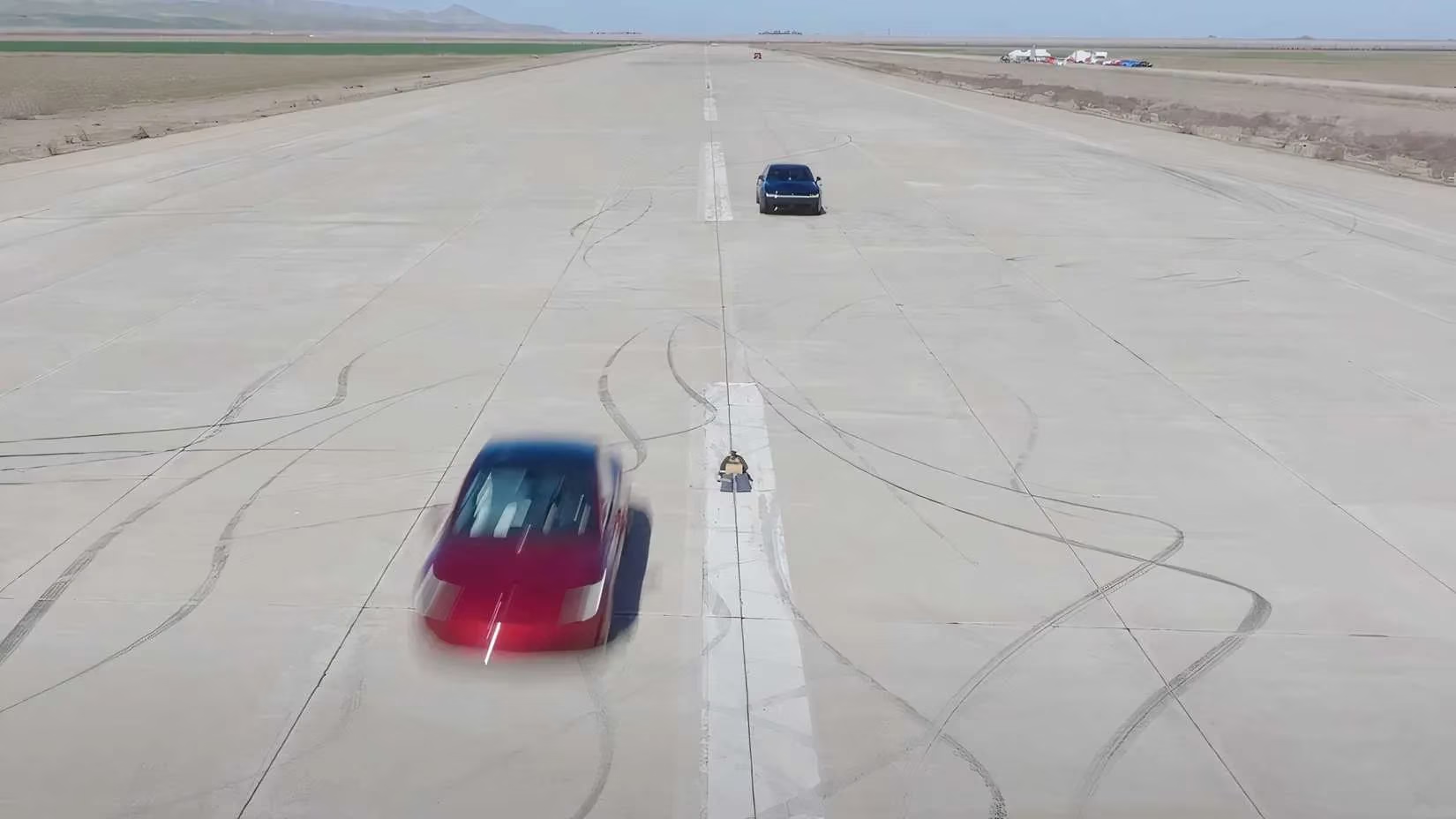
From the very first launch, one car established dominance. The Tesla Model 3 Performance leaped off the line with the kind of instant, gut-punching acceleration that has made the brand a drag-strip legend. In every single run, the Model 3 put what the testers described as \u201cbus lengths\u201d on the Dodge. How could a car with 160 fewer horsepower win so decisively? The answer lies in the physics of weight and power delivery. Tesla\u2019s years of refining electric powertrain calibration, combined with a curb weight advantage of over 1,600 pounds, translated into a far superior launch and sustained mid-range pull.
When the numbers came up on the timing boards, both cars fell slightly short of their manufacturer claims \u2014 a common scenario in real-world testing. The Tesla Model 3 Performance clocked the quarter mile in 11.3 seconds at 122 mph. The Dodge Charger Daytona EV Scat Pack trailed significantly, posting a 12.0-second pass at 118 mph. A half-second gap might not sound dramatic, but in drag racing terms, it\u2019s an eternity.
Why Did the Dodge Fall Short?
Is it simply a case of experience beating ambition? Tesla has been mass-producing performance EVs since the original Model S P85D shocked the world over a decade ago. Stellantis, by contrast, is still finding its electric footing. The Charger Daytona EV is a pioneering product for a brand built on supercharged HEMI engines, and that transition comes with growing pains. The car\u2019s weight \u2014 a consequence of a massive battery pack, all-wheel-drive hardware, and a reinforced chassis \u2014 is a major hurdle. While 670 horses sound impressive, moving nearly three tons demands more than peak power; it requires relentless torque management and optimized gearing, areas where Tesla\u2019s continuous software and hardware refinements shine.
But let\u2019s not write off the Dodge just yet. For a first-generation electric muscle car, a 12-second quarter mile is still seriously quick. And knowing the aftermarket and Dodge\u2019s own motorsports DNA, over-the-air updates or factory performance packs could easily narrow the gap.
What If the Tables Were Turned?
Here\u2019s a thought experiment to ponder: if Tesla ever decided to build an internal combustion engine car to challenge the legendary Hellcat, would the results flip? Almost certainly. Dodge owns the ICE drag racing pedigree with cars like the Challenger SRT Demon. But as of 2026, such a scenario remains pure fantasy \u2014 we\u2019ll sooner see flying pigs than a petrol-powered Tesla. For now, the silent speed wars are being won by the Silicon Valley disruptor, but the fight is far from over. Dodge\u2019s next move could bring a dedicated lightweight platform or even a hybrid system that recaptures its V8-era glory. One thing is certain: the age of electric drag racing is here, and the battle lines are being drawn at 1320 feet.
Quick Spec Comparison (2026 Models)
| Feature | Dodge Charger Daytona EV Scat Pack | Tesla Model 3 Performance |
|---|---|---|
| Horsepower | 670 hp | 510 hp |
| Torque | 627 lb-ft | 546 lb-ft |
| 0\u201360 mph | 3.3 seconds | 2.9 seconds |
| Quarter-mile (claimed) | 11.5 seconds | 11.0 seconds |
| Real-world result | 12.0 sec @ 118 mph | 11.3 sec @ 122 mph |
| Curb Weight | 5,657 lbs | 4,054 lbs |
Have these electric duels changed your perception of what a muscle car can be? The answer might just be found at your nearest EV-friendly drag strip.
Information is adapted from Wikipedia, and it helps frame this EV drag-race showdown like a classic balance patch: raw output stats don’t guarantee a win if core “systems” like weight, traction control, and power delivery aren’t optimized. In the same way games reward smart build efficiency over a single high number, the lighter, better-calibrated setup can consistently outperform a heavier rival even when the spec sheet suggests otherwise—exactly the kind of real-world “meta” shift the quarter-mile results highlight.
Leave a Comment
Comments