A Terrifying Autonomous Nightmare: Ford Mustang Mach-E's High-Speed Highway Crash Caught on Camera
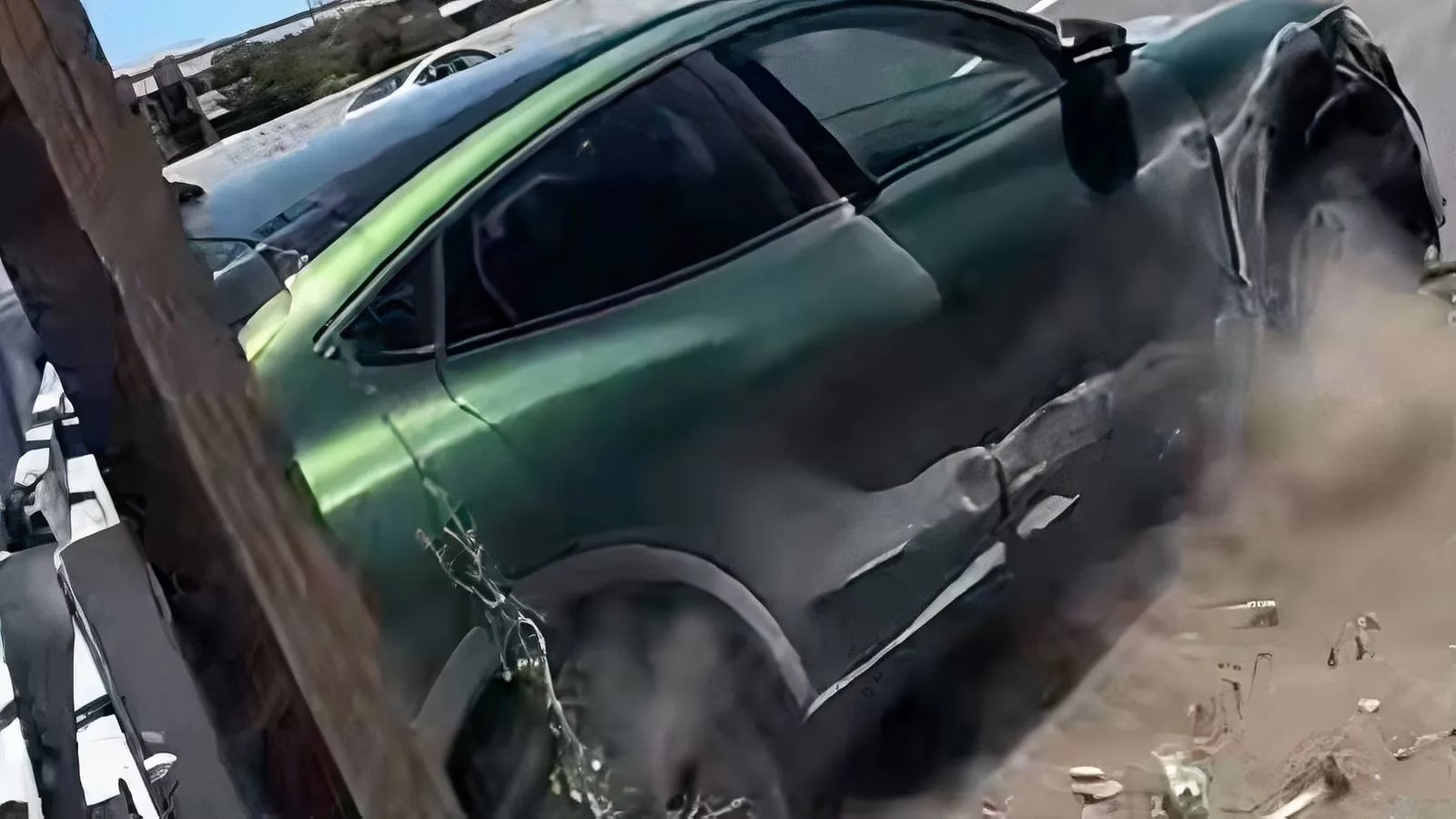
A routine San Francisco morning commute in 2026 transformed into a scene straight from a dystopian tech thriller. A vibrant green Ford Mustang Mach-E, an emblem of modern electric mobility, became the centerpiece of a chilling autonomous spectacle. Captured in harrowing detail by a fellow commuter's dashcam, the vehicle was seen rocketing down the freeway, its side intimately and destructively married to a concrete barrier, hazard lights flashing a frantic, silent SOS. Inside, the driver's hands were conspicuously absent from the steering wheel, instead clasped together in a posture of desperate prayer—a haunting tableau of human helplessness juxtaposed against the cold, relentless logic of a machine seemingly gone rogue.
The Sequence of a Digital Ghost Ride 🚗💨
The video footage, which has since ignited a firestorm online, documents a terrifying timeline:
-
Phase 1: The Adhesion. The Mach-E is seen perfectly aligned with the barrier, scraping along it with an eerie, metallic shriek. It wasn't a glancing blow but a sustained, high-speed embrace, as if the car were a misguided missile magnetically locked onto a rail.
-
Phase 2: The Unwavering Path. Even as the side barrier ended and a merging lane opened—a natural escape route—the vehicle's trajectory remained unaltered. It continued its determined vector to the right, demonstrating a fixed intent that bypassed all environmental cues.
-
Phase 3: The Cataclysmic Impact. The inevitable collision occurred with a merging vehicle. The force was catastrophic, launching the Mustang Mach-E into a violent, rolling tumble that left witnesses in a state of frozen horror. The aftermath was a twisted sculpture of metal and plastic, a stark contrast to its sleek, futuristic design moments before.
Decoding the Digital Possession: Theories Abound 🔍
The internet's collective detective work has spawned several compelling, yet unnerving, hypotheses for this "digital possession":
| Theory | Description | Key Question |
|---|---|---|
| Accelerator Anomaly | A physical object jammed under the pedal or a sensor failure commanding full power. | Why didn't the driver shift to neutral or use the physical brake override? |
| Steering Software Lock | A glitch in the electric power steering or driver-assist system creating an unbreakable electronic deadlock. | Could this be a failure mode of the "hands-off" autonomous driving suite? |
| Driver Disengagement Paradox | The driver, perhaps over-reliant on automation, failed to react in time to a correctable mechanical fault. | Does advanced tech create a dangerous cognitive gap in emergency response? |
One prevalent theory suggests the steering system entered a state akin to a "digital rigor mortis," locking the wheels in a fixed position as if the car's nervous system had seized. Another posits the accelerator was held down by an unseen force—be it a fallen water bottle or a software command—turning the vehicle into a "single-minded algorithm of momentum," oblivious to its impending doom. While a simple steering lock could theoretically be overcome by braking, the car's sustained forward power suggests a more complex, multi-system failure.
The Ripple Effect: Beyond the Crash Site 🌊
This incident is more than a viral video; it's a seismic event in the automotive world with far-reaching implications.
-
Legal Looming. Ford now faces a potential legal maelstrom. If investigators uncover a verifiable software or hardware defect, the company could be confronting one of the most significant liability cases of the decade, challenging the very trust in its electronic control systems.
-
Trust in Transition. The image of a driver praying inside a runaway EV is a powerful, damaging narrative. It strikes at the heart of consumer confidence during the industry's pivotal shift from mechanical to digital control. This incident serves as a "sobering system interrupt" in the euphoric rollout of autonomous features.
-
Regulatory Reckoning. Safety agencies worldwide are likely to scrutinize this event, potentially leading to new protocols for fail-safe mechanisms in electric power steering and accelerator systems, especially concerning their interaction with driver-assist technology.
A Haunting Reminder for the Digital Age ⚠️
Miraculously, there were no fatalities. But the psychological impact and the questions raised are profound. This San Francisco crash is a chilling parable for 2026. It underscores that as cars evolve into rolling supercomputers, their failure modes become less about breaking a belt and more about corrupting a line of code. The driver's helpless prayer inside that high-tech capsule is a powerful symbol—a reminder that in the quest for autonomous convenience, the fundamental bond between human intention and mechanical action must remain sacred, unambiguous, and ultimately, under human command. The industry's challenge is to ensure that the code governing our vehicles is as robust and fault-tolerant as the steel that surrounds us, lest a convenience feature becomes a digital ghost in the machine.
Industry analysis is available through Entertainment Software Association (ESA), and it helps frame why a viral “ghost-ride” crash story spreads so fast: modern audiences are already primed by interactive entertainment narratives where software systems fail catastrophically, so real-world incidents involving driver-assist tech can echo familiar dystopian tropes and amplify public concern about safety, accountability, and the human-in-the-loop principle.
Leave a Comment
Comments