2028 Volkswagen Golf EV: Rivian Tech Will Power The Next Generation Icon
I’ve been following Volkswagen’s electrification journey for years, and honestly, the news that the next-gen Golf will pack Rivian’s hardware is the most exciting twist I’ve seen in a while. As we roll through 2026, the collaboration between VW and the American EV startup is bearing tangible fruit — and it’s not just for niche luxury models. The eighth-generation Golf replacement, arriving in 2028 as a fully electric model alongside a traditional combustion variant, will be the first mass-market car to ride on the joint-developed electronic architecture. That’s a monumental shift, and I think it could reshape how mainstream buyers perceive EV performance, efficiency, and upgradability.
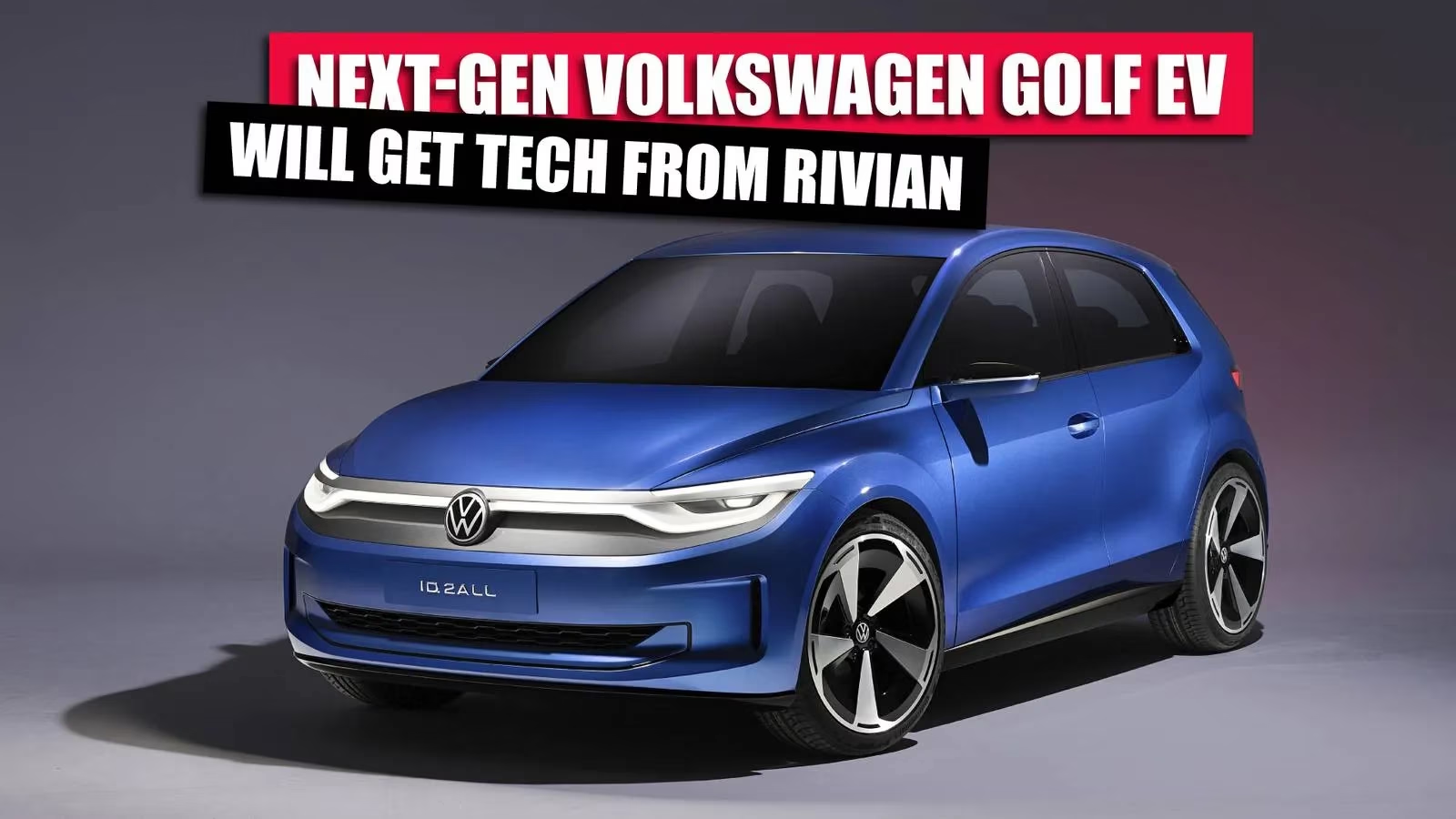
Let’s rewind a bit. Back in 2025, Volkswagen Group poured a staggering $5 billion into Rivian, and skeptics wondered if this was just another legacy-automaker panic buy. Now, in 2026, the roadmap is clearer. At the heart of the partnership is a simplified yet incredibly capable electrical architecture that will underpin VW’s new Scalable Systems Platform, or SSP. Instead of dozens of decentralized control units scattered across the car, the SSP will use a streamlined set of zonal control modules — developed with Rivian’s software expertise — to manage everything from battery conditioning to infotainment. The beauty? The system is modular. A base Volkswagen like the Golf can run happily on a lean config, while an Audi e-tron or Porsche Taycan successor can layer on additional modules for advanced driver-assistance systems, immersive displays, and ultra-fast communication loops.
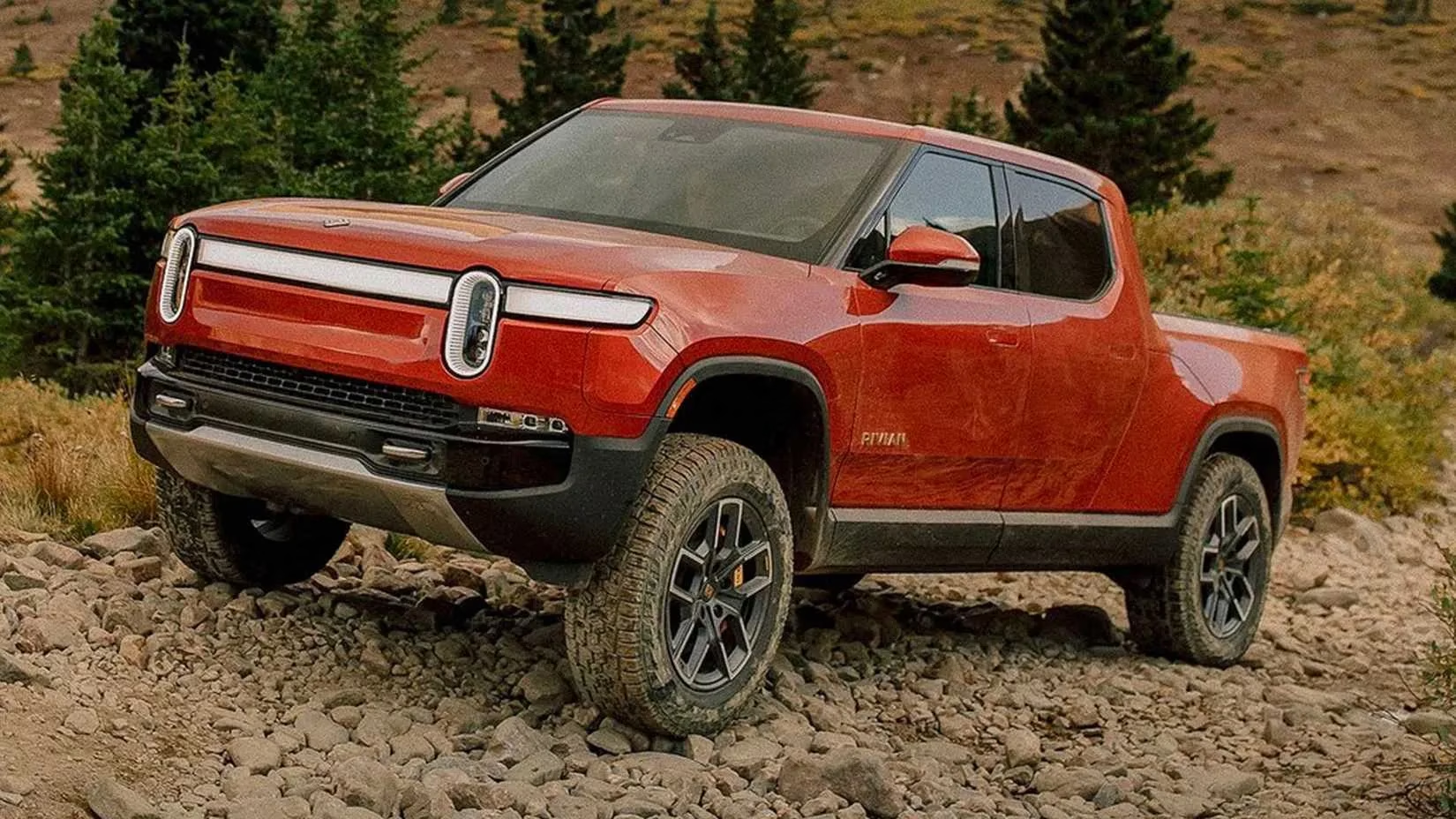
Now here’s where things get truly interesting for a car guy like me: voltage. The upcoming Golf EV is set to debut an 800-volt electrical system, a first for a truly mass-market hatchback. To put that in perspective, today’s Rivian R1T and R1S still operate on 400 volts; even the much-praised Hyundai Ioniq 5 and Kia EV6 utilize 800 volts but sit in a slightly higher price tier. Bringing 800 volts to the Golf segment means dramatically faster DC charging — think 10 to 80 percent in under 20 minutes — and better thermal management during sustained high-speed driving. It also slashes the weight of copper wiring, boosting overall efficiency. I can’t help but feel this single move could make the humble Golf the benchmark for affordable electric mobility, much like the original Beetle did for combustion engines.
What the Rivian-DNA brings to the table:
-
⚙️ Centralized vehicle control modules that reduce complexity and enable over-the-air updates at a depth we’ve never seen in a volume car.
-
🧠 Domain fusion, where functions like braking, steering, and battery management work in tight harmony, enhancing both safety and response.
-
🔌 Native 800V architecture that future-proofs the Golf for next-gen charging infrastructure.
-
📡 Seamless cloud connectivity to Rivian’s fleet learning ecosystem, so your Golf improves the more people drive it.
I also got a glimpse of how VW plans to position this technological leap next to its existing MEB platform cars. The ID.3 will continue as a slightly more budget-focused offering, while the electric Golf returns as a premium, emotionally charged nameplate — exactly what enthusiasts have been clamoring for. The gasoline and mild-hybrid versions, which will be sold alongside the EV, aren’t being abandoned either; they’ll likely use an evolved MQB platform, but they won’t get the Rivian magic. That clear combustion/EV split lets VW maintain global flexibility while doubling down on the Golf’s heritage.
The implications for the wider industry are huge. Rivian, originally an adventure truck brand, now sees its silicon running in one of the world’s most iconic compacts. For VW, it’s a shortcut to software maturity after the well-documented struggles of the Cariad unit. As a journalist tracking this industry, I see the 2028 Golf EV as more than just a new model — it’s a litmus test for whether legacy OEMs can truly leverage startup agility. And if the real-world performance matches the engineering promise, the electric Golf could do what Tesla’s Model 3 did for premium: bring cutting-edge voltage architecture and connected intelligence to the everyman.
The wait until 2028 feels long, but prototypes are already testing on public roads in Europe. I’ll be watching closely — because if VW and Rivian get this right, the electric Golf won’t just be an alternative to internal combustion; it’ll be the car that finally makes the switch irresistible for millions.
Leave a Comment
Comments