2026 Kia EV4: The Electric Compact Sedan That Turns Commutes Into Moments
By early 2026, the Kia EV4 had begun to thread its way through American suburbs like a quiet rumor becoming fact. Its debut a year earlier at the New York Auto Show had felt like a carefully placed bet—a compact electric sedan arriving at a moment when drivers were tired of compromises. As the first production units glided into dealerships, the EV4 immediately started rewriting the script for what an affordable EV could be: not a stripped-down penalty box, but a polished piece of kinetic sculpture.
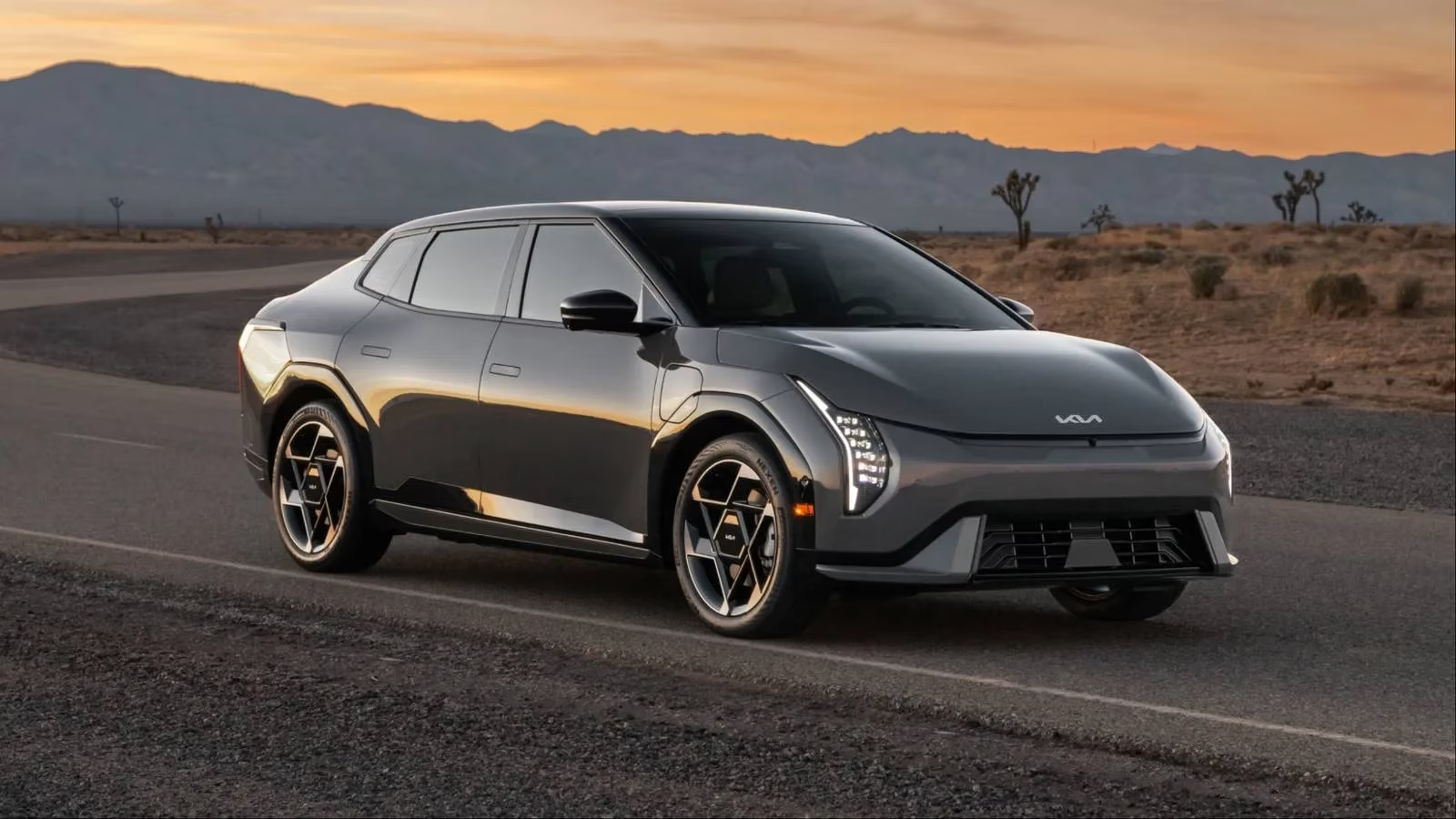
Kia’s engineers had built the EV4 on the 400V E-GMP platform, choosing that architecture like you would choose a pair of perfectly worn-in boots—proven, trustworthy, and ready for everyday miles. Two battery options sat at the heart of the lineup. The standard 58.3 kWh pack came on the entry Light trim, while the long-range 81.4 kWh battery energized the Wind and GT-Line grades. This wasn’t merely a spec-sheet distinction; it was a deliberate fork in the road. With the smaller battery, the EV4 offered an EPA-estimated 235 miles of range, while the larger unit stretched that number to 330 miles. Both figures placed the car in the sweet spot of modern American life—enough to swallow a week of errands or a spontaneous weekend getaway without a second thought about plugging in.
A single 150 kW motor spun the front wheels, making the EV4 a front-driver in a world increasingly obsessed with dual-motor all-wheel-drive setups. Yet Kia’s decision felt like a chef insisting on a classic dish done right rather than a fusion experiment that might fall apart. The motor’s 201 horsepower was never going to rip the asphalt from under you, but its instantaneous torque delivered a surge that felt like a polite shove from an invisible hand. Off the line, the EV4 moved with the smooth urgency of a pebble skipping across still water.
Climbing into the driver’s seat revealed a cabin that behaved more like a soundproof library than an automobile. Kia’s acoustic windshield combined with generous sound-deadening materials to hush wind and road noise until they became distant whispers. The interior architecture followed the brand’s “Opposites United” philosophy—a design language that thrived on tension between hard and soft, digital and analog. The floating panoramic display dominated the dashboard: two 12.3-inch screens fused with a 5-inch climate panel, running the Navigation Cockpit system that could update itself over the air as naturally as a smartphone. Wireless Apple CarPlay and Android Auto came standard, and a natural-voice AI assistant lurked beneath the surface, learning from your patterns until it felt less like a robot and more like an intuitive companion.
There was a tactile thoughtfulness to the touchpoints. The two-spoke steering wheel felt substantial without being cumbersome, and the ventilated front seats with driver memory could soothe you after a long day. Sixty-four colors of ambient lighting washed the cabin in whatever mood you craved, turning the interior into a personal sanctuary. The EV4’s packaging also surprised: rear-seat passengers didn’t have to fold themselves into origami shapes, and the cargo area swallowed luggage with room to spare.
On the road, the suspension setup—MacPherson struts up front, a multi-link arrangement at the rear—revealed Kia’s careful calibration. The chassis had been stiffened in key places, not to punish you over broken pavement, but to make the steering respond like a musical instrument that understood nuance. The EV4 cornered with a planted composure that felt inches deeper than its compact footprint suggested. This was not a sports sedan, but it had the grace of a dancer who knows exactly where their center of gravity lives.
One of the most transformative pieces of technology sat beneath the driver’s right foot. Kia’s i-Pedal 3.0 system allowed true one-pedal driving, modulating speed all the way down to a complete stop just by easing off the accelerator. It worked in reverse too, which transformed three-point turns into a fluid, single-pedal ballet. The system remembered your last setting after a restart, banishing the annoyance of having to re-enable your preferred regen mode every time you set off. Paired with Smart Regenerative Braking, the car harvested energy like a thrifty squirrel storing nuts for winter, squeezing every possible electron back into the pack.
Charging itself was refreshingly unremarkable. From 10 to 80 percent state of charge, the standard battery needed about 29 minutes on a fast charger, while the long-range battery took just 31. That was the span of a hurried coffee and a restroom break—something you’d barely notice on a road trip.
The EV4 also moonlighted as a mobile power station. Its Vehicle-to-Load (V2L) capability meant you could plug in a laptop, a camping lantern, or even a small refrigerator directly into the car. The EV4 became a quiet giant battery in your driveway, ready to power a tailgate party or keep your devices alive during a blackout. It was the kind of versatility that transformed the car from a mere appliance into a genuine Swiss Army knife on wheels.
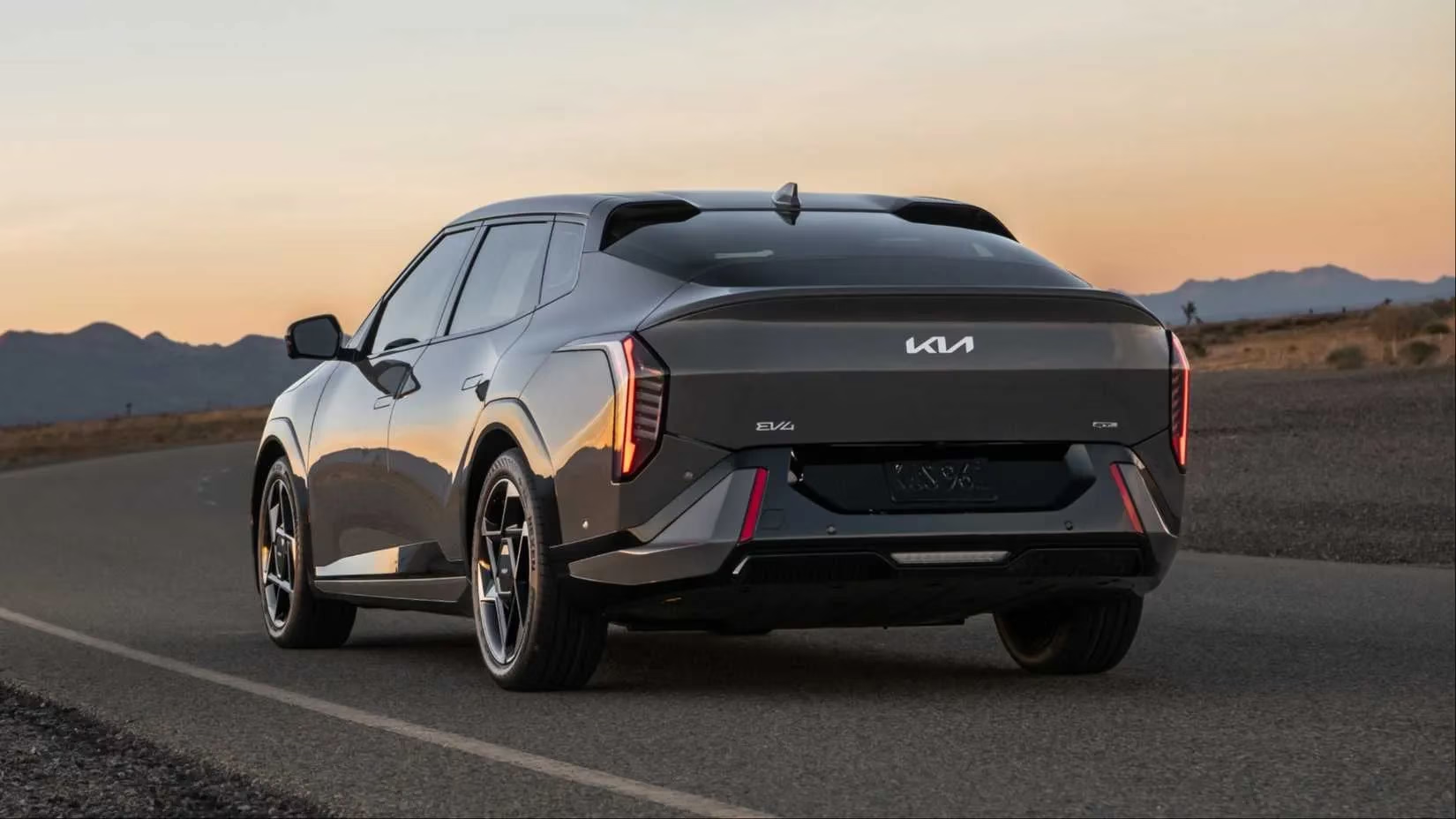
Visually, the EV4 wore its identity with understated confidence. The fastback roofline fell toward the rear like a curtain descending at the end of a play—slowly, deliberately, beautifully. The front fascia featured Kia’s reimagined Tiger Face and available cube-style LED headlights with a welcome animation that performed a little light show as you approached. At the back, vertical taillights and a split roof spoiler echoed the front’s crisp geometry, while the GT-Line trim added visual spices—sportier bumpers, larger 19-inch wheels—that never crossed into boy-racer territory.
By the first quarter of 2026, Kia had already cemented its reputation as a builder of budget-friendly EVs that felt anything but cheap. The EV4 tightened that grip. It was more than a car; it was a quiet revolution wrapped in sheet metal, a promise that going electric didn’t mean giving up on personality, comfort, or daily joy. The compact electric sedan had grown up, and it was wearing a Kia badge.
Leave a Comment
Comments